Anthropic to present its Mythos AI model to G20 financial regulators
Anthropic has received an unusual invitation: to present its Mythos AI model to G20 finance ministers and central banks through the Financial Stability Board. The model identifies critical vulnerabilities in the cybersecurity of financial systems. At the initiative of Bank of England Governor Andrew Bailey, the company will brief officials on what Mythos has found.
AI-processed from TNW; edited by Hamidun News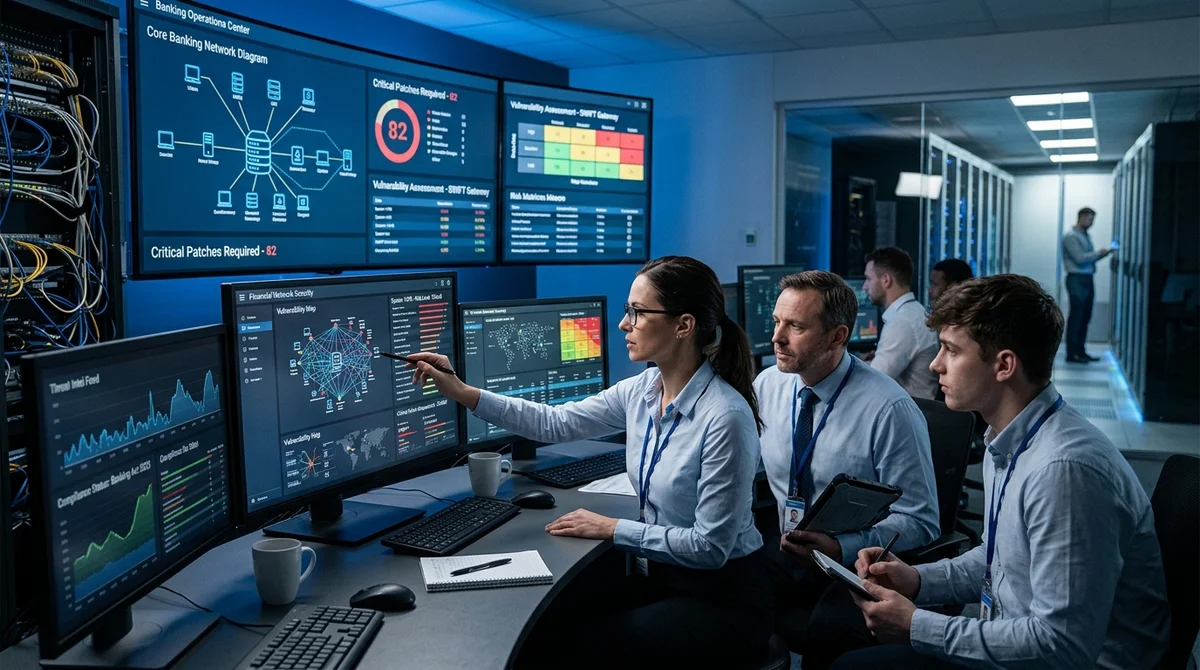
Anthropic has received an unusual invitation: to present its Mythos AI model to G20 financial regulators. Bank of England Governor Andrew Bailey, who chairs the Financial Stability Board (FSB), has invited the company to brief finance ministers and central bank heads on the vulnerabilities the model has identified.
Why financial cybersecurity is in focus
The banking sector is critical infrastructure for the global economy. Any vulnerability in payments, trade finance or settlement systems can trigger a systemic crisis. SWIFT, which processes trillions of dollars every day, has already survived serious attacks: in 2016, $81 million was stolen through its system. This year's cyber threats have become so dangerous that the FSB has put them on its list of priority financial risks, alongside climate change and inflation.
In this context, an AI tool that can automatically identify vulnerabilities in payment infrastructure has drawn interest not only from technologists but also from policymakers. Banks traditionally lag in security updates because of cost and reluctance to disrupt system stability. Regulators, meanwhile, are looking for a way to speed up the process without overloading IT teams.
Andrew Bailey stated directly that Mythos has already identified serious security problems in financial systems, and that this is significant enough to discuss at the G20 level.
How Mythos finds vulnerabilities
Anthropic's model analyzes financial infrastructure systematically, running a range of security tests:
- scans bank APIs for authentication and authorization vulnerabilities
- tests the resilience of payment gateways against denial-of-service attacks
- analyzes security logs for signs of compromise and suspicious activity
- identifies misconfigurations in cloud systems and data stores
- checks data compliance with regulatory standards, including PCI-DSS and GDPR
In practice, Mythos has already found vulnerabilities that could have led to unauthorized access to customer accounts and compromise of payment terminals. Some of these problems involved incorrect implementation of authentication protocols, which bank specialists failed to detect in a standard audit. Importantly, Mythos works with real financial systems, but under the control and with the permission of the banks.
An unprecedented step
This is the first time an AI company has been invited to present to the FSB its findings on vulnerabilities in the financial sector. Such data usually stays confidential and is discussed only among bank CISOs, their technical teams and national regulators.
Andrew Bailey's decision to raise the topic before the G20 hints that the problem runs deeper than local bugs in individual banks. It may involve systemic vulnerabilities in the architecture of international payments, or new classes of attacks that traditional security tools miss. It is also a signal that AI is starting to play a role not just as a technological tool but as a strategic asset in protecting financial stability.
"We are needed not to replace people, but to amplify their ability to
identify risks that are critical to financial stability."
What this means
This is the first sign that regulators are starting to use AI not as a threat but as a tool for protecting the financial system. If the FSB approves Anthropic's approach, we can expect such AI systems to be either recommended or mandatory for all large financial institutions in G20 countries. Other regulators, including the SEC in the US, the FCA in the UK and the EBA in Europe, will most likely start requiring banks to adopt similar vulnerability detection systems.
For AI companies, this opens a new market: instead of B2C or B2B SaaS, they can work directly with government regulators on critical infrastructure.
- Nov 1, 2026Local models lose to Opus and Codex: 0.21 on a MacBook versus 1.00 for Codex
- Nov 1, 2026Kimi scores 96.2% on a 1C database analytics test and emerges as a fallback if Claude access is blocked
- Nov 1, 2026OpenAI Rewrites GPT Behavior Rules: Five Values and a Chain of Command
- Nov 1, 2026Google admits AI Mode cuts search revenue, shares fall 15%
Key Questions Answered
Why financial cybersecurity is in focus?
The banking sector is critical infrastructure for the global economy. Any vulnerability in payments, trade finance or settlement systems can trigger a systemic crisis. SWIFT, which processes trillions of dollars every day, has already survived serious attacks: in 2016, $81 million was stolen through its system. This year's cyber threats have become so dangerous that the FSB has put them on its list of priority financial risks, alongside climate change and inflation. In this context, an AI tool that can automatically identify vulnerabilities in payment infrastructure has dra
How Mythos finds vulnerabilities?
Anthropic's model analyzes financial infrastructure systematically, running a range of security tests: scans bank APIs for authentication and authorization vulnerabilities tests the resilience of payment gateways against denial-of-service attacks analyzes security logs for signs of compromise and suspicious activity identifies misconfigurations in cloud systems and data stores checks data compliance with regulatory standards, including PCI-DSS and GDPR In practice, Mythos has already found vulnerabilities that could have led to unauthorized access to customer accounts and c
What are the key details on An unprecedented step?
This is the first time an AI company has been invited to present to the FSB its findings on vulnerabilities in the financial sector. Such data usually stays confidential and is discussed only among bank CISOs, their technical teams and national regulators. Andrew Bailey's decision to raise the topic before the G20 hints that the problem runs deeper than local bugs in individual banks. It may involve systemic vulnerabilities in the architecture of international payments, or new classes of attacks that traditional security tools miss. It is also a signal that AI is starting t
Test Frontier LLMs & Autonomous Agents in One Workspace
Run Claude Opus 5.5, GPT-6, Gemini 3.1, and DeepSeek side-by-side in Nomad AI (nomadnet.ai) — unified model routing, deep research, and multimodal workflows under one subscription.
The AI world, distilled — once a week
Seven stories that actually mattered, hand-picked. No noise, no reposts, no press releases.
Done! Check your inbox for a confirmation.