Young entrepreneurs in Asia are profiting from hateful AI content on Facebook
A Guardian investigation has exposed a global hate-content factory. Hundreds of Facebook accounts with Union Jack branding and names like Britain Today pose as grassroots communities. They are actually run by young entrepreneurs in Sri Lanka and Pakistan, who produce AI videos about cafés that stop serving bacon because of Muslims, along with images of Victorian London captioned "when this was the real England." Next to the nostalgia sits open hatred: memes calling Islam a cancer and posts about a Muslim invasion of the West. The creators make money through Facebook monetization. *Meta is designated an extremist organization and banned in Russia.
AI-processed from Guardian; edited by Hamidun News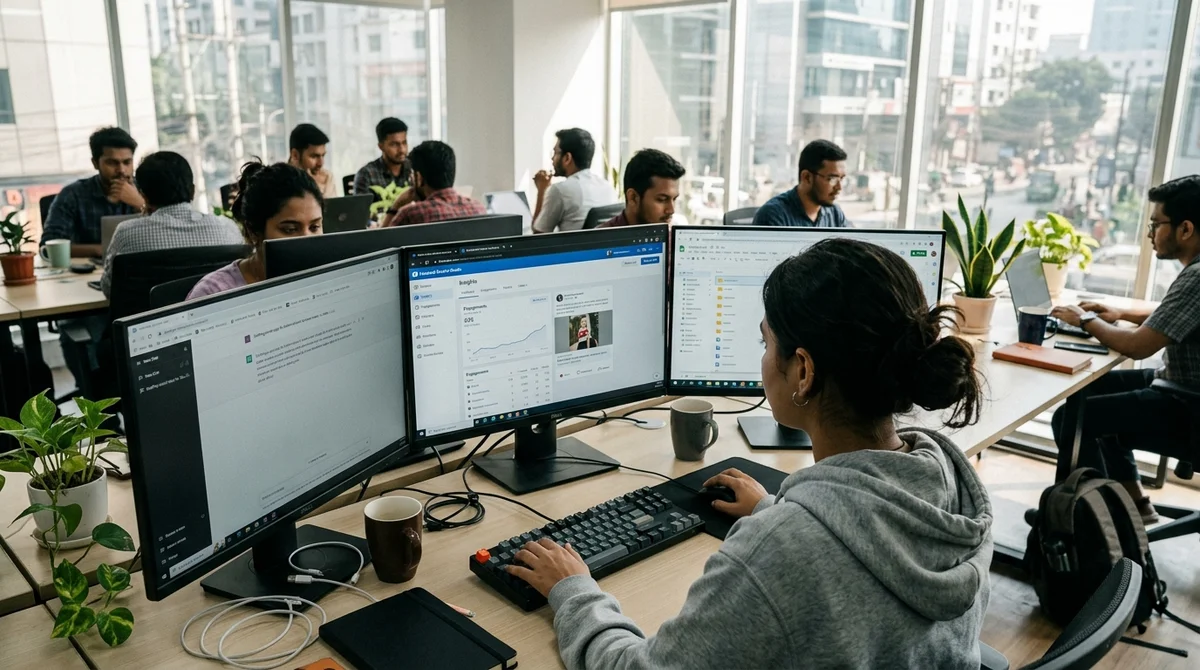
A Guardian investigation has exposed a global operation spreading hateful content. Hundreds of Facebook accounts posing as British communities are actually run by young entrepreneurs in South Asia, who use AI to generate toxic content and monetize it. This isn't an ideological war. It's about money.
Who runs the accounts
Facebook accounts such as Britain Today, Britannia News and English Voice look like grassroots communities of concerned Britons. In reality, they are content factories. Behind them are young people in Sri Lanka and Pakistan who don't live in Britain and have no interest in its politics. Their goal is simple: figure out Facebook monetization and build a system that makes money. The language, the flag and the ideology are just tools.
What the content looks like
AI generates videos that look like real people speaking. A man complains that his café stopped serving bacon so as not to offend Muslims. Images of Victorian London carry the caption "when the city was English and beautiful." This is nostalgia that passes for harmless criticism of change.
But right next to it is open hatred. Memes calling Islam a cancer. Posts framing Muslims praying in the street as an invasion. Promotion of the Great Replacement theory. Together, these posts act like micro-toxins: each one looks like an opinion, but in aggregate they slowly poison the feed.
The money in hate
Facebook monetizes views: the more engagement, the more revenue. Young people in Asia found an arbitrage opportunity — create hateful content in English (a high-paying market) and publish it through a network of fake accounts. A single successful account pulls in 10 million views a month. That money flows back to South Asia, where it's enough to live on, hire operators and expand the factory.
- Content creation with AI (almost no cost)
- Publishing through a network of front accounts (looks organic)
- Monetization through Facebook (payouts in dollars)
- Cashing out in low-cost countries
Why it works
Facebook optimizes for engagement — for reaction, not truth. Hate provokes reactions: people click, comment and share out of anger. The algorithms amplify this content and push it up the feed.
The platform only blocks obvious violations (direct calls to violence). As long as an account looks organic, the content stays up.
What it means
The tools (AI for creation, platforms for distribution, payments for monetization) let anyone turn emotions into a commodity. The creators don't believe in the ideology. But the consequences are real: the content fuels phobias, divides societies and poisons public debate. Platforms choose neutrality over responsibility.
*Meta is designated an extremist organization and banned in Russia.
- Nov 1, 2026MoneyGate safety layer blocked all 42 fraudulent requests to local AI models
- Oct 31, 2026Open-source LLM gateway KTMS 1.0 plugs your own GPUs into the cloud and survives outages
- Oct 31, 202622B-Parameter LTX-2.5 Runs on a 10 GB RTX 3080, but Takes 5 Minutes per Shot
- Oct 29, 2026T-Tech Introduces LIMe, a Method That Trains Language Models With 15% Less Compute
Key Questions Answered
Who runs the accounts?
Facebook accounts such as Britain Today, Britannia News and English Voice look like grassroots communities of concerned Britons. In reality, they are content factories. Behind them are young people in Sri Lanka and Pakistan who don't live in Britain and have no interest in its politics. Their goal is simple: figure out Facebook monetization and build a system that makes money. The language, the flag and the ideology are just tools.
What the content looks like?
AI generates videos that look like real people speaking. A man complains that his café stopped serving bacon so as not to offend Muslims. Images of Victorian London carry the caption "when the city was English and beautiful." This is nostalgia that passes for harmless criticism of change. But right next to it is open hatred. Memes calling Islam a cancer. Posts framing Muslims praying in the street as an invasion. Promotion of the Great Replacement theory. Together, these posts act like micro-toxins: each one looks like an opinion, but in aggregate they slowly poison the fee
What are the key details on The money in hate?
Facebook monetizes views: the more engagement, the more revenue. Young people in Asia found an arbitrage opportunity — create hateful content in English (a high-paying market) and publish it through a network of fake accounts. A single successful account pulls in 10 million views a month. That money flows back to South Asia, where it's enough to live on, hire operators and expand the factory. Content creation with AI (almost no cost) Publishing through a network of front accounts (looks organic) Monetization through Facebook (payouts in dollars) Cashing out in low-cost coun
Test Frontier LLMs & Autonomous Agents in One Workspace
Run Claude Opus 5.5, GPT-6, Gemini 3.1, and DeepSeek side-by-side in Nomad AI (nomadnet.ai) — unified model routing, deep research, and multimodal workflows under one subscription.
The AI world, distilled — once a week
Seven stories that actually mattered, hand-picked. No noise, no reposts, no press releases.
Done! Check your inbox for a confirmation.