Dell lands 1,000 new enterprise AI server customers
Dell added 1,000 new customers for its flagship AI server line this quarter. The move is part of the company's strategy to win the enterprise market from customers deploying large-scale AI infrastructure to process big volumes of data. Servers built around Nvidia processors show growing demand from traditional large businesses.
AI-processed from Bloomberg Tech; edited by Hamidun News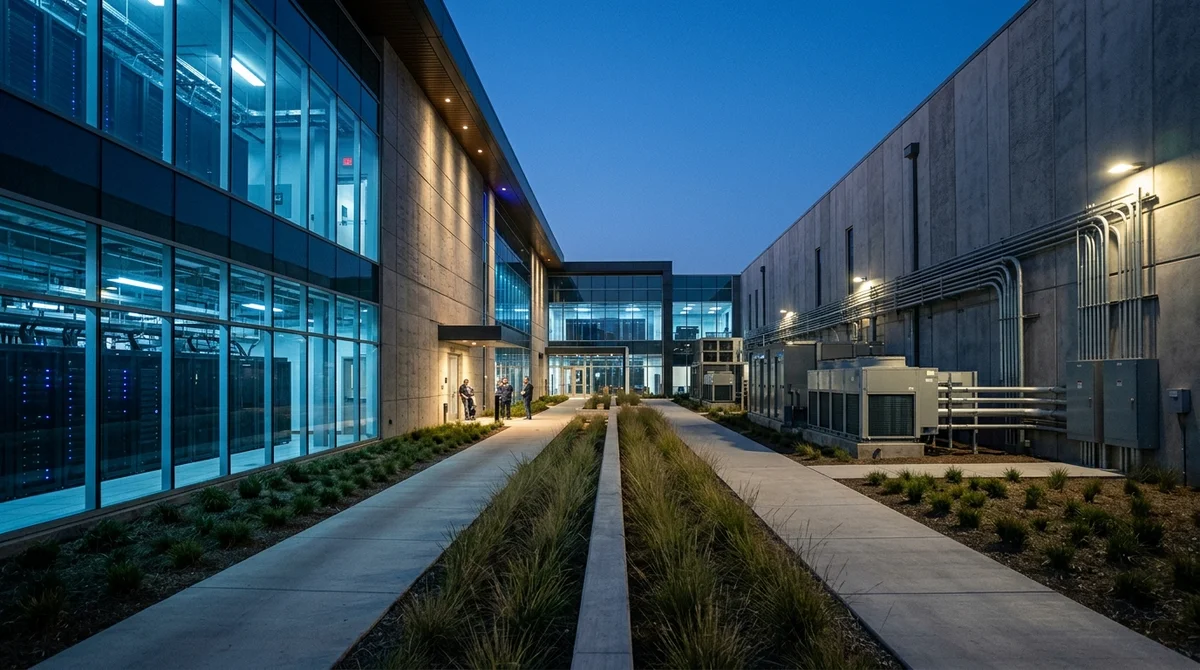
Dell Technologies added 1,000 customers for its flagship AI server line last quarter. This suggests the company is successfully positioning itself as an AI infrastructure supplier for large enterprises, not just for startups and cloud providers.
Enterprise AI is moving out of the cloud
Growing demand for Dell's AI servers reflects a global shift: large companies are no longer relying entirely on cloud services and are starting to run AI in their own data centers. For financial institutions, manufacturers and government agencies, this means greater control over data, faster access to results and the ability to customize systems to their needs.
Cloud services (AWS, Azure, Google Cloud) remain useful, but they do not fit every scenario. Companies with large data volumes, strict compliance requirements or long-term AI projects prefer to own hardware that they fully control. Dell servers equipped with Nvidia processors are becoming the standard choice for these organizations.
The company offers more than hardware: it provides a complete solution that includes technical support, integration with existing infrastructure and leasing programs that reduce capital expenditure.
What these servers are used for
Corporations use AI servers for very specific business tasks:
- Training their own large language models on private data and the company's proprietary information
- Deploying ready-made AI models for recommendation systems, fraud detection and demand forecasting
- Processing large volumes of data in real time for analytics and monitoring
- Integrating AI features into existing enterprise software (ERP, CRM, BI systems, HCM)
- Experimenting with new AI approaches in a sandbox environment before a broad rollout to production
Scaling and competitive advantage
Dell is showing it can not only sell but also scale infrastructure deliveries to meet rising demand. Adding 1,000 customers in a single quarter is a significant achievement in the enterprise category, where sales happen deal by deal and each contract can be worth many millions of dollars.
The company is preparing for further expansion and higher production. In the coming years, demand for enterprise AI infrastructure will only grow, as more organizations come to see the need for their own computing capacity to gain a competitive edge.
What this means
The AI server market is entering a phase of mass adoption. For IT leaders, this is a signal to draw up multi-year AI infrastructure plans instead of experimenting on cloud platforms. For Dell and other vendors, it means long-term revenue, steady shipments and growing production volumes. For competitors, it means margin pressure and a need to innovate and scale quickly.
- Nov 1, 202616 models tested on 7 search tools: Exa averaged 10.5 out of 14, SearXNG about 3
- Nov 1, 2026Google's StreamVibe video agent beats other models by 10.7% on response timing and quality
- Nov 1, 2026OpenAI Rewrites GPT Behavior Rules: Five Values and a Chain of Command
- Nov 1, 2026Voice bots built on LLMs turn to Jev, a fast classifier, for decisions in 200–500 ms
Key Questions Answered
What are the key details on Enterprise AI is moving out of the cloud?
Growing demand for Dell's AI servers reflects a global shift: large companies are no longer relying entirely on cloud services and are starting to run AI in their own data centers. For financial institutions, manufacturers and government agencies, this means greater control over data, faster access to results and the ability to customize systems to their needs. Cloud services (AWS, Azure, Google Cloud) remain useful, but they do not fit every scenario. Companies with large data volumes, strict compliance requirements or long-term AI projects prefer to own hardware that they
What these servers are used for?
Corporations use AI servers for very specific business tasks: Training their own large language models on private data and the company's proprietary information Deploying ready-made AI models for recommendation systems, fraud detection and demand forecasting Processing large volumes of data in real time for analytics and monitoring Integrating AI features into existing enterprise software (ERP, CRM, BI systems, HCM) Experimenting with new AI approaches in a sandbox environment before a broad rollout to production
What are the key details on Scaling and competitive advantage?
Dell is showing it can not only sell but also scale infrastructure deliveries to meet rising demand. Adding 1,000 customers in a single quarter is a significant achievement in the enterprise category, where sales happen deal by deal and each contract can be worth many millions of dollars. The company is preparing for further expansion and higher production. In the coming years, demand for enterprise AI infrastructure will only grow, as more organizations come to see the need for their own computing capacity to gain a competitive edge.
Test Frontier LLMs & Autonomous Agents in One Workspace
Run Claude Opus 5.5, GPT-6, Gemini 3.1, and DeepSeek side-by-side in Nomad AI (nomadnet.ai) — unified model routing, deep research, and multimodal workflows under one subscription.
The AI world, distilled — once a week
Seven stories that actually mattered, hand-picked. No noise, no reposts, no press releases.
Done! Check your inbox for a confirmation.