OTUS Launches Free Open Lessons on AI Agents, Kubernetes and Go in May
From May 18 to 28, OTUS is holding open lessons on Kubernetes, Go, LLMs, AI agents, load testing, observability, API Gateway and security. They are meant as a first step toward choosing a full course. The lessons run as evening online sessions, and attendees do not need to sign up for a full course in advance.
AI-processed from Habr AI; edited by Hamidun News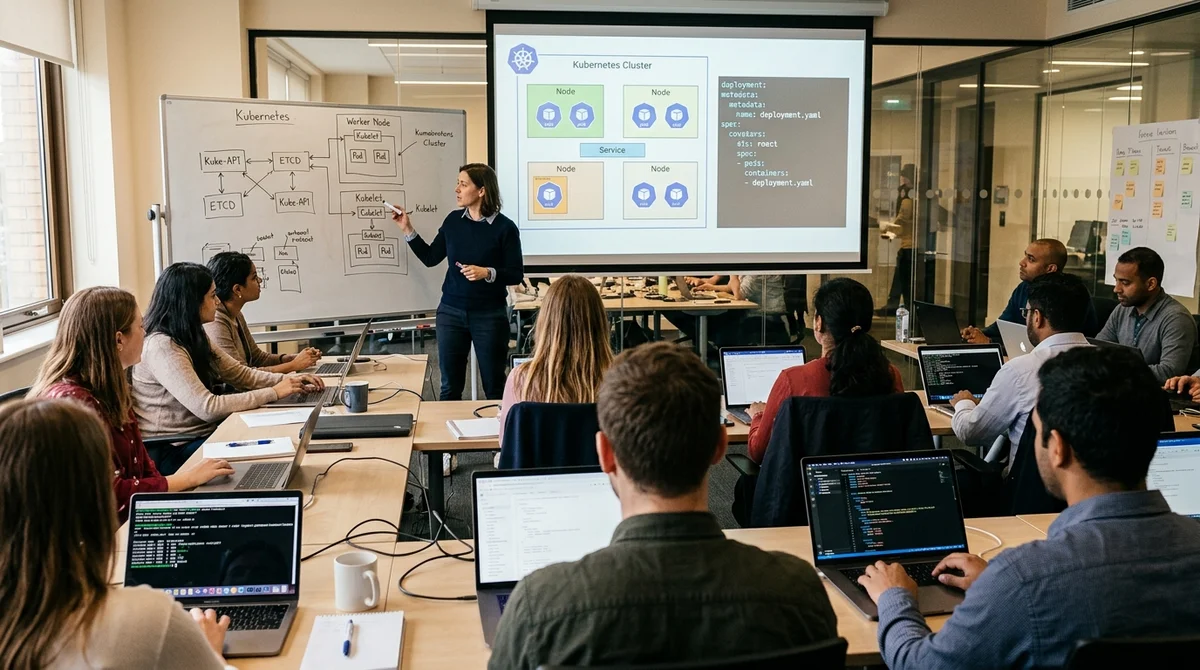
OTUS is preparing an intensive block of open lessons for May 18-28. Over 10 days, you can join sessions across 9 different topics, from Kubernetes to AI agents, and work out which one to study in more depth.
9 topics on the program
The schedule covers topics relevant for 2026. Each lesson is a first introduction, after which you can decide whether to go deeper.
- Kubernetes and container orchestration
- Go, a language for high-load systems
- LLMs and AI agents: working with language models
- Load testing
- Observability, logging and metrics
- API Gateway and traffic management
- Application security
- CTE (specialized OTUS topics)
- Architecture and system design
When and how
The open lessons run from May 18 to 28, almost twice a week. The format is evening online sessions of 1.5-2 hours. You can simply show up, without signing up for a full course beforehand.
OTUS instructors run each lesson like a regular class, with code examples, questions and, sometimes, exercises for those who want them. Since the content is free, it is a good way to get a feel for the platform's teaching style and talk to an instructor before deciding on a course.
Who it is for
It suits people who:
- Want to try a new language or technology without a big investment
- Are considering a full course and want to see it live first
- Work in an adjacent field and want to widen their skill set
- Are simply curious about how IT is developing in 2026
There are no barriers: all you need is a browser and a free evening.
What this means
When an education platform opens its classes to everyone, it signals that it wants to attract newcomers, not only people already studying with it. For learners the risk is low. For the platform, it is a chance to show the quality of its teaching and see which topics resonate with the audience.
Key Questions Answered
What are the key details on 9 topics on the program?
The schedule covers topics relevant for 2026. Each lesson is a first introduction, after which you can decide whether to go deeper. Kubernetes and container orchestration Go, a language for high-load systems LLMs and AI agents: working with language models Load testing Observability, logging and metrics API Gateway and traffic management Application security CTE (specialized OTUS topics) Architecture and system design
When and how?
The open lessons run from May 18 to 28, almost twice a week. The format is evening online sessions of 1.5-2 hours. You can simply show up, without signing up for a full course beforehand. OTUS instructors run each lesson like a regular class, with code examples, questions and, sometimes, exercises for those who want them. Since the content is free, it is a good way to get a feel for the platform's teaching style and talk to an instructor before deciding on a course.
Who it is for?
It suits people who: Want to try a new language or technology without a big investment Are considering a full course and want to see it live first Work in an adjacent field and want to widen their skill set Are simply curious about how IT is developing in 2026 There are no barriers: all you need is a browser and a free evening.
Test Frontier LLMs & Autonomous Agents in One Workspace
Run Claude Opus 5.5, GPT-6, Gemini 3.1, and DeepSeek side-by-side in Nomad AI (nomadnet.ai) — unified model routing, deep research, and multimodal workflows under one subscription.
The AI world, distilled — once a week
Seven stories that actually mattered, hand-picked. No noise, no reposts, no press releases.
Done! Check your inbox for a confirmation.