Why GPT Gets Letter Counts Wrong: Tokenization Explained
LLMs process text as a sequence of numeric tokens, not as individual letters. That explains an odd paradox: GPT can easily get confused by a task as simple as counting the letters in a word like strawberry. Understanding tokenization is key to writing more effective prompts, anticipating strange model behavior, optimizing the context window, and working with multilingual text.
AI-processed from Habr AI; edited by Hamidun News
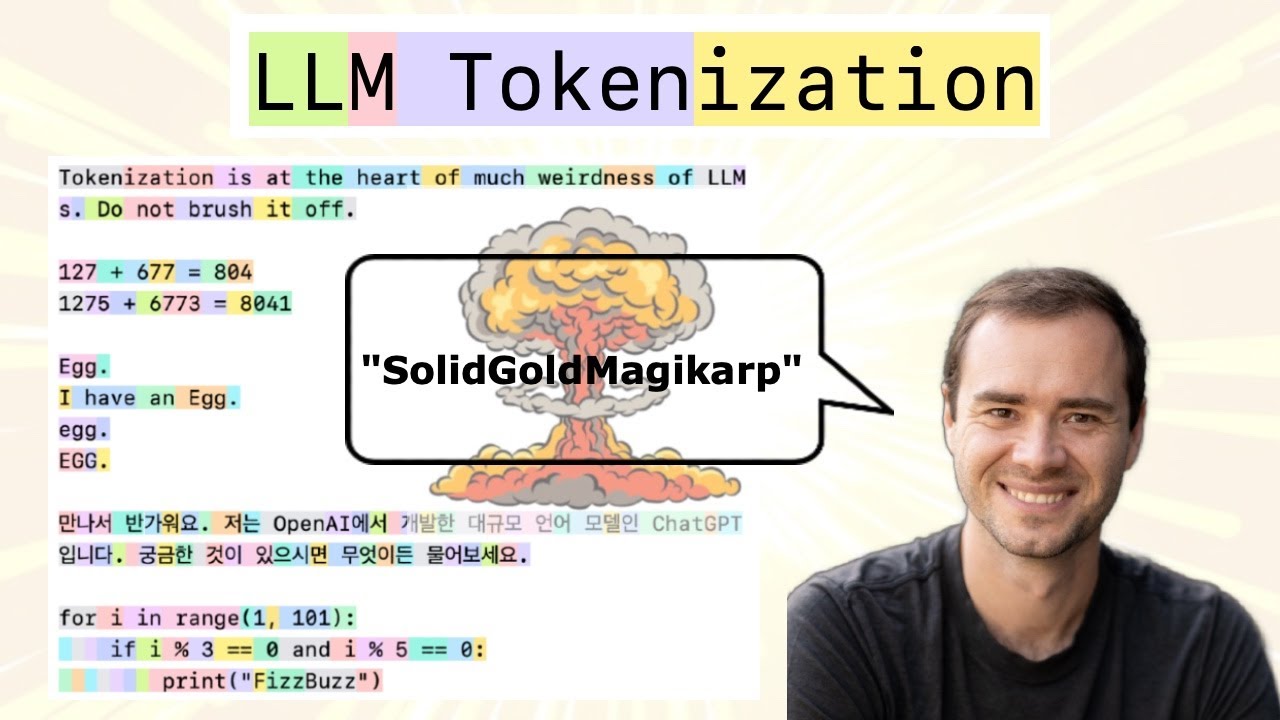
When you type a prompt into ChatGPT, you see ordinary text made of letters. The model sees something entirely different: a sequence of numbers called tokens. This mismatch produces some strange effects. GPT may fail to work out how many letters are in the word strawberry, or get confused during a simple count.
How LLMs see text
To a neural network, text isn't a set of letters but a sequence of numeric codes. Each token maps to a number, and the model works only with those numbers. It never sees the letters themselves. Imagine reading a book through a system that first converts the words into codes, lets you process the codes, and then converts them back into text.
A common word may be a single token, while a rare word gets split into several pieces. For example, "hello" is encoded as one number, while "strawberry" may become three or four numbers. Russian is even trickier: its rich morphology means words are split less efficiently.
Why this causes problems
The gap between how people see text and how the model sees it leads to a whole range of problems:
- Counting errors: GPT can't simply count letters, because it works with numbers, not characters
- Poor handling of rare words: unusual letter combinations get split into several tokens, and the model sees them as separate chunks
- Language asymmetry: English tokenizes more efficiently than Russian, Chinese, or Arabic
- Context consumption: if a word splits into 3 tokens instead of 1, your prompt takes up more room in the context window
- Unpredictable behavior: the model can act strangely with numbers, codes, and rare names, because they're broken into fragments
The algorithm behind the scenes
Tokenization relies on an algorithm called Byte Pair Encoding (BPE). Here's how it works: first, the text is split so that every character is its own token. The algorithm then finds the most frequent pairs of characters and merges them into a new token. Next, it looks for frequent pairs among the resulting tokens and merges those too. This repeats thousands of times.
The result is a GPT vocabulary of roughly 50 thousand tokens. Common words and word fragments get their own tokens, while rare letter combinations stay fragmented. It isn't perfect, but it's more efficient than encoding every letter separately.
What this means
Understanding tokenization changes how you work with LLMs. If you know the model will get confused counting letters, you can ask it to approach the task differently — for example, by first printing the letters out one by one and then counting them. It's not a cure-all, but it helps you write more reliable prompts.
Knowing how tokenization works also helps when optimizing long prompts: you can predict where the model will "waste" tokens. That matters for anyone working with LLMs at a deep level, from prompt engineers to developers building applications on top of neural networks.
- Nov 2, 2026Meta's Muse assistant keeps dossiers on loved ones and gets root on Ubuntu by default
- Nov 1, 2026Local models lose to Opus and Codex: 0.21 on a MacBook versus 1.00 for Codex
- Nov 1, 2026Kimi scores 96.2% on a 1C database analytics test and emerges as a fallback if Claude access is blocked
- Nov 1, 2026OpenAI Rewrites GPT Behavior Rules: Five Values and a Chain of Command
Key Questions Answered
How LLMs see text?
To a neural network, text isn't a set of letters but a sequence of numeric codes. Each token maps to a number, and the model works only with those numbers. It never sees the letters themselves. Imagine reading a book through a system that first converts the words into codes, lets you process the codes, and then converts them back into text. A common word may be a single token, while a rare word gets split into several pieces. For example, "hello" is encoded as one number, while "strawberry" may become three or four numbers. Russian is even trickier: its rich morphology mean
Why this causes problems?
The gap between how people see text and how the model sees it leads to a whole range of problems: Counting errors: GPT can't simply count letters, because it works with numbers, not characters Poor handling of rare words: unusual letter combinations get split into several tokens, and the model sees them as separate chunks Language asymmetry: English tokenizes more efficiently than Russian, Chinese, or Arabic Context consumption: if a word splits into 3 tokens instead of 1, your prompt takes up more room in the context window Unpredictable behavior: the model can act strange
What are the key details on The algorithm behind the scenes?
Tokenization relies on an algorithm called Byte Pair Encoding (BPE). Here's how it works: first, the text is split so that every character is its own token. The algorithm then finds the most frequent pairs of characters and merges them into a new token. Next, it looks for frequent pairs among the resulting tokens and merges those too. This repeats thousands of times. The result is a GPT vocabulary of roughly 50 thousand tokens. Common words and word fragments get their own tokens, while rare letter combinations stay fragmented. It isn't perfect, but it's more efficient than
Test Frontier LLMs & Autonomous Agents in One Workspace
Run Claude Opus 5.5, GPT-6, Gemini 3.1, and DeepSeek side-by-side in Nomad AI (nomadnet.ai) — unified model routing, deep research, and multimodal workflows under one subscription.
The AI world, distilled — once a week
Seven stories that actually mattered, hand-picked. No noise, no reposts, no press releases.
Done! Check your inbox for a confirmation.