Why India Is Falling Behind in the Global AI Race: Ruchir Sharma's View
Investors see India lagging in the AI trade: capital is flowing into chips, compute and infrastructure. The main threats are low R&D spending and the automation of IT outsourcing. But Ruchir Sharma points to future advantages: strong GDP growth and the potential that opens up when AI shifts toward productivity applications.
AI-processed from Bloomberg Tech; edited by Hamidun News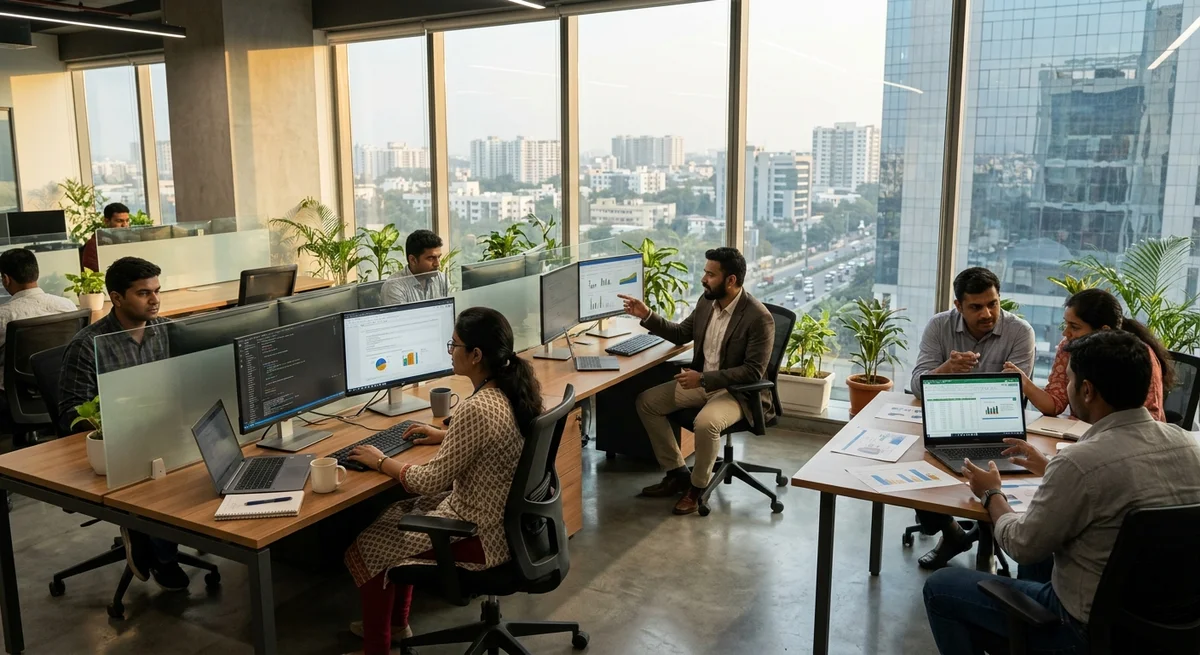
India is positioned as the losing side of the global AI trade. Investors are pouring capital into chips, computing power and infrastructure, areas dominated by American and Chinese corporations. Ruchir Sharma, chairman of Rockefeller International, explains that this position threatens one of India's main advantages.
A shortfall in homegrown research
The first gap is R&D spending. India spends significantly less on fundamental AI research than its competitors. That creates dependence: the country does not generate its own breakthrough models but imports technology. While OpenAI launches new GPT versions, ByteDance rolls out local solutions and Anthropic bets on long context, India plays the role of consumer, not architect.
This slows the local startup ecosystem. Small companies in India cannot compete in the global race because they lack access to the compute and funding that their rivals in the US or Europe get.
A threat to the IT sector and outsourcing
The second problem is more acute: AI threatens India's main export engine, software development and Business Process Outsourcing (BPO).
- Junior developers are already facing replacement: Copilot and Claude are taking over routine coding
- BPO operations (data processing, customer service) are next in line for AI automation
- Large Indian companies (TCS, Infosys, Wipro) are seeing pressure on margins and contract volumes
- IT services contribute 10% of India's foreign-currency exports; a loss here is a loss for the macroeconomy
The scale of the problem: millions of Indian IT professionals work for the global market. Automating a slice of that market moves jobs outside India or eliminates them altogether.
"India risks losing its advantage just as the whole world moves to AI," is
Sharma's reasoning.
The potential for a later recovery
Still, full pessimism is not warranted. Ruchir Sharma cites several reasons for optimism.
First, India's nominal GDP is growing 7–8% a year, faster than in developed countries. That gives it a buffer to reinvest and recover.
Second, a valuation reset. If Indian stocks trade at a discount today amid AI panic, a repricing could be sharp tomorrow, once the story changes.
Third, as AI moves from the race for models to practical productivity applications (business process automation, customer intelligence, supply chain optimization), India can retool itself. Instead of building models, India becomes an integrator and optimizer of AI for emerging markets in Africa, Southeast Asia and Latin America.
What this means
In the short term (1–2 years), India is in an unfavorable position: it is losing its export advantage in code, is not creating its own AI champions, and investors are pulling back capital. But over the medium term (3–5 years), the game could turn. GDP growth + a large engineering talent pool + demand shifting toward productivity applications = a chance to get back in the game.
For investors, this means a repricing lies ahead, but it requires patience.
- Nov 1, 2026Local models lose to Opus and Codex: 0.21 on a MacBook versus 1.00 for Codex
- Nov 1, 2026Kimi scores 96.2% on a 1C database analytics test and emerges as a fallback if Claude access is blocked
- Nov 1, 2026OpenAI Rewrites GPT Behavior Rules: Five Values and a Chain of Command
- Nov 1, 2026Google admits AI Mode cuts search revenue, shares fall 15%
Key Questions Answered
What are the key details on A shortfall in homegrown research?
The first gap is R&D spending. India spends significantly less on fundamental AI research than its competitors. That creates dependence: the country does not generate its own breakthrough models but imports technology. While OpenAI launches new GPT versions, ByteDance rolls out local solutions and Anthropic bets on long context, India plays the role of consumer, not architect. This slows the local startup ecosystem. Small companies in India cannot compete in the global race because they lack access to the compute and funding that their rivals in the US or Europe get.
What are the key details on A threat to the IT sector and outsourcing?
The second problem is more acute: AI threatens India's main export engine, software development and Business Process Outsourcing (BPO). Junior developers are already facing replacement: Copilot and Claude are taking over routine coding BPO operations (data processing, customer service) are next in line for AI automation Large Indian companies (TCS, Infosys, Wipro) are seeing pressure on margins and contract volumes IT services contribute 10% of India's foreign-currency exports; a loss here is a loss for the macroeconomy The scale of the problem: millions of Indian IT profes
What are the key details on The potential for a later recovery?
Still, full pessimism is not warranted. Ruchir Sharma cites several reasons for optimism. First, India's nominal GDP is growing 7–8% a year, faster than in developed countries. That gives it a buffer to reinvest and recover. Second, a valuation reset. If Indian stocks trade at a discount today amid AI panic, a repricing could be sharp tomorrow, once the story changes. Third, as AI moves from the race for models to practical productivity applications (business process automation, customer intelligence, supply chain optimization), India can retool itself. Instead of building
Test Frontier LLMs & Autonomous Agents in One Workspace
Run Claude Opus 5.5, GPT-6, Gemini 3.1, and DeepSeek side-by-side in Nomad AI (nomadnet.ai) — unified model routing, deep research, and multimodal workflows under one subscription.
The AI world, distilled — once a week
Seven stories that actually mattered, hand-picked. No noise, no reposts, no press releases.
Done! Check your inbox for a confirmation.