Meta AI unveils NeuralBench, a framework for benchmarking brain-activity models
Meta has released NeuralBench, a unified open framework for fairly testing AI models trained on brain-activity recordings. It is the largest openly available EEG benchmark: 36 distinct tasks, 94 datasets and 14 deep-learning architectures. It was evaluated on data from 9,478 subjects, with 13,603 hours of electroencephalography recordings. The framework offers a single standardized interface for fair comparison of different brain-interface models. *Meta has been designated an extremist organization and is banned in Russia.
AI-processed from MarkTechPost; edited by Hamidun News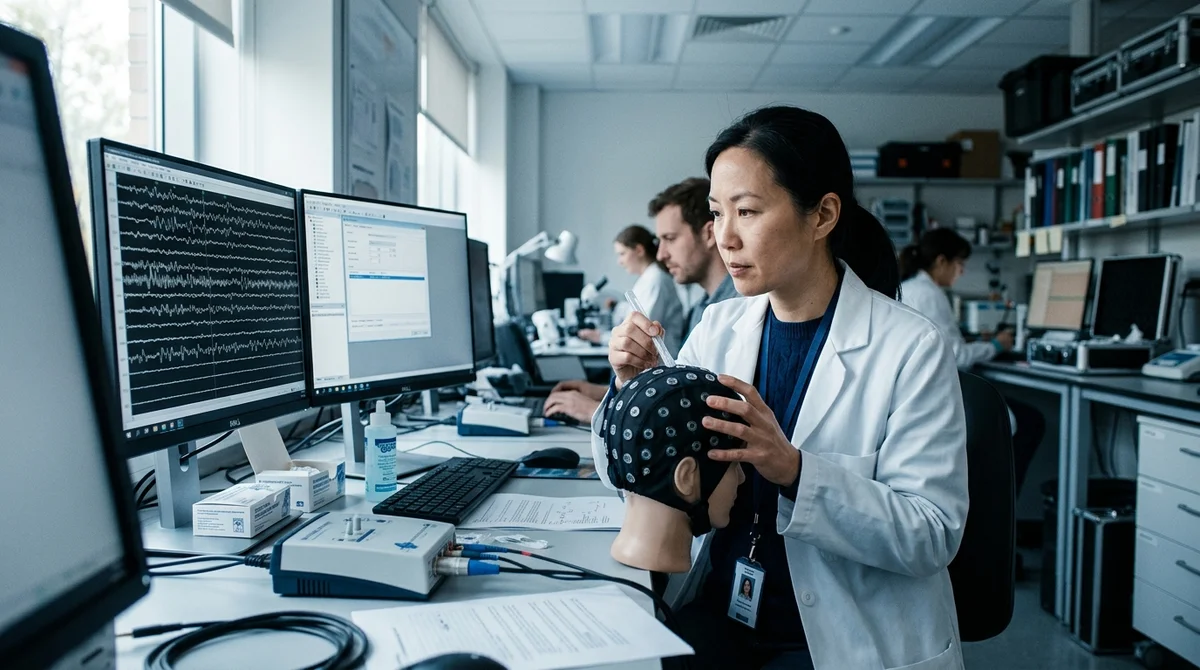
Meta AI has released NeuralBench, a unified framework for benchmarking models that analyze brain-activity recordings. Alongside it comes NeuralBench-EEG v1.0, the largest open electroencephalography dataset ever assembled. It covers 36 varied brain-signal processing tasks and 94 separate datasets, built from data on 9,478 subjects, with a total of 13,603 hours of high-quality EEG recordings.
What NeuralBench is
NeuralBench provides a single standardized interface for fairly testing 14 different deep-learning architectures on identical data. It addresses a fundamental problem that has plagued NeuroAI researchers for decades: each lab used its own datasets, applied its own methods for processing EEG signals and chose its own evaluation metrics. As a result, findings could not be compared objectively across groups.
The framework covers a range of EEG tasks, from signal classification and artifact detection to predicting cognitive states and emotions. Each of the 36 tasks has clearly defined evaluation metrics that remove subjectivity from the interpretation of results.
Why unification was needed
Before NeuralBench, NeuroAI remained deeply fragmented. Different research groups took different approaches, used different data-processing tools and evaluated models in different ways. This made it much harder to reproduce results, compare methods objectively and track the field's overall progress.
A unified approach makes it possible to:
- Quickly evaluate new architectures without a month of preliminary engineering work
- Fairly compare models from different labs under the same conditions
- See the field's overall progress on a single scale
- Develop NeuroAI as an engineering discipline with shared standards
- Transfer knowledge between applications, from diagnostics to brain-computer interfaces
Who this matters to
The framework matters to neuroscientists who want to apply AI to EEG data and to ML engineers interested in neuroscience. Companies building brain-computer interfaces, from thought-controlled prostheses to stroke rehabilitation systems, can now validate their models on a recognized benchmark. This should increase the confidence of investors and medical regulators in new technologies.
The dataset's openness matters a great deal. It is free for everyone, so any team can start work on NeuroAI applications without buying expensive EEG-collection equipment.
Historical precedent
NeuralBench is to NeuroAI what ImageNet was to computer vision. When a public benchmark with a large dataset appeared in 2010, it launched a golden age of computer vision. Architectures improved, objective standards emerged, and it became clear which approaches and methods actually work. The same will happen with brain analysis. A shared benchmark speeds up an industry: researchers get a clear target, companies invest with confidence, and quality rises for all participants.
What this means
NeuralBench may significantly speed up the move of neural interfaces from lab prototypes to clinical practice and commercial applications. Doctors will get objective performance metrics. Investors will see a market that is standardizing. Researchers will be able to focus on innovation rather than on compatibility of data and formats.
This is a rare moment: NeuroAI is mature enough for a useful benchmark, yet young enough that unification could speed up development substantially for years.
*Meta has been designated an extremist organization and is banned in Russia.
- Nov 1, 2026MoneyGate safety layer blocked all 42 fraudulent requests to local AI models
- Oct 31, 2026Open-source LLM gateway KTMS 1.0 plugs your own GPUs into the cloud and survives outages
- Oct 31, 202622B-Parameter LTX-2.5 Runs on a 10 GB RTX 3080, but Takes 5 Minutes per Shot
- Oct 29, 2026T-Tech Introduces LIMe, a Method That Trains Language Models With 15% Less Compute
Key Questions Answered
What NeuralBench is?
NeuralBench provides a single standardized interface for fairly testing 14 different deep-learning architectures on identical data. It addresses a fundamental problem that has plagued NeuroAI researchers for decades: each lab used its own datasets, applied its own methods for processing EEG signals and chose its own evaluation metrics. As a result, findings could not be compared objectively across groups. The framework covers a range of EEG tasks, from signal classification and artifact detection to predicting cognitive states and emotions. Each of the 36 tasks has clearly
Why unification was needed?
Before NeuralBench, NeuroAI remained deeply fragmented. Different research groups took different approaches, used different data-processing tools and evaluated models in different ways. This made it much harder to reproduce results, compare methods objectively and track the field's overall progress. A unified approach makes it possible to: Quickly evaluate new architectures without a month of preliminary engineering work Fairly compare models from different labs under the same conditions See the field's overall progress on a single scale Develop NeuroAI as an engineering di
Who this matters to?
The framework matters to neuroscientists who want to apply AI to EEG data and to ML engineers interested in neuroscience. Companies building brain-computer interfaces, from thought-controlled prostheses to stroke rehabilitation systems, can now validate their models on a recognized benchmark. This should increase the confidence of investors and medical regulators in new technologies. The dataset's openness matters a great deal. It is free for everyone, so any team can start work on NeuroAI applications without buying expensive EEG-collection equipment.
Test Frontier LLMs & Autonomous Agents in One Workspace
Run Claude Opus 5.5, GPT-6, Gemini 3.1, and DeepSeek side-by-side in Nomad AI (nomadnet.ai) — unified model routing, deep research, and multimodal workflows under one subscription.
The AI world, distilled — once a week
Seven stories that actually mattered, hand-picked. No noise, no reposts, no press releases.
Done! Check your inbox for a confirmation.