MedBro: a reference app that puts Russian and international clinical guidelines side by side
Russian doctors have long been unable to access up-to-date medical information. UpToDate is blocked, Notion is closed, and the standard national guidelines trail global standards by two years. MedBro grew out of this situation. The free reference service shows international recommendations next to the Russian approach. The platform currently hosts 80 guidelines. By the end of May, the team plans to cover the major specialties and add a personal account for doctors.
AI-processed from Habr AI; edited by Hamidun News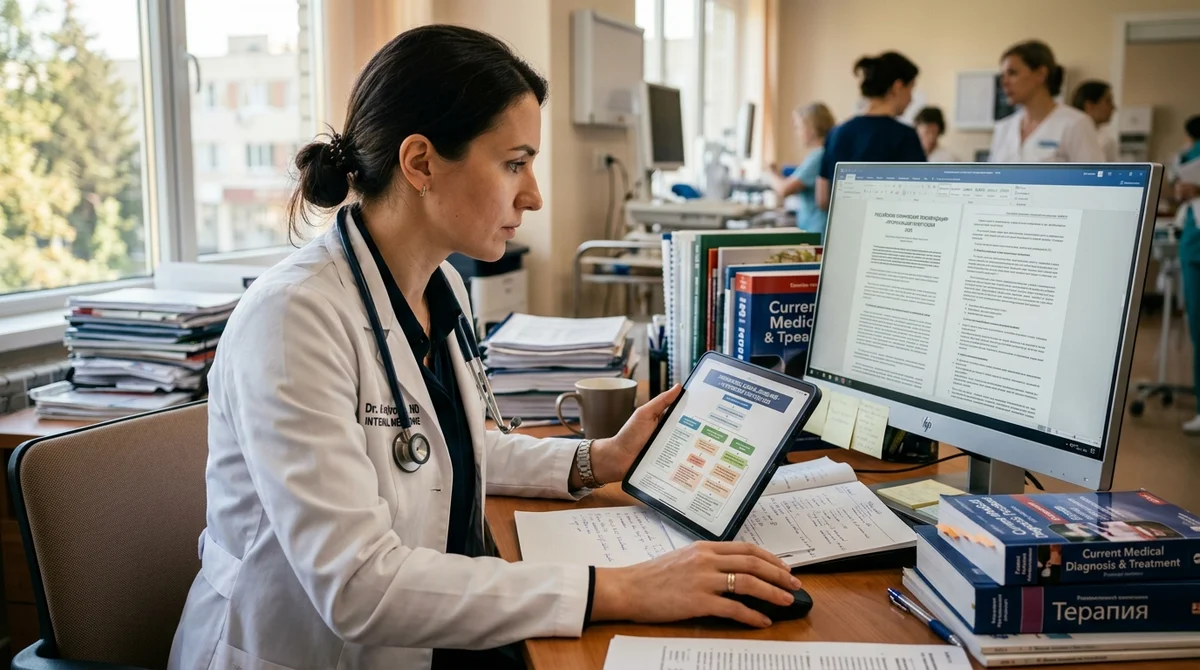
Russian clinical guidelines trail international ones by an average of two years. The cost goes beyond lost time: the gap shows up in methods, dosages, and the quality of diagnostics. A young startup, MedBro, wants to close it. The team built a free reference service that shows doctors international recommendations and the Russian position side by side.
Why doctors lost access
Russian doctors used to rely on foreign sources. UpToDate, the go-to database for clinicians worldwide, was available in Russia, and most private clinics used it. After it was blocked, some physicians tried to get around the restrictions with foreign SIM cards and VPNs, but those loopholes were gradually closed as well.
Notion disappeared at the same time. Doctors had spent years building treatment templates, diagnostic checklists, and working documents there. All of it scattered across Telegram chats and private notes, and the information lost its structure.
The standard Russian clinical guidelines are published on the Ministry of Health website, but they lag global practice by several years. Doctors follow instructions written for the situation three or four years ago, while medicine moves fast: new diagnostic markers emerge, dosage thresholds change, and previously unknown drug side effects come to light.
How MedBro works
The idea for the app came up at home over dinner, not in an office. The founder's wife is a doctor at the Fomin Clinic in Moscow, and she described how hard it is to get current information. The team followed startup methodology: they interviewed doctors, validated the hypothesis, and built an MVP.
MedBro presents each guideline in two columns:
- Left: the international recommendation (UpToDate, WHO, and other authoritative sources)
- Right: the corresponding position from the Russian clinical guidelines, with the year of publication
- Differences are clearly highlighted: diagnostic thresholds, dosages, alternative methods
The platform runs at medbro.pro and is optimized for mobile. An Android app is ready; the iOS version is in review.
Under the hood, the product uses a knowledge graph, a structured store that links concepts, drugs, and conditions. Doctors don't just read text; they navigate between related recommendations.
What's ready now
MedBro hosts about 80 clinical guidelines across various specialties. By the end of May, the team plans to cover the main fields: cardiology, neurology, gastroenterology, pulmonology, and others. They will also add a personal account for doctors with bookmarks, private notes, and a "workbook" of useful recommendations.
The service remains completely free. Its funding doesn't rely on payments; it rests on the goal of helping Russian doctors cope with information isolation.
What it means
The blocking of foreign medical sources has opened a real gap in the quality of Russian healthcare. MedBro is a local solution that works within current restrictions and gives doctors a tool to compare approaches and make informed choices.
The clinical knowledge graph the team has built is the start of infrastructure for developing medicine domestically, bringing global standards in locally, without intermediaries.
Key Questions Answered
Why doctors lost access?
Russian doctors used to rely on foreign sources. UpToDate, the go-to database for clinicians worldwide, was available in Russia, and most private clinics used it. After it was blocked, some physicians tried to get around the restrictions with foreign SIM cards and VPNs, but those loopholes were gradually closed as well. Notion disappeared at the same time. Doctors had spent years building treatment templates, diagnostic checklists, and working documents there. All of it scattered across Telegram chats and private notes, and the information lost its structure. The standard R
How MedBro works?
The idea for the app came up at home over dinner, not in an office. The founder's wife is a doctor at the Fomin Clinic in Moscow, and she described how hard it is to get current information. The team followed startup methodology: they interviewed doctors, validated the hypothesis, and built an MVP. MedBro presents each guideline in two columns: Left: the international recommendation (UpToDate, WHO, and other authoritative sources) Right: the corresponding position from the Russian clinical guidelines, with the year of publication Differences are clearly highlighted: diagnos
What's ready now?
MedBro hosts about 80 clinical guidelines across various specialties. By the end of May, the team plans to cover the main fields: cardiology, neurology, gastroenterology, pulmonology, and others. They will also add a personal account for doctors with bookmarks, private notes, and a "workbook" of useful recommendations. The service remains completely free. Its funding doesn't rely on payments; it rests on the goal of helping Russian doctors cope with information isolation.
Test Frontier LLMs & Autonomous Agents in One Workspace
Run Claude Opus 5.5, GPT-6, Gemini 3.1, and DeepSeek side-by-side in Nomad AI (nomadnet.ai) — unified model routing, deep research, and multimodal workflows under one subscription.
The AI world, distilled — once a week
Seven stories that actually mattered, hand-picked. No noise, no reposts, no press releases.
Done! Check your inbox for a confirmation.