Soderbergh defends use of Meta AI in his Lennon documentary
At the Cannes Film Festival, director Steven Soderbergh premiered a documentary about John Lennon's last interview, made with Meta's AI. Critics were outraged, but Soderbergh defends his choice: the AI is part of the film's meaning, not a hidden tool. *Meta is designated an extremist organization and banned in Russia.
AI-processed from TNW; edited by Hamidun News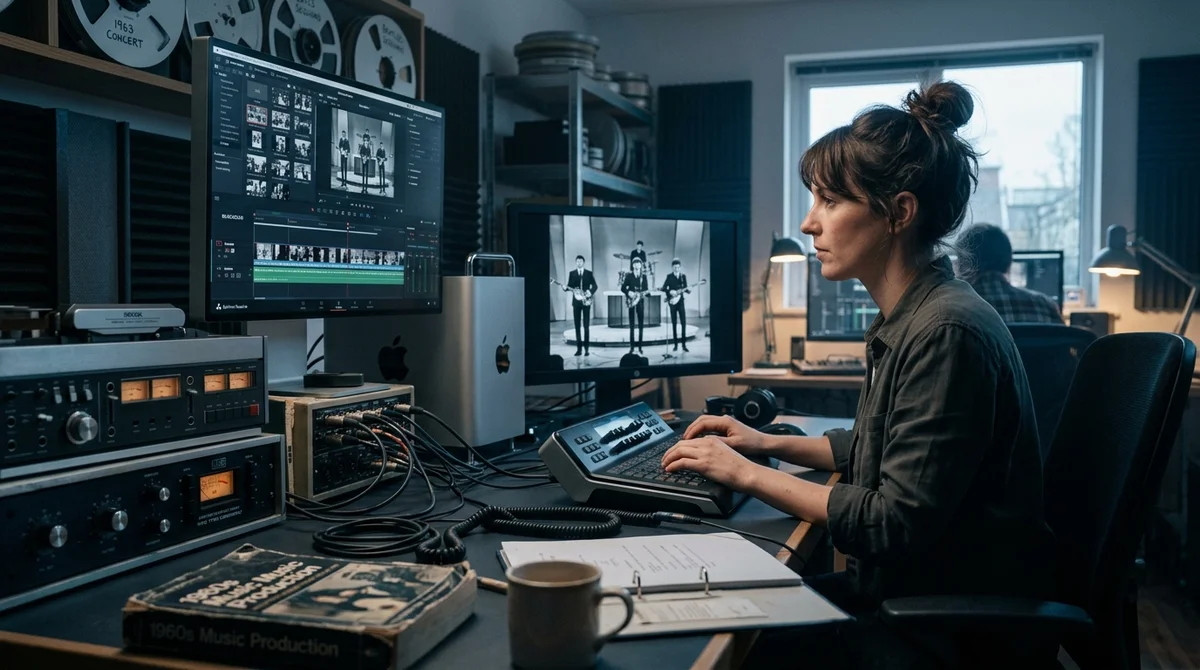
Steven Soderbergh made his documentary "John Lennon: The Last Interview", which premiered at the 79th Cannes Film Festival, with Meta's AI tools. The film is built around the historic two-hour interview that John Lennon and Yoko Ono gave to radio station KFRC on 8 December 1980, just hours before the musician's death. The interview had never been published in full before, and Soderbergh gained access to the rare archival material.
How Soderbergh worked with AI
The director used Meta's AI tools to process and restore the audio and video. The technology brought the archival recording up to a condition suitable for cinematic viewing while preserving the authenticity of the voices and images of Lennon and his wife. It was not a full synthesis of faces or voices, but rather a cleanup and restoration of the original content.
Soderbergh is known for experimenting with form. His films often explore technology as a theme, not just as a tool. This time, his choice to use AI drew a mixed reaction at Cannes. Some critics and viewers called the use of algorithms unethical and speculative, as if the director were replacing historical memory with digital processing. Others saw it as a technical necessity for restoring the material.
Soderbergh's position
The director does not hide his choice; he defends it openly. In his view, using AI was a deliberate part of the film's artistic vision. He argues that in 2026, when artificial intelligence is deeply integrated into our lives and culture, concealing its use would be dishonest and hypocritical.
"This is a film about Lennon's interview, but it is also a film about the process of creation in the age of AI.
The algorithm is not a mistake and not a 'dirty stain' — it is a subject for reflection. I'm simply more honest than other directors," Soderbergh says, explaining his choice.
Why AI worries the film world
The use of artificial intelligence in cinema runs up against a historically rooted distrust:
- AI is associated with fake content, deepfakes and the loss of an author's signature
- Tools from Meta, OpenAI and other corporations raise concerns among critics about control over art
- Working with historical material and the likenesses of real people requires particular delicacy
- The industry has no consensus on when and under what conditions AI can be ethical
- The public is used to seeing AI as a potential threat to creativity, not as a creative tool
What this means
The controversy around Soderbergh's film shows that AI in cinema is ceasing to be a purely technological question and becoming a question of honesty and the director's stance. If a filmmaker is ready to defend his choice openly and show that AI is part of the work's meaning, not just a technical convenience, audiences may accept it. The film becomes a test of whether viewers are ready to see technology not as an enemy of creativity but as the medium in which contemporary art is made. If criticism of Soderbergh grows, or conversely turns into support, it will be a sign that the cultural boundaries around AI are starting to shift.
*Meta is designated an extremist organization and banned in Russia.
- Nov 1, 2026MoneyGate safety layer blocked all 42 fraudulent requests to local AI models
- Oct 31, 2026Open-source LLM gateway KTMS 1.0 plugs your own GPUs into the cloud and survives outages
- Oct 31, 202622B-Parameter LTX-2.5 Runs on a 10 GB RTX 3080, but Takes 5 Minutes per Shot
- Oct 29, 2026T-Tech Introduces LIMe, a Method That Trains Language Models With 15% Less Compute
Key Questions Answered
How Soderbergh worked with AI?
The director used Meta's AI tools to process and restore the audio and video. The technology brought the archival recording up to a condition suitable for cinematic viewing while preserving the authenticity of the voices and images of Lennon and his wife. It was not a full synthesis of faces or voices, but rather a cleanup and restoration of the original content. Soderbergh is known for experimenting with form. His films often explore technology as a theme, not just as a tool. This time, his choice to use AI drew a mixed reaction at Cannes. Some critics and viewers called t
What are the key details on Soderbergh's position?
The director does not hide his choice; he defends it openly. In his view, using AI was a deliberate part of the film's artistic vision. He argues that in 2026, when artificial intelligence is deeply integrated into our lives and culture, concealing its use would be dishonest and hypocritical. "This is a film about Lennon's interview, but it is also a film about the process of creation in the age of AI. The algorithm is not a mistake and not a 'dirty stain' — it is a subject for reflection. I'm simply more honest than other directors," Soderbergh says, explaining his choice.
Why AI worries the film world?
The use of artificial intelligence in cinema runs up against a historically rooted distrust: AI is associated with fake content, deepfakes and the loss of an author's signature Tools from Meta, OpenAI and other corporations raise concerns among critics about control over art Working with historical material and the likenesses of real people requires particular delicacy The industry has no consensus on when and under what conditions AI can be ethical The public is used to seeing AI as a potential threat to creativity, not as a creative tool
Ship AI Faster with Founders, Engineers & Weekly Architecture Reviews
Inside Vibe Club (hamidun.com/club) — weekly live masterminds with Zhemal Khamidun, Tech Radar, full LMS access, and 370+ production Claude Code skills.
The AI world, distilled — once a week
Seven stories that actually mattered, hand-picked. No noise, no reposts, no press releases.
Done! Check your inbox for a confirmation.