Russia's Customs Service to Get AI for Flagging Suspicious Transactions
Russia's customs service is set to receive a complete overhaul of its IT systems. The contractor is a Rosatom subsidiary. The project calls for a switch to domestic technology and the simultaneous rollout of AI functions. The systems will flag suspicious transactions, analyze customs declarations and forecast financial risks.
AI-processed from CNews AI; edited by Hamidun News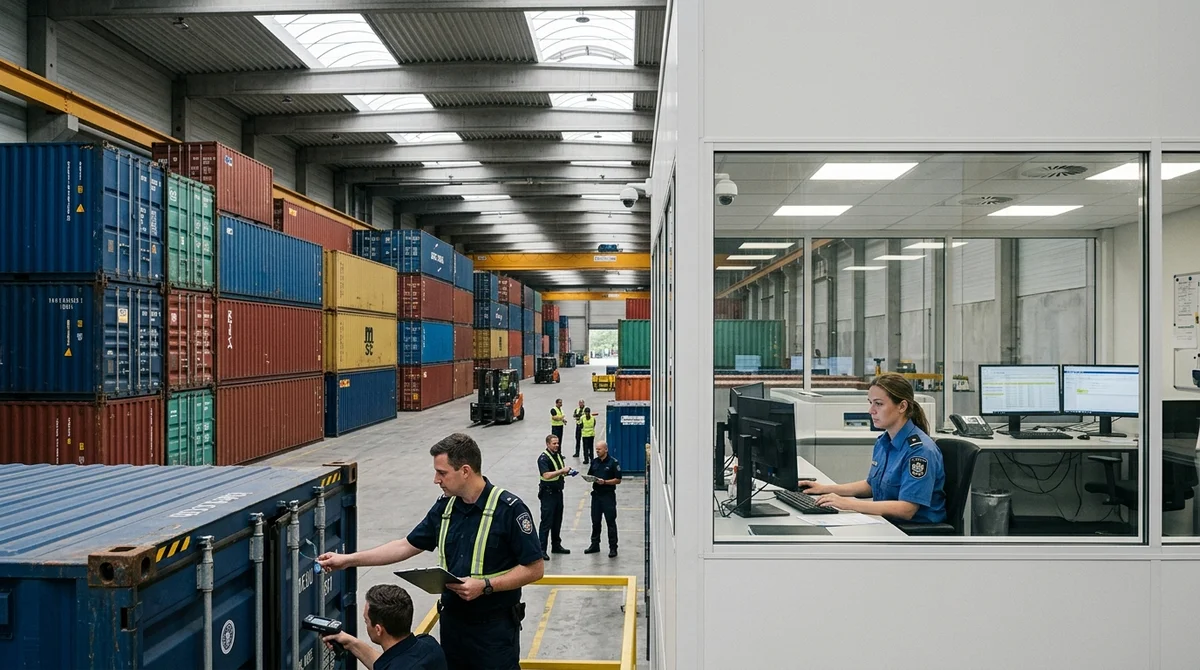
A Rosatom subsidiary has won a contract for a large-scale modernization of the information systems of Russia's customs service. As the agency moves to domestic technology, it plans to introduce a range of artificial intelligence functions.
Import substitution at customs
The customs service is one of Russia's key agencies, and it still relies heavily on foreign software and equipment. Its current information systems are built on solutions that fell under sanctions and supply restrictions. This creates a critical vulnerability: if Western companies cut off access or end support, the entire customs control system could stop in a single day. In addition, the outdated architecture of the existing systems slows declaration processing amid growing trade volumes, more complex logistics and the need to analyze goods under sanctions.
Rosatom's project aims to replace this technology stack entirely. Customs will receive domestic equivalents, from operating systems to specialized software for processing cargo, declarations and statistics.
AI for detecting violations
Beyond import substitution, the new system will include built-in artificial intelligence functions that are meant to make customs a smarter player in the fight against economic crime. The key function is automatic detection of suspicious financial transactions.
The system will analyze declarations, accompanying documents, the trader's history, goods prices and delivery routes in real time. The algorithms will identify hidden smuggling, underpayment of duties, and attempts to evade sanctions through shell companies and intermediary countries. They will account for complex factors: world market prices, demand seasonality, competitors' supply routes, and the financial condition of the importer and its partners.
This will let customs officers focus on the highest-risk shipments instead of mechanically inspecting every container.
What tools customs will get
According to the plan, the AI system will offer the following capabilities:
- Real-time detection of suspicious financial schemes and transactions
- Smuggling risk analysis by type of goods, country of origin and delivery method
- Forecasting the likelihood of violations based on the trader's history and its counterparties
- Automated processing of standard declarations without human involvement
- Integration with accounting and statistics systems and with other agencies
The developers promise that this set of tools will speed up customs work by 30–40% while reducing the number of violations.
What this means
Import substitution at customs is not just a matter of replacing outdated code; it is also about strengthening Russia's economic security. Domestic technology and AI solutions will make the agency less dependent on Western software suppliers. At the same time, the systems will run faster, and the service will gain tools to fight economic crime under the new trade reality.
The project shows that Russia is developing its own software not only for theoretical research but also for critical infrastructure. If the customs modernization succeeds, similar AI solutions could be adopted by the tax service, the customs services of neighboring countries and other government agencies.
Key Questions Answered
What are the key details on Import substitution at customs?
The customs service is one of Russia's key agencies, and it still relies heavily on foreign software and equipment. Its current information systems are built on solutions that fell under sanctions and supply restrictions. This creates a critical vulnerability: if Western companies cut off access or end support, the entire customs control system could stop in a single day. In addition, the outdated architecture of the existing systems slows declaration processing amid growing trade volumes, more complex logistics and the need to analyze goods under sanctions. Rosatom's proje
What are the key details on AI for detecting violations?
Beyond import substitution, the new system will include built-in artificial intelligence functions that are meant to make customs a smarter player in the fight against economic crime. The key function is automatic detection of suspicious financial transactions. The system will analyze declarations, accompanying documents, the trader's history, goods prices and delivery routes in real time. The algorithms will identify hidden smuggling, underpayment of duties, and attempts to evade sanctions through shell companies and intermediary countries. They will account for complex fa
What tools customs will get?
According to the plan, the AI system will offer the following capabilities: Real-time detection of suspicious financial schemes and transactions Smuggling risk analysis by type of goods, country of origin and delivery method Forecasting the likelihood of violations based on the trader's history and its counterparties Automated processing of standard declarations without human involvement Integration with accounting and statistics systems and with other agencies The developers promise that this set of tools will speed up customs work by 30–40% while reducing the number of vi
Ship AI Faster with Founders, Engineers & Weekly Architecture Reviews
Inside Vibe Club (hamidun.com/club) — weekly live masterminds with Zhemal Khamidun, Tech Radar, full LMS access, and 370+ production Claude Code skills.
The AI world, distilled — once a week
Seven stories that actually mattered, hand-picked. No noise, no reposts, no press releases.
Done! Check your inbox for a confirmation.