Retailers turn to facial recognition to fight shoplifting
Stores ranging from supermarkets to small corner shops are starting to use facial recognition systems to combat shoplifting. Police and private companies see the technology as a powerful crime-fighting tool. But experts point out that the technology pushes surveillance further into public spaces and does not always produce accurate results, which raises new privacy questions.
AI-processed from Guardian; edited by Hamidun News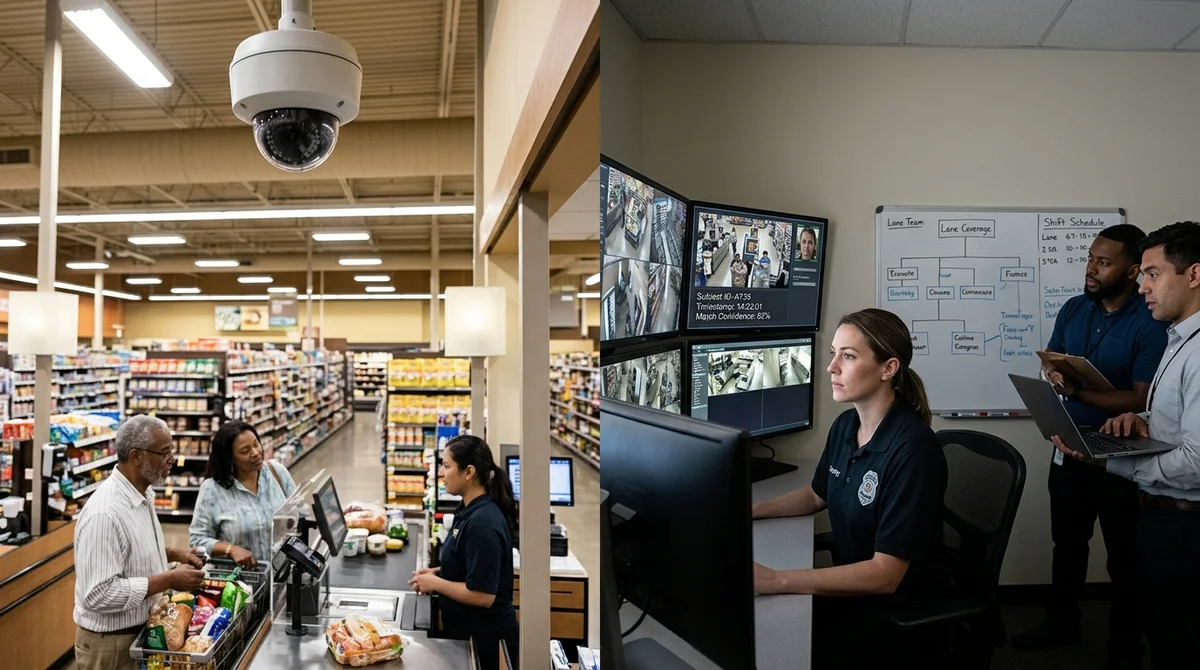
Live facial recognition is coming to retail. Facial recognition systems, already widely used by law enforcement to solve crimes, are now being rolled out by supermarkets and small neighborhood shops. The goal is simple: stop a wave of shoplifting that costs the retail sector billions.
What stores are promising
Retailers see facial recognition as a powerful tool for preventing theft. The systems work in real time: cameras scan the face of every customer and compare it against a database of known thieves, people involved in past thefts, or people flagged for suspicious activity. When the system finds a match, store staff get an alert on a tablet or smartphone and can discreetly follow the person or call security.
Vendors claim their systems have helped cut theft losses by 30–50%. Police are also actively adopting the technology to investigate crimes, track suspects, and search for missing people.
How the technology works
Modern facial recognition systems analyze geometric features: the distance between the eyes, the shape of the nose, the position of the cheekbones, the width of the mouth. These unique characteristics are converted into a digital code, which is then compared against thousands or millions of records in databases.
It sounds simple, but real life is messier. The technology needs good video quality, optimal lighting, and a straight-on angle to the camera. Meanwhile, people wear masks, hats, and sunglasses, store lighting changes, and viewing angles are never ideal. As a result, accuracy often drops, especially for people with different skin tones.
Why it's dangerous
Despite the appealing promises, deploying facial recognition in stores raises serious concerns:
- Misidentification — the systems regularly make mistakes, leading to false accusations against innocent people
- Expanded surveillance — monitoring now covers not just the merchandise but every shopper
- Lack of transparency — most shoppers don't know their faces are being scanned and analyzed
- Data leaks — the collected data may be sold to third parties or misused
- Discrimination — algorithms may disproportionately target people from certain demographic groups
The Guardian correspondent Jessica Murray notes that expanding surveillance in private spaces requires strict regulation and oversight. People should know when and how their faces are being analyzed, and should be able to opt out of such systems.
"When the technology isn't always accurate and oversight is absent,
privacy wins," civil liberties experts note.
What it means
Facial recognition is becoming part of everyday life — not only on the streets and in airports, but also in the stores where we simply buy bread and milk. This raises new questions about the balance between security and privacy in the digital age. For Russia, where video surveillance systems are expanding rapidly, this debate is especially relevant.
- Nov 1, 2026Pika Labs releases open video model H3 Flex: 6 steps instead of 50
- Nov 1, 2026Google's StreamVibe video agent beats other models by 10.7% on response timing and quality
- Oct 31, 2026AI cartoon series: a 24-second episode built ten ways, the best cost 162 credits
- Oct 31, 2026Anthropic: Fold Subagents Back Into a Single Loop — One Customer's Tasks Ran Twice as Fast
Key Questions Answered
What stores are promising?
Retailers see facial recognition as a powerful tool for preventing theft. The systems work in real time: cameras scan the face of every customer and compare it against a database of known thieves, people involved in past thefts, or people flagged for suspicious activity. When the system finds a match, store staff get an alert on a tablet or smartphone and can discreetly follow the person or call security. Vendors claim their systems have helped cut theft losses by 30–50%. Police are also actively adopting the technology to investigate crimes, track suspects, and search for
How the technology works?
Modern facial recognition systems analyze geometric features: the distance between the eyes, the shape of the nose, the position of the cheekbones, the width of the mouth. These unique characteristics are converted into a digital code, which is then compared against thousands or millions of records in databases. It sounds simple, but real life is messier. The technology needs good video quality, optimal lighting, and a straight-on angle to the camera. Meanwhile, people wear masks, hats, and sunglasses, store lighting changes, and viewing angles are never ideal. As a result,
Why it's dangerous?
Despite the appealing promises, deploying facial recognition in stores raises serious concerns: Misidentification — the systems regularly make mistakes, leading to false accusations against innocent people Expanded surveillance — monitoring now covers not just the merchandise but every shopper Lack of transparency — most shoppers don't know their faces are being scanned and analyzed Data leaks — the collected data may be sold to third parties or misused Discrimination — algorithms may disproportionately target people from certain demographic groups The Guardian corresponden
Ship AI Faster with Founders, Engineers & Weekly Architecture Reviews
Inside Vibe Club (hamidun.com/club) — weekly live masterminds with Zhemal Khamidun, Tech Radar, full LMS access, and 370+ production Claude Code skills.
The AI world, distilled — once a week
Seven stories that actually mattered, hand-picked. No noise, no reposts, no press releases.
Done! Check your inbox for a confirmation.