Europe's Dependence on US Cloud Providers Has Become a Political Risk
Europe runs almost entirely on American cloud services and on GPUs from Nvidia and AMD. That threatens more than data sovereignty; it has also become a political risk. If a conflict with the US breaks out, Europe could lose access to critical infrastructure.
AI-processed from TNW; edited by Hamidun News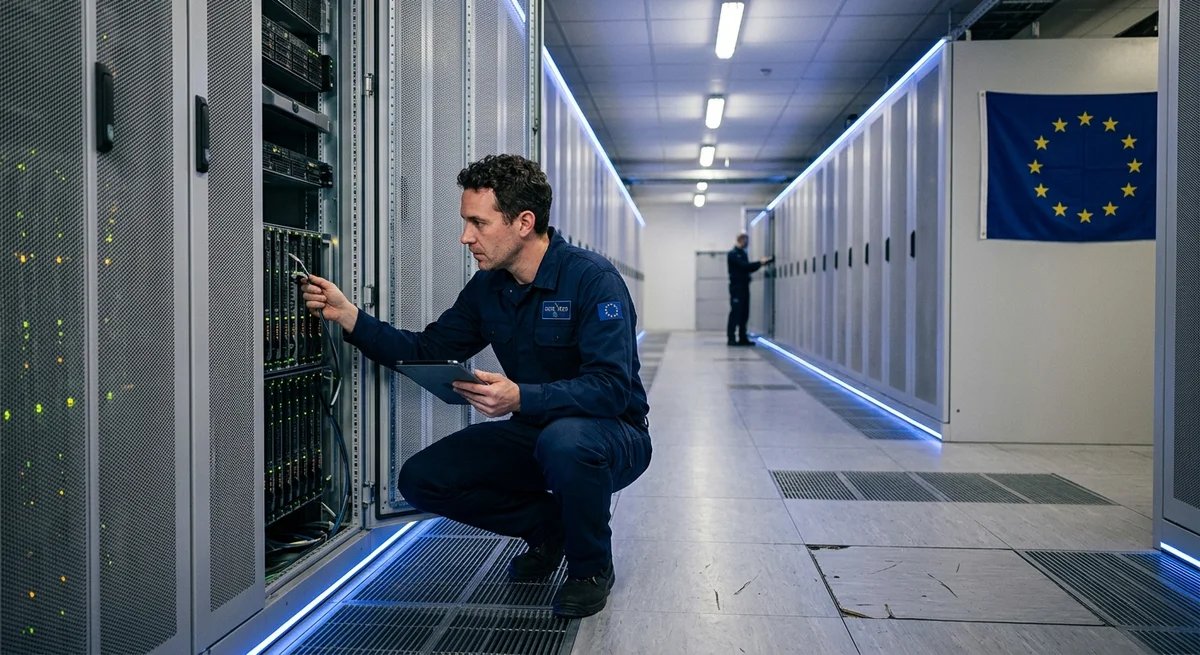
Europe is dangerously dependent on American cloud services. The dependence threatens its technological sovereignty and has also become a serious political risk in its relationship with Washington.
Who owns Europe's cloud infrastructure
Europe's AI and cloud computing industry runs almost entirely on American companies. Nvidia and AMD supply the GPUs that provide the compute for training large language models. AWS, Microsoft Azure, and Google Cloud dominate the region's cloud market. European companies and governments have no alternatives of comparable scale, so they remain consumers of American technology.
The political and strategic risk
This dependence creates a vulnerability that goes far beyond technical issues. In a trade dispute, a sanctions regime, or a political standoff, the US could restrict access to critical technologies. Europe would lose control over its own data and compute. Even without direct sanctions, American companies are bound by US law and could be forced to cut off European customers.
- No European alternatives to the latest-generation GPUs
- Cloud infrastructure entirely dependent on three American giants
- Risk of access being blocked during political conflicts
- Leaks of critical corporate and government data
How to escape the trap
The European Commission already recognizes the problem. Initiatives such as the European High Performance Computing Joint Undertaking (EuroHPC) are trying to build up Europe's own computing capacity. But progress is slow, and demand keeps growing. Europe needs large-scale investment in its semiconductor industry, its own cloud platforms, and AI infrastructure. Only then can it reduce its dependence and gain real control over its digital ecosystem.
What this means
Cloud dependence is not just a technical issue. It is a matter of national security and political leverage. Europe has to choose: remain a consumer of American technology or invest in an ecosystem of its own. Every year of delay makes that task harder.
- Nov 1, 202616 models tested on 7 search tools: Exa averaged 10.5 out of 14, SearXNG about 3
- Nov 1, 2026Google's StreamVibe video agent beats other models by 10.7% on response timing and quality
- Nov 1, 2026OpenAI Rewrites GPT Behavior Rules: Five Values and a Chain of Command
- Nov 1, 2026Voice bots built on LLMs turn to Jev, a fast classifier, for decisions in 200–500 ms
Key Questions Answered
Who owns Europe's cloud infrastructure?
Europe's AI and cloud computing industry runs almost entirely on American companies. Nvidia and AMD supply the GPUs that provide the compute for training large language models. AWS, Microsoft Azure, and Google Cloud dominate the region's cloud market. European companies and governments have no alternatives of comparable scale, so they remain consumers of American technology.
What are the key details on The political and strategic risk?
This dependence creates a vulnerability that goes far beyond technical issues. In a trade dispute, a sanctions regime, or a political standoff, the US could restrict access to critical technologies. Europe would lose control over its own data and compute. Even without direct sanctions, American companies are bound by US law and could be forced to cut off European customers. No European alternatives to the latest-generation GPUs Cloud infrastructure entirely dependent on three American giants Risk of access being blocked during political conflicts Leaks of critical corporate
How to escape the trap?
The European Commission already recognizes the problem. Initiatives such as the European High Performance Computing Joint Undertaking (EuroHPC) are trying to build up Europe's own computing capacity. But progress is slow, and demand keeps growing. Europe needs large-scale investment in its semiconductor industry, its own cloud platforms, and AI infrastructure. Only then can it reduce its dependence and gain real control over its digital ecosystem.
Test Frontier LLMs & Autonomous Agents in One Workspace
Run Claude Opus 5.5, GPT-6, Gemini 3.1, and DeepSeek side-by-side in Nomad AI (nomadnet.ai) — unified model routing, deep research, and multimodal workflows under one subscription.
The AI world, distilled — once a week
Seven stories that actually mattered, hand-picked. No noise, no reposts, no press releases.
Done! Check your inbox for a confirmation.