Marketers Love AI, Consumers Don't: Canva Report Reveals a Trust Gap
Canva has released a report on the contradiction shaping marketing in 2026. 97% of marketers use AI every day, but 78% of consumers want content to be made by people. The gap between industry enthusiasm and audience skepticism is widening.
AI-processed from TNW; edited by Hamidun News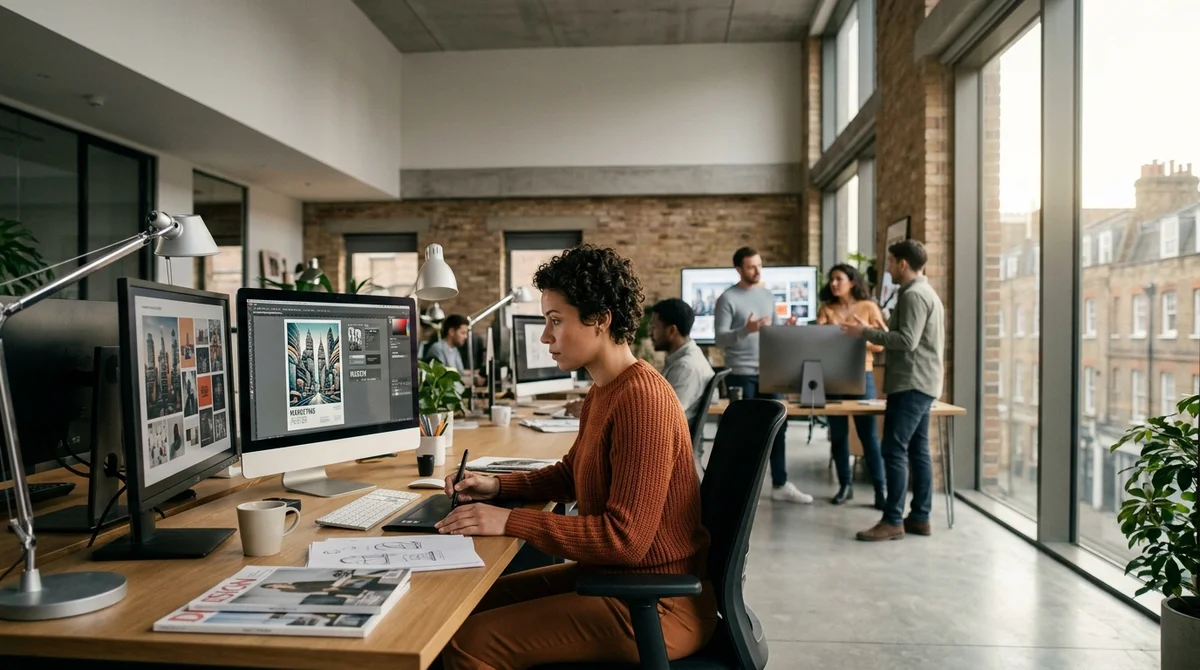
Canva has released a new report on marketing and artificial intelligence that exposes a deep and growing contradiction between what marketers do and what consumers want. Marketing in 2026 has split in two. One side has fallen hard for AI and sees it as the industry's future. The other side, the consumer audience, doesn't trust it and would rather deal with people.
What the report found
The State of Marketing and AI 2026 study is one of the largest projects in Canva's history. Analysts surveyed marketers and consumers across countries and time zones, gathering data from five continents. The results were sharper and more polarized than the company itself expected.
On one side, marketers have fully moved to AI tools to speed up and scale their work. They use neural networks for everything from brainstorming ideas to final polishing of visuals. On the other, consumers are pushing back against the trend quite actively. The paradox: the more marketers automate their workflows, the less consumers trust them.
- 97% of marketers use AI daily to create a range of content (images, copy, video, design, mockups, layouts)
- 78% of consumers said outright that they want marketing content to be made by people, not robots and algorithms
- A 19-percentage-point gap is the largest in the history of Canva's marketing research
Why are consumers skeptical of AI content?
Consumer distrust isn't driven by the technology itself, but by a sense that the content is "fake" and that nobody is paying personal attention to them. People intuitively sense the difference between content that a real designer or copywriter worked on and text or images automatically generated by a neural network. This isn't a sci-fi fear of robots taking over. It's a practical, well-founded disappointment at losing the human touch in their interactions with brands.
There's a technical layer to the problem, too. AI content often contains subtle flaws: clumsy metaphors, odd turns of phrase, logical gaps, and semantic quirks that the machine misses but the human brain catches instantly. Once consumers spot such a flaw, they lose trust in the brand as a whole. A single mistake in AI-generated copy or design reads as carelessness and a lack of attention to the audience.
"Marketers see AI as a tool for speed and scale.
Consumers see it as a refusal to pay attention to their experience and needs."
The trap for marketers in 2026
Marketers are in a tough spot with no easy way out. If they drop AI, they fall behind competitors on speed, lose productivity and resources, and spend more time on routine work. If they go all in on AI without a critical eye, they risk alienating their audience and losing its trust.
Canva's research shows that many major brands have already run into this dilemma in practice and are looking for a way out. The answer appears to be a hybrid approach: use AI for drafts, rapid ideation, and prototyping, but leave final refinement, editing, and quality control to a human. Consumers respond best to exactly this kind of content, started by a machine and finished by an experienced professional, and consider it more honest and higher in quality.
What this means for marketing
The 2026 trend isn't full marketing automation. It's finding the right balance between speed and quality. Brands that use AI openly and honestly lose trust if the resulting content looks awkward or contains errors. Brands that hide their AI use and are later given away by its mistakes lose even more.
The only honest way forward is to be more transparent and bolder in their choices: show where automation is doing the work, and where human expertise and handcraft come in.
- Nov 1, 2026Google taught its StreamVibe video agent to decide when to step in on its own: +10.7%
- Oct 31, 2026AI Cartoon: A 24-Second Episode Built Ten Ways, and the Best Cost 162 Credits
- Oct 31, 2026Anthropic: Fold Subagents Back Into a Single Loop — One Customer's Tasks Ran Twice as Fast
- Oct 31, 2026Freefield: an open-source ComfyUI studio with 120 apps for images, video and audio
Key Questions Answered
Why are consumers skeptical of AI content?
Consumer distrust isn't driven by the technology itself, but by a sense that the content is "fake" and that nobody is paying personal attention to them. People intuitively sense the difference between content that a real designer or copywriter worked on and text or images automatically generated by a neural network. This isn't a sci-fi fear of robots taking over. It's a practical, well-founded disappointment at losing the human touch in their interactions with brands. There's a technical layer to the problem, too. AI content often contains subtle flaws: clumsy metaphors, od
What the report found?
The State of Marketing and AI 2026 study is one of the largest projects in Canva's history. Analysts surveyed marketers and consumers across countries and time zones, gathering data from five continents. The results were sharper and more polarized than the company itself expected. On one side, marketers have fully moved to AI tools to speed up and scale their work. They use neural networks for everything from brainstorming ideas to final polishing of visuals. On the other, consumers are pushing back against the trend quite actively. The paradox: the more marketers automate
What are the key details on The trap for marketers in 2026?
Marketers are in a tough spot with no easy way out. If they drop AI, they fall behind competitors on speed, lose productivity and resources, and spend more time on routine work. If they go all in on AI without a critical eye, they risk alienating their audience and losing its trust. Canva's research shows that many major brands have already run into this dilemma in practice and are looking for a way out. The answer appears to be a hybrid approach: use AI for drafts, rapid ideation, and prototyping, but leave final refinement, editing, and quality control to a human. Consume
Ship AI Faster with Founders, Engineers & Weekly Architecture Reviews
Inside Vibe Club (hamidun.com/club) — weekly live masterminds with Zhemal Khamidun, Tech Radar, full LMS access, and 370+ production Claude Code skills.
The AI world, distilled — once a week
Seven stories that actually mattered, hand-picked. No noise, no reposts, no press releases.
Done! Check your inbox for a confirmation.