AI video takes more manual work than the tools promise
AI video tools promise automation, but in practice they demand a lot of manual work. A Habr author shared his experience: instead of a couple of clicks, he got long, nerve-wracking work on every frame and effect. The tools pitch a simple deal: a subscription plus a few commands, and the content is done. The reality is closer to an assistant that needs constant supervision.
AI-processed from Habr AI; edited by Hamidun News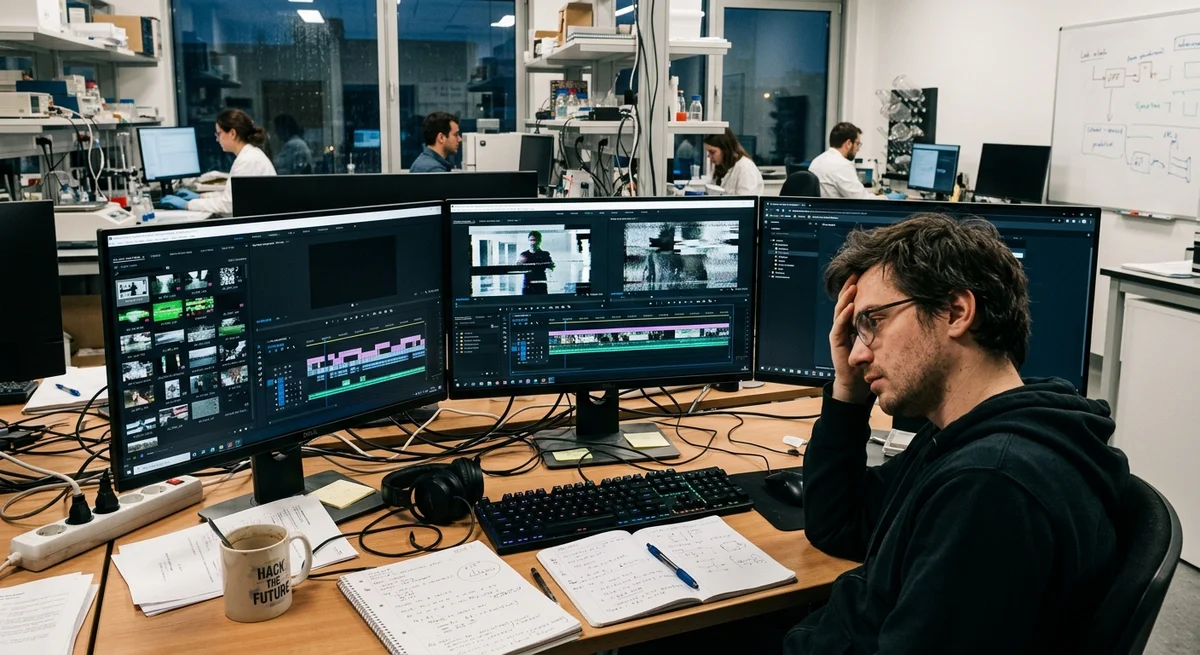
Popular AI-based video tools paint an appealing picture: forget expensive video designers and months-long projects, just get a subscription, type a few commands, and your content is ready. But an experienced developer, returning to Habr after 10 years of silence, shared a harsher truth.
What AI video tools promise
A host of services now take on complex work: they generate scenes from prompts, add effects, sync them with audio, and even pick music. The cost is low, usually a subscription of 10-30 dollars a month. The idea is attractive: instead of hiring a specialist and working in complex editors like DaVinci Resolve, you focus on the idea and the technology does the rest.
Reality turned out differently
Step by step, it became clear that AI tools are not a magic wand but rather an assistant that needs constant oversight. Every frame has to be checked, many frames redone, effects tweaked. The author ran into these problems:
- Generated scenes need several passes to reach the desired result
- Audio sync often drifts
- Transitions between frames look unnatural
- Color correction and processing are still manual work
- The final result still has to be watched in full, and problem spots fixed
Why this happens
The intelligence in AI is still nominal. Models generate well in a vacuum, but a project is a living organism: its parts must work together, share a single style and match the script. What the AI produces piece by piece doesn't come together into one stream without rework. On top of that, each tool has its own limits: one generates people well but struggles with hands; another excels at landscapes but gets lost in architecture.
What this means
AI video tools are useful, but not as a replacement for creativity and technical craft; they work as an accelerator for routine tasks. If you can afford a video designer, that is still faster than fiddling with AI and corrections yourself. If you are a developer with an eye for framing a shot, AI can help, but most of the work remains on you.
- Nov 2, 2026The Verge reviewer builds a $50 Meta Muse Charm alternative with Claude Code
- Nov 2, 20268 Skills for video in Claude Code: from 244 pixel effects to rough-cut editing
- Nov 1, 2026Pika Labs releases open video model H3 Flex: 6 steps instead of 50
- Nov 1, 2026Google's StreamVibe video agent beats other models by 10.7% on response timing and quality
Key Questions Answered
What AI video tools promise?
A host of services now take on complex work: they generate scenes from prompts, add effects, sync them with audio, and even pick music. The cost is low, usually a subscription of 10-30 dollars a month. The idea is attractive: instead of hiring a specialist and working in complex editors like DaVinci Resolve, you focus on the idea and the technology does the rest.
What are the key details on Reality turned out differently?
Step by step, it became clear that AI tools are not a magic wand but rather an assistant that needs constant oversight. Every frame has to be checked, many frames redone, effects tweaked. The author ran into these problems: Generated scenes need several passes to reach the desired result Audio sync often drifts Transitions between frames look unnatural Color correction and processing are still manual work The final result still has to be watched in full, and problem spots fixed
Why this happens?
The intelligence in AI is still nominal. Models generate well in a vacuum, but a project is a living organism: its parts must work together, share a single style and match the script. What the AI produces piece by piece doesn't come together into one stream without rework. On top of that, each tool has its own limits: one generates people well but struggles with hands; another excels at landscapes but gets lost in architecture.
Test Frontier LLMs & Autonomous Agents in One Workspace
Run Claude Opus 5.5, GPT-6, Gemini 3.1, and DeepSeek side-by-side in Nomad AI (nomadnet.ai) — unified model routing, deep research, and multimodal workflows under one subscription.
The AI world, distilled — once a week
Seven stories that actually mattered, hand-picked. No noise, no reposts, no press releases.
Done! Check your inbox for a confirmation.