Applied Materials expects sales to climb on AI chip demand
Applied Materials issued a record sales and profit forecast that topped market expectations. The main driver is demand for artificial intelligence chips. The forecast signals that the AI industry is moving from startups into mass production.
AI-processed from Bloomberg Tech; edited by Hamidun News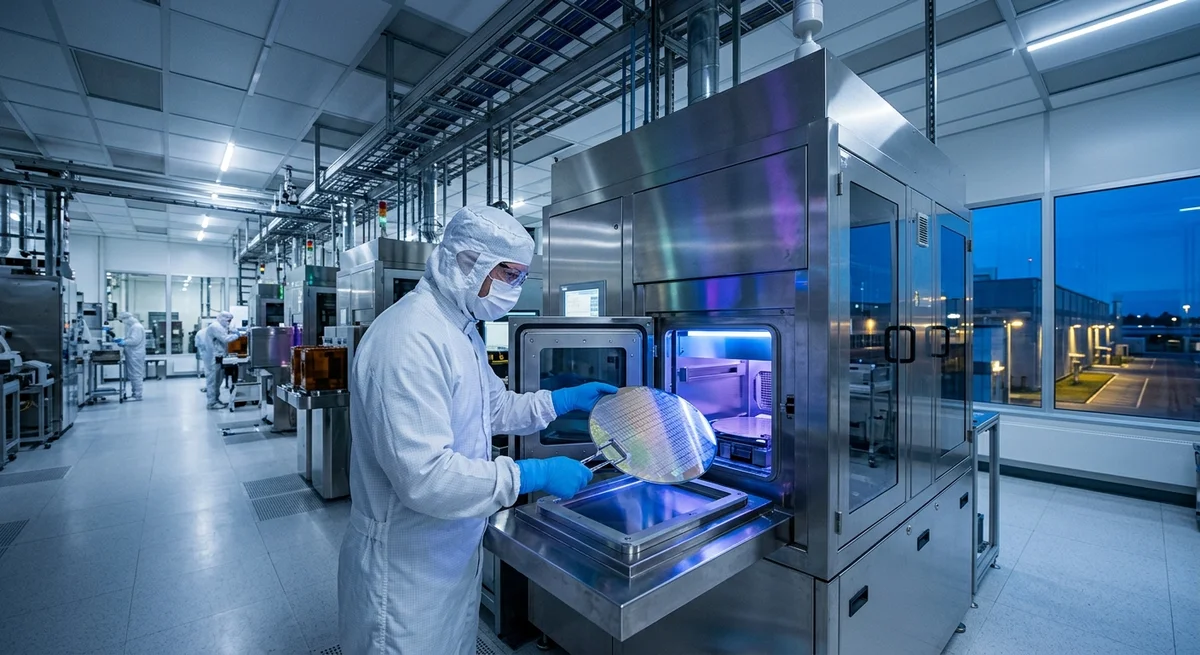
Applied Materials, the largest American supplier of semiconductor equipment, has published a sales and profit forecast that significantly exceeds market expectations. The reason is very specific: surging demand for chips used to train AI models and for high-speed memory for computing infrastructure.
A wave of demand for AI equipment
Applied Materials does not make the chips themselves. It supplies the tools and equipment used to manufacture them. That distinction matters: when an equipment maker sharply raises its forecasts, it means real retooling of fabs is under way upstream.
Demand has now split into several segments. Some chips are needed to train large language models, which takes extreme computing power, costs a lot and runs for months. Others are memory chips that run already-trained systems in production and store model weights. Still others are specialized equipment for expanding fab capacity.
- Equipment for making high-performance training chips
- Tools for manufacturing GDDR and HBM memory
- Systems for expanding output at existing fabs
- Tooling for new process technologies
The growth is neither accidental nor temporary. Applied Materials sees a steady pipeline of orders from all the major chipmakers. This is a fundamental shift in how the industry invests in computing.
What the forecast says about the market
For Applied Materials itself, this is a large expansion of its business. But the signal is more serious. When an equipment maker sharply changes its long-term forecasts, it means the AI industry is moving from startups and labs into real industrial retooling.
This is not talk and slide decks. It is hard money going into steel machines capable of producing billions of chips. Those machines will run for years. NVIDIA, Intel, TSMC, Samsung and other manufacturers are clearly preparing capacity for the surge in demand they expect from cloud providers and enterprise companies.
Applied Materials' visibility spans the whole chain: from microelectronics to equipment for data centers worldwide.
If they see this level of demand, the rest of the market is genuinely preparing for a large-scale expansion.
Why it matters
Applied Materials belongs to a small club of companies that see the industry in full. Its customers are the ones who make chips for everyone. When the forecast changes here, it reflects real orders and trends that are not yet obvious to the rest of the market.
For investors, this means AI demand is not a marketing invention. It is a real reindustrialization with billions being invested. For IT companies, the window of opportunity is closing fast. The giants are buying up production capacity in bulk, and competing for resources is getting harder.
What this means
For the industry, this is a point of no return. AI is no longer a startup project. It is now an infrastructure class that demands enormous capital investment, like building car plants or power stations once did.
Key Questions Answered
What are the key details on A wave of demand for AI equipment?
Applied Materials does not make the chips themselves. It supplies the tools and equipment used to manufacture them. That distinction matters: when an equipment maker sharply raises its forecasts, it means real retooling of fabs is under way upstream. Demand has now split into several segments. Some chips are needed to train large language models, which takes extreme computing power, costs a lot and runs for months. Others are memory chips that run already-trained systems in production and store model weights. Still others are specialized equipment for expanding fab capacity
What the forecast says about the market?
For Applied Materials itself, this is a large expansion of its business. But the signal is more serious. When an equipment maker sharply changes its long-term forecasts, it means the AI industry is moving from startups and labs into real industrial retooling. This is not talk and slide decks. It is hard money going into steel machines capable of producing billions of chips. Those machines will run for years. NVIDIA, Intel, TSMC, Samsung and other manufacturers are clearly preparing capacity for the surge in demand they expect from cloud providers and enterprise companies. A
Why it matters?
Applied Materials belongs to a small club of companies that see the industry in full. Its customers are the ones who make chips for everyone. When the forecast changes here, it reflects real orders and trends that are not yet obvious to the rest of the market. For investors, this means AI demand is not a marketing invention. It is a real reindustrialization with billions being invested. For IT companies, the window of opportunity is closing fast. The giants are buying up production capacity in bulk, and competing for resources is getting harder.
Test Frontier LLMs & Autonomous Agents in One Workspace
Run Claude Opus 5.5, GPT-6, Gemini 3.1, and DeepSeek side-by-side in Nomad AI (nomadnet.ai) — unified model routing, deep research, and multimodal workflows under one subscription.
The AI world, distilled — once a week
Seven stories that actually mattered, hand-picked. No noise, no reposts, no press releases.
Done! Check your inbox for a confirmation.