Talent Shortage Threatens the Revival of the US Chip Industry
Shari Liss, a leader at the industry association SEMI, told Bloomberg that the US faces an acute shortage of qualified engineers in chip manufacturing. The problem has become pressing just as the country tries to implement the CHIPS Act and restrict exports of advanced chips to China.
AI-processed from Bloomberg Tech; edited by Hamidun News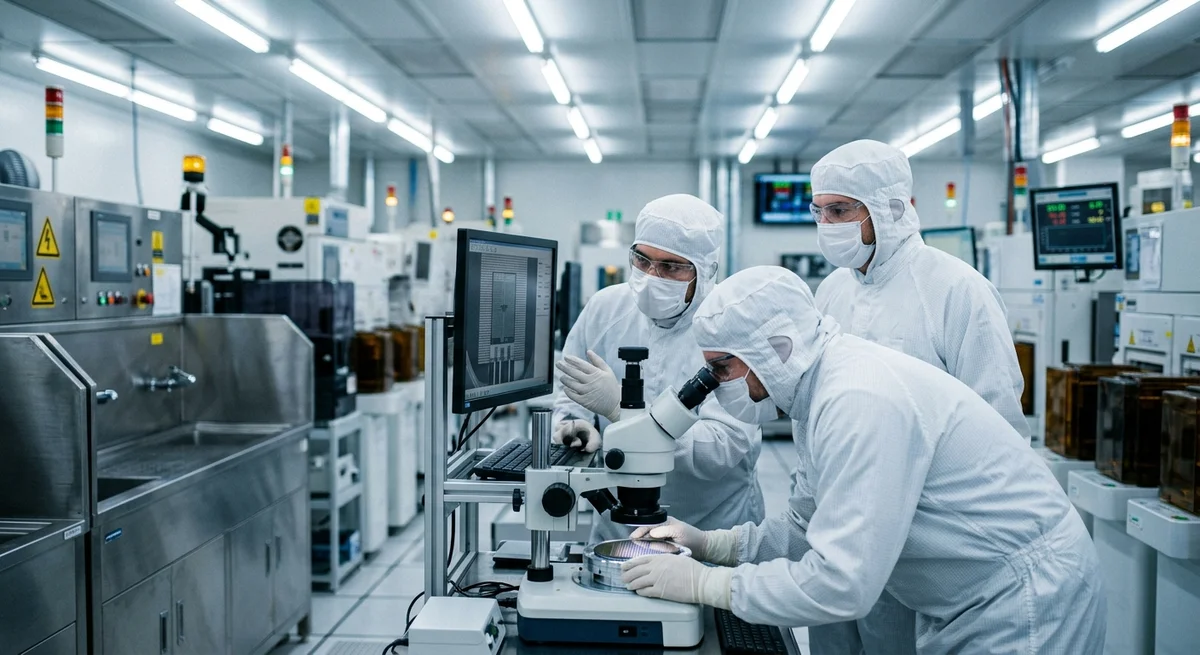
After Trump and Xi met in Beijing, attention focused squarely on export controls and diplomacy. But the real obstacle to reviving the US chip industry is something else entirely: an acute shortage of skilled workers.
What the summit covered
During the two-day meeting in Beijing, President Trump raised the issues of protecting the US chip industry and securing guarantees for AI development. The central item was export restrictions on advanced chips such as the Nvidia H200 and other cutting-edge semiconductors.
The United States has restricted shipments of advanced chips to China for several years, aiming to slow the growth of China's AI industry and protect its own technological lead. These negotiations are critical to US strategy: without them, Beijing would have an easier time obtaining the components it needs through third countries.
But there's a paradox: even if the talks succeed, the US physically cannot scale up production quickly.
The core problem: an acute talent shortage
According to Shari Liss, vice president at SEMI (Semiconductor Industry Association) responsible for the industry's workforce development, the US chip industry faces a critical shortage of specialists. This isn't just a staffing issue; it threatens the entire strategy for rebuilding manufacturing.
The industry needs people with experience in:
- Semiconductor process engineering and design
- Fab (fabrication) operations and management
- Developing chipmaking equipment
- Technical maintenance and automation systems
- Quality control and manufacturing data analysis
Shari Liss stressed that the problem has become pressing precisely now, as the US tries to carry out the ambitious plans of the CHIPS Act, the law that allocated tens of billions of dollars to rebuilding domestic semiconductor manufacturing.
Why this is becoming a national problem
Without people, money and plans are just numbers on paper. A fab engineer, someone who understands the entire chipmaking cycle and can optimize processes, is a rare specialist. You can't hire one in a month, and training one from scratch takes several years.
The US may win diplomatic concessions and may ban exports, but without an influx of young engineers and technologists, the industry simply won't grow at the required pace. A competitive advantage turns into a capacity shortfall.
What it means
The talent shortage in the semiconductor industry may prove to be the main bottleneck, bigger than export restrictions or diplomatic disputes. The US needs not only bans and negotiations but also a long-term strategy to train specialists, attract immigrant engineers, and build educational programs directly into colleges and universities.
- Nov 1, 2026Voice bots built on LLMs turn to Jev, a fast classifier, for decisions in 200–500 ms
- Nov 1, 2026MoneyGate safety layer blocked all 42 fraudulent requests to local AI models
- Oct 31, 202622B-Parameter LTX-2.5 Runs on a 10 GB RTX 3080, but Takes 5 Minutes per Shot
- Oct 30, 2026Mistral opens Large 4 weights: strong at code, but Chinese models score 32 to its 26
Key Questions Answered
What the summit covered?
During the two-day meeting in Beijing, President Trump raised the issues of protecting the US chip industry and securing guarantees for AI development. The central item was export restrictions on advanced chips such as the Nvidia H200 and other cutting-edge semiconductors. The United States has restricted shipments of advanced chips to China for several years, aiming to slow the growth of China's AI industry and protect its own technological lead. These negotiations are critical to US strategy: without them, Beijing would have an easier time obtaining the components it need
What are the key details on The core problem: an acute talent shortage?
According to Shari Liss, vice president at SEMI (Semiconductor Industry Association) responsible for the industry's workforce development, the US chip industry faces a critical shortage of specialists. This isn't just a staffing issue; it threatens the entire strategy for rebuilding manufacturing. The industry needs people with experience in: Semiconductor process engineering and design Fab (fabrication) operations and management Developing chipmaking equipment Technical maintenance and automation systems Quality control and manufacturing data analysis Shari Liss stressed t
Why this is becoming a national problem?
Without people, money and plans are just numbers on paper. A fab engineer, someone who understands the entire chipmaking cycle and can optimize processes, is a rare specialist. You can't hire one in a month, and training one from scratch takes several years. The US may win diplomatic concessions and may ban exports, but without an influx of young engineers and technologists, the industry simply won't grow at the required pace. A competitive advantage turns into a capacity shortfall.
Test Frontier LLMs & Autonomous Agents in One Workspace
Run Claude Opus 5.5, GPT-6, Gemini 3.1, and DeepSeek side-by-side in Nomad AI (nomadnet.ai) — unified model routing, deep research, and multimodal workflows under one subscription.
The AI world, distilled — once a week
Seven stories that actually mattered, hand-picked. No noise, no reposts, no press releases.
Done! Check your inbox for a confirmation.