NVIDIA unveils SANA-WM: a model for 60-second 720p videos on a single GPU
NVIDIA has unveiled SANA-WM, an open model for video generation with precise camera control. The model creates minute-long videos in 720p and can run on a single RTX 5090 without cloud services. With 2.6 billion parameters and 6-DoF control, SANA-WM enables video studios to produce high-quality content locally while cutting spending on cloud infrastructure.
AI-processed from MarkTechPost; edited by Hamidun News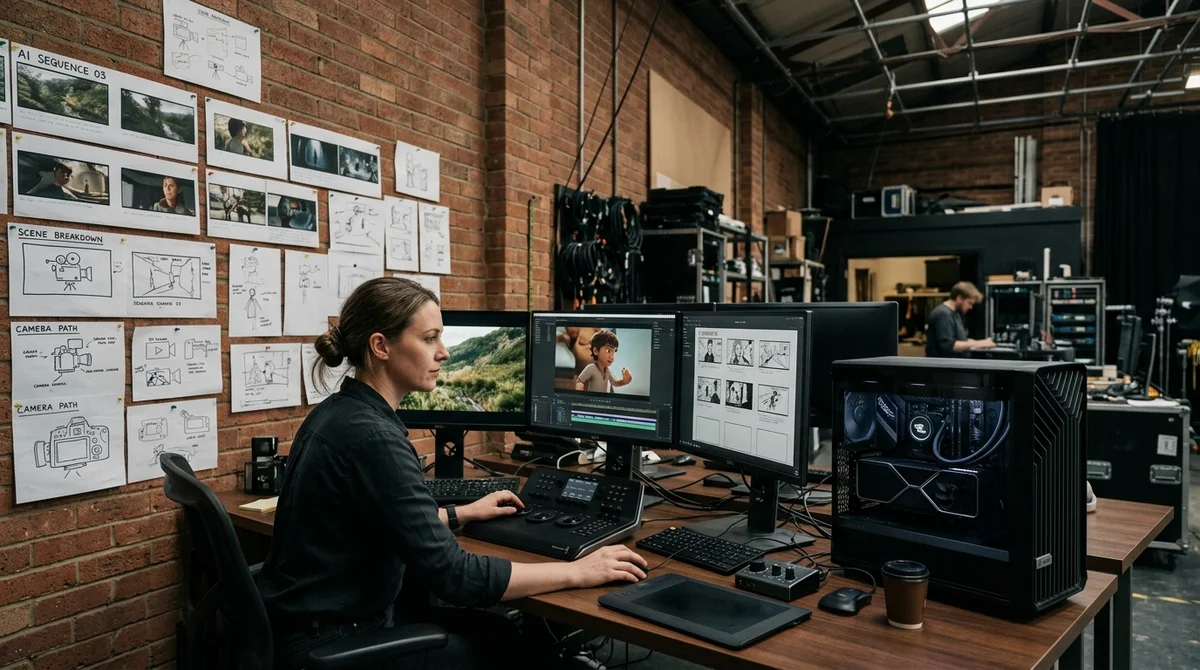
NVIDIA introduced SANA-WM — an open-source world model for video generation with camera control. The model creates 60-second videos in 720p with precise 6-DoF control and can run on a single RTX 5090.
How SANA-WM Works
SANA-WM is what's called a world model, a simulator of the physical world. Rather than simply stitching images into video, the model learns how the physical world responds to actions: if you rotate the camera left, objects in the frame move correctly. The model contains 2.6 billion parameters and was trained on 64 H100 GPUs.
Key capabilities of SANA-WM:
- Generating 60-second videos in 720p (1280×720)
- Precise camera control through 6-DoF control (position and orientation)
- Running on a single RTX 5090 without cloud services
- Open-source code for experimentation and adaptation
- Support for scaling: from scientific research to production
Why This Matters for Video Creators
Before SANA-WM, video generators were either cloud services (expensive) or required specialized equipment. SANA-WM changes this: it works locally, quickly, and without subscriptions. A studio can generate video scenarios, frame-by-frame visualizations, and drafts in minutes, without cloud dependency.
For directors and animators, this means the ability to quickly test visual storyboard ideas. For 3D artists — a way to automate creation of camera transitions in complex scenes. For marketers — quickly generate a promotional video with needed movement dynamics and viewing angles.
What This Means
SANA-WM symbolizes the transition from cloud-based video generators to local tools. Just as GPU once made 3D rendering accessible on every computer, world models are starting to make video generation accessible. For the industry, this is an acceleration of AI adoption in creative processes — not because models suddenly became smarter, but because they can now work everywhere.
- Oct 28, 2026OpenAI Releases GPT-6.1 Terra: Half the Price, Twice the Accuracy in Code
- Oct 28, 2026Meta open-sources Muse Spark Open: an 816B-parameter MoE with a 1M-token context
- Oct 28, 2026OpenAI Releases GPT-6.1 Terra: $1 per Million Input Tokens and Three Times Faster Than Astra
- Oct 28, 2026An Agent Builds a Motion Studio From 20 Open-Source Libraries, From Remotion to Whisper
Key Questions Answered
How SANA-WM Works?
SANA-WM is what's called a world model, a simulator of the physical world. Rather than simply stitching images into video, the model learns how the physical world responds to actions: if you rotate the camera left, objects in the frame move correctly. The model contains 2.6 billion parameters and was trained on 64 H100 GPUs. Key capabilities of SANA-WM: Generating 60-second videos in 720p (1280×720) Precise camera control through 6-DoF control (position and orientation) Running on a single RTX 5090 without cloud services Open-source code for experimentation and adaptation S
Why This Matters for Video Creators?
Before SANA-WM, video generators were either cloud services (expensive) or required specialized equipment. SANA-WM changes this: it works locally, quickly, and without subscriptions. A studio can generate video scenarios, frame-by-frame visualizations, and drafts in minutes, without cloud dependency. For directors and animators, this means the ability to quickly test visual storyboard ideas. For 3D artists — a way to automate creation of camera transitions in complex scenes. For marketers — quickly generate a promotional video with needed movement dynamics and viewing angle
What This Means?
SANA-WM symbolizes the transition from cloud-based video generators to local tools. Just as GPU once made 3D rendering accessible on every computer, world models are starting to make video generation accessible. For the industry, this is an acceleration of AI adoption in creative processes — not because models suddenly became smarter, but because they can now work everywhere.
Test Frontier LLMs & Autonomous Agents in One Workspace
Run Claude Opus 5.5, GPT-6, Gemini 3.1, and DeepSeek side-by-side in Nomad AI (nomadnet.ai) — unified model routing, deep research, and multimodal workflows under one subscription.
The AI world, distilled — once a week
Seven stories that actually mattered, hand-picked. No noise, no reposts, no press releases.
Done! Check your inbox for a confirmation.