K.C. Green, creator of "This Is Fine," accuses Artisan of stealing his artwork for ads
K.C. Green, the creator of the iconic internet meme "This Is Fine," has accused AI startup Artisan of using his illustration without authorization. The company
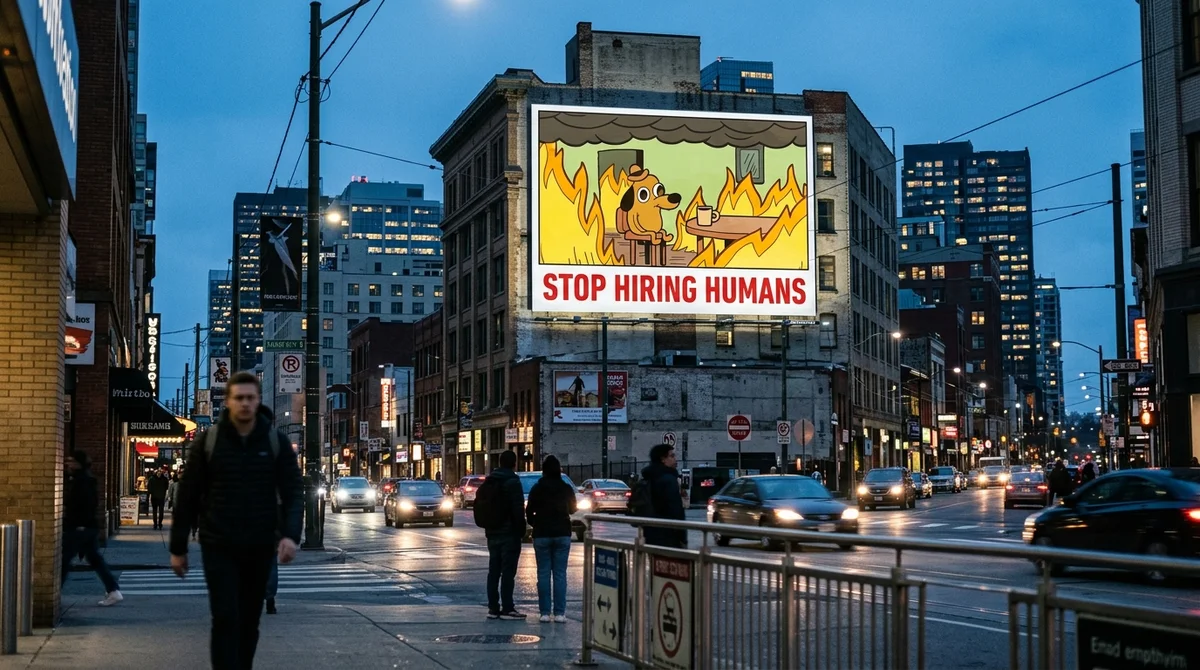
K.C. Green, creator of the iconic internet meme 'This Is Fine', discovered that his illustration was used by AI startup Artisan in their advertising campaign without requesting permission.
Billboards Calling for Human Replacement
Artisan, a startup developing AI tools for automating corporate processes, launched a controversial billboard series with a provocative slogan 'Stop Hiring Humans'. The wide-format posters feature K.C. Green's illustration: a dog calmly sitting in the center of a burning room. The irony is stark — one of the world's most recognizable illustrations of human denial of reality has been transformed into a symbol of a new AI revolution, literally urging companies to eliminate their employees in favor of automation. All of this happened without a single word of gratitude to the author and without any compensation whatsoever.
How the Meme Conquered the Internet
The meme's story began in 2013 when K.C. Green published the Gunshow comic strip featuring a dog character in a burning room.
Over more than a decade, the meme has become one of the most cited and recognizable images on the internet. People apply it in contexts ranging from serious financial crises and political upheavals to openly funny situations. The meme has become a universal way to express cognitive dissonance — a state when a person encounters an unpleasant reality but continues to smile and say everything is okay.
This psychological depth made the meme powerful and eternal. It reflects a deeply human survival mechanism — denial. But the illustration remains the intellectual property of K.
C. Green. Its use for commercial purposes has always required permission and typically involved royalty payments.
- Created in 2013 in the Gunshow web comic
- Over 13 years became one of the most recognizable memes
- Used in politics, corporate culture, and everyday life
- Copyright remains the property of K.C. Green
Growing Wave of Conflicts Over Authorship
The situation with Artisan is just the tip of the iceberg of a larger problem. In recent years, major AI companies have repeatedly used others' creative works without permission. From mass training of models on data collected without authors' consent to literal use of others' illustrations in marketing. Artists, writers, and designers around the world have expressed dissatisfaction with how their work feeds systems that then compete with them in the marketplace. K.C. Green has joined a growing chorus of critics outraged at how the tech industry treats creators' rights. The question becomes increasingly acute: who pays the price for AI progress, and will the work of millions of creators whose data fuels these systems ever be compensated?
What This Means
The Artisan situation exposes a fundamental conflict: how should creative works be valued when they can be easily copied and reused without consequences? When corporations appropriate others' content, creators lose not only income but also control over their legacy. This is critical for internet culture, where works are often created through enthusiasm but possess real market value.