Nvidia's Jensen Huang: AI creates a huge number of new jobs
Jensen Huang, Nvidia's CEO, said fears of job losses caused by AI are exaggerated. In his view, the technology is creating a huge number of new employment oppor
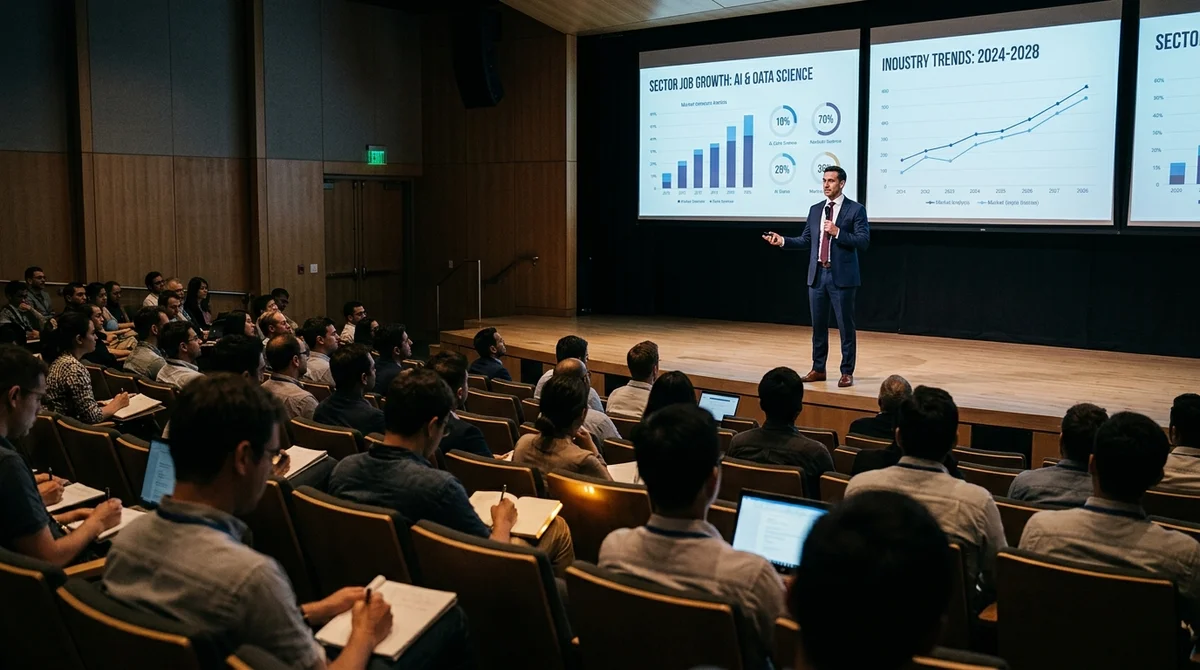
Jensen Huang, CEO of Nvidia, stated that workers' concerns about AI-induced unemployment are significantly overstated. According to his view, the history of technological revolutions shows that artificial intelligence tends to create new jobs rather than destroy them.
What
Huang Says The Nvidia CEO is convinced that concerns about massive job losses due to AI have no serious foundation. Huang has spoken on this topic before and consistently emphasizes that AI is not the end of careers but the beginning of a new era of professional opportunities. In his presentations, Huang explained that every technological revolution in history has gone through a similar period of fears and doubts — from the industrial revolution to the era of computerization and the mass spread of the internet.
However, in all cases, the number of jobs not only recovered but also grew significantly. Huang stresses that people often confuse the automation of individual processes with the complete disappearance of entire professions. The former does happen, but the latter remains an exception rather than the rule.
Most professions simply evolve, changing the set of required skills.
Historical Context History indeed supports the position of the Nvidia CEO.
When automobiles appeared, people feared massive unemployment among cab drivers, stable workers, and horse industry employees. When computers arrived, there were concerns that they would take jobs from clerks, accountants, and typists. However, in both cases, the labor market not only recovered but also expanded and diversified significantly.
Let's look at concrete examples: Industrial Revolution: destroyed traditional crafts and manual production, but created entirely new industries in industrial manufacturing, machine engineering, and required an ever-growing army of workers and engineers Computerization: displaced some office positions and roles, but gave birth to an entire IT sector, programming, web design, and numerous related professions * Internet: created a threat to traditional retail and postal services, but simultaneously spawned e-commerce, digital marketing, content production, and dozens of new specialties ## Current Situation with AI Huang is convinced that the AI situation is completely analogous to these historical precedents. Yes, robotization and automation will indeed replace certain types of work, especially routine and repetitive ones. But at the same time, entirely new professions will emerge related to training, managing, improving, controlling, and developing AI systems.
Labor market data confirms Huang's forecast. Demand for machine learning engineers, data scientists, AI security specialists, and other AI professionals is growing exponentially, while the supply of qualified candidates is falling behind demand. This creates a serious talent shortage in the industry.
Huang also notes that companies like Nvidia receive enormous financial benefits from AI expansion, and these profits inevitably transform into the creation of new jobs in the ecosystem. Although the transition period may be painful for certain worker categories, the long-term outlook remains optimistic.
What
This Means Jensen Huang's perspective reflects the classic optimism of the technology establishment and major players in the AI industry. However, his argument is not entirely uncontested and does not account for all the nuances of the situation. The transition period can indeed place serious pressure on the labor market, especially for workers lacking necessary retraining skills. Nevertheless, historical data suggests that in the long term, new technologies do create more opportunities than they destroy.