Genesis AI unveils GENE-26.5, a model for fully capable robots
Genesis AI, a startup backed by Khosla Ventures, has unveiled its first model, GENE-26.5, aimed at advancing robotics. The company raised $105 million to build foundation AI for autonomous robots. At a public demonstration, it showed robotic hands with precise control performing complex manipulation tasks: grasping objects of different shapes, handling various materials and carrying out production operations.
AI-processed from TechCrunch; edited by Hamidun News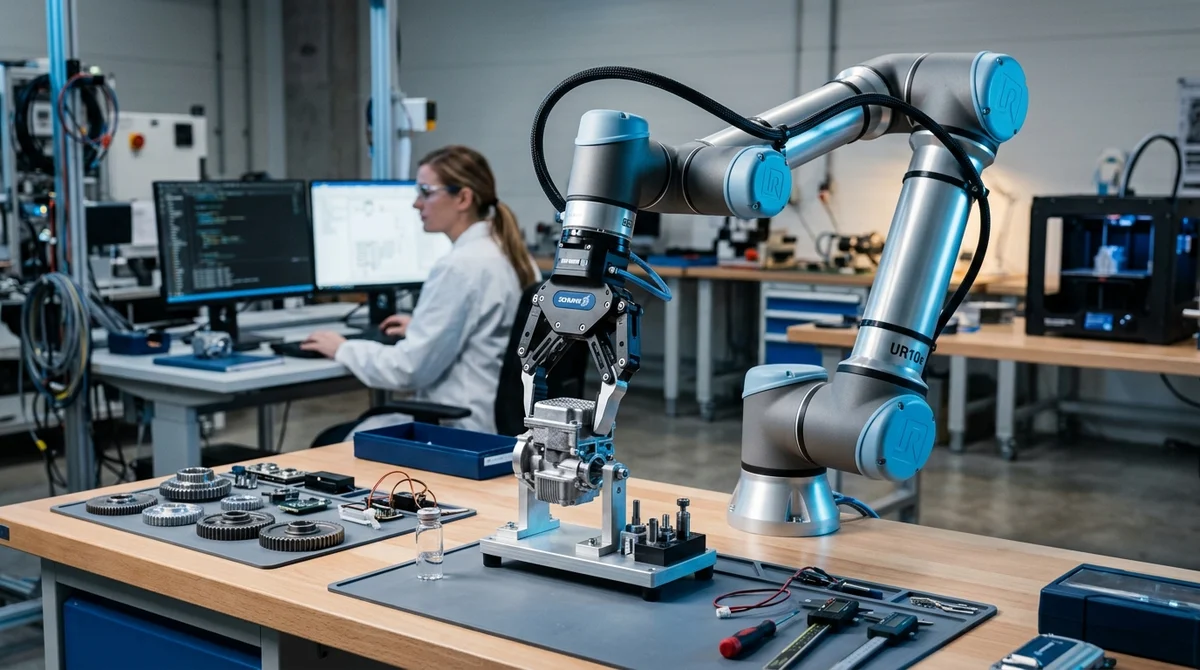
Genesis AI, a startup that raised $105 million to develop foundation AI for robotics, has unveiled its first model, GENE-26.5. The company did not just present the model as a research paper: it also showed working robots with robotic hands performing complex manipulation tasks.
How Genesis AI came about
The startup raised $105 million to build foundation AI models designed specifically for robotics. The idea is simple: general-purpose models like GPT work very well for text, but robots need models trained on three-dimensional perception of the world, motor control and motion planning. Ordinary text neural networks are simply not suited to controlling a robotic arm or a mobile robot.
Investors from Khosla Ventures and other funds believe a foundation model for robotics could become to robotics what GPT became to text and multimodal applications. Instead of writing all of a robot's control logic from scratch, developers would be able to take the ready-made GENE model and adapt it to specific tasks. That should significantly cut development time and the cost of deploying robots.
GENE-26.5: the first model
After years of closed development, Genesis has finally shown results. GENE-26.5 was trained on a huge volume of data on robot movements, grasps, manipulations and motion trajectories. It can predict and generate how a robot should move to complete a given task, even if the task differs slightly from the training data.
This is not mere prediction but the generation of actual control commands, so-called action tokens, which are sent directly to the robot's motors. The approach lets a robot work almost like a living creature: not following a rigid program, but adapting to its surroundings and the type of objects it has to handle.
Demonstration and capabilities
At the public demonstration, the company showed robotic hands performing manipulation tasks with high precision and smoothness:
- Grasping objects of different shapes, sizes and weights with high precision
- Manipulating fragile objects without damaging them
- Working with different materials and surface textures
- Performing multi-step production tasks with coordination
- Adapting to new scenarios and task variations without retraining
This is Genesis's first public demonstration, a move from closed development in labs to openly showing real capabilities. The video footage shows smooth, natural hand movement. Even small failures look organic and realistic rather than edited or staged, which gives an impression of honesty on the developers' part.
Why it matters
Robotics is on the threshold of a global revolution, but truly autonomous robots that can work in unstructured environments and perform complex physical tasks remain rare outside the lab. Most industrial robots on assembly lines perform the same task a million times in a row under identical conditions. GENE-26.5 may change that by becoming the basis for more versatile and adaptive robots.
If the model really works as well as the demo materials suggest, it would speed up industrial robotics, logistics, warehouse automation and manufacturing. Companies could deploy robots at their sites faster, without spending years developing custom control logic for each individual robot.
What it means
Robotics is moving out of the experiment-and-prototype phase and into the phase of real industrial products. With serious funding and a working model, Genesis AI is becoming a contender to build foundation AI for robots, much as OpenAI built an ecosystem around GPT and changed the trajectory of AI development.
- Nov 1, 2026Local models lose to Opus and Codex: 0.21 on a MacBook versus 1.00 for Codex
- Nov 1, 2026Kimi scores 96.2% on a 1C database analytics test and emerges as a fallback if Claude access is blocked
- Nov 1, 2026OpenAI Rewrites GPT Behavior Rules: Five Values and a Chain of Command
- Nov 1, 2026Google admits AI Mode cuts search revenue, shares fall 15%
Key Questions Answered
How Genesis AI came about?
The startup raised $105 million to build foundation AI models designed specifically for robotics. The idea is simple: general-purpose models like GPT work very well for text, but robots need models trained on three-dimensional perception of the world, motor control and motion planning. Ordinary text neural networks are simply not suited to controlling a robotic arm or a mobile robot. Investors from Khosla Ventures and other funds believe a foundation model for robotics could become to robotics what GPT became to text and multimodal applications. Instead of writing all of a
What are the key details on GENE-26.5: the first model?
After years of closed development, Genesis has finally shown results. GENE-26.5 was trained on a huge volume of data on robot movements, grasps, manipulations and motion trajectories. It can predict and generate how a robot should move to complete a given task, even if the task differs slightly from the training data. This is not mere prediction but the generation of actual control commands, so-called action tokens, which are sent directly to the robot's motors. The approach lets a robot work almost like a living creature: not following a rigid program, but adapting to its
What are the key details on Demonstration and capabilities?
At the public demonstration, the company showed robotic hands performing manipulation tasks with high precision and smoothness: Grasping objects of different shapes, sizes and weights with high precision Manipulating fragile objects without damaging them Working with different materials and surface textures Performing multi-step production tasks with coordination Adapting to new scenarios and task variations without retraining This is Genesis's first public demonstration, a move from closed development in labs to openly showing real capabilities. The video footage shows smo
Test Frontier LLMs & Autonomous Agents in One Workspace
Run Claude Opus 5.5, GPT-6, Gemini 3.1, and DeepSeek side-by-side in Nomad AI (nomadnet.ai) — unified model routing, deep research, and multimodal workflows under one subscription.
The AI world, distilled — once a week
Seven stories that actually mattered, hand-picked. No noise, no reposts, no press releases.
Done! Check your inbox for a confirmation.