Aurora's driverless trucks are ready to scale: from dozens to hundreds
After a year of commercial operations, Aurora is moving to scale. The company's driverless trucks have already hauled freight between Dallas and Houston, and the fleet will now grow from a few dozen to hundreds of vehicles. This is the first significant step from the lab to industry in the era of self-driving trucks.
AI-processed from TechCrunch; edited by Hamidun News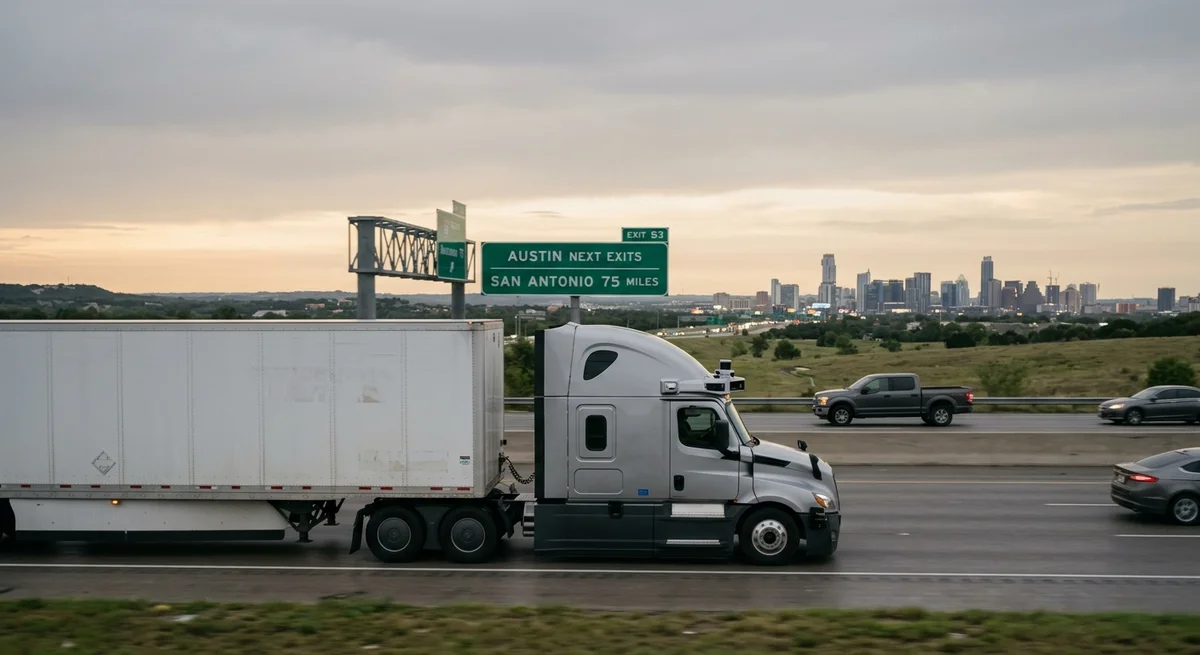
Aurora, one of the few companies that has proven autonomous trucks are viable, is entering a new phase. The company launched commercial hauling in April last year and is now scaling its fleet from a few dozen vehicles to hundreds this year. This is a turning point: self-driving is finally no longer "just around the corner" and is becoming a reality in the logistics that feed the US economy.
Ten years of waiting
For ten years, the industry promised that driverless vehicles were about to hit the road. DARPA challenges, successful tests in closed environments, ambitious announcements at conferences: all of that happened, but real scaling did not. Every time a company claimed a breakthrough, it turned out that an actual service was still far off.
Aurora stands apart because it didn't chase a universal solution. Instead of tackling every problem of urban driving at once, the company focused on a single but profitable task: long-haul freight between cities, where conditions are more predictable than on big-city streets. That let it reach commercial readiness faster.
How the Dallas-Houston route works
Aurora currently hauls freight between Dallas and Houston on a route of roughly 280 km. The trucks rely on a sensor suite of LiDAR, cameras, and radar to navigate without a driver. In the initial phase, an operator rode along for safety; now operations are becoming fully autonomous.
The route was chosen deliberately:
- Well-structured interstate highways with clear lane markings
- Predictable traffic and stable weather
- A logistics center (Texas is the main hub for ground freight)
- Repeatability: the same routes every day
- Access to major industrial partners
Scaling: hundreds of trucks this year
CEO Chris Urmson confirmed the shift from a pilot project to full-scale commercial deployment. That means not only a bigger fleet, but also more routes within Texas and potentially into other states, additional support staff, and deeper integration with logistics partners such as UPS and FedEx.
Serious challenges remain: certification and regulation at every level, compliance with labor law, reliability in extreme weather, competition from Waymo and other startups, and insurance and liability for crashes.
What this means for everyone
If Aurora keeps up the pace, driverless trucks will become a routine sight on interstate highways within the next 2-3 years. That would free millions of drivers to retrain, cut logistics costs, and reshape the economics of long-haul trucking.
For investors, it's a signal: autonomous logistics is finally becoming a real business rather than a lab project.
- Nov 1, 2026New test catches hidden AI agent collusion by measuring how a partner reacts to a paraphrase
- Nov 1, 2026Illinois compiled 12 151 open problems and tested whether AI can solve them
- Oct 31, 2026AI engineer writes a single reward function for agent teams: win rate climbs from 51% to 90%
- Oct 31, 2026SkillMem stores an AI agent skill in 9.6 KB and speeds up a team 4.2x
Key Questions Answered
What are the key details on Ten years of waiting?
For ten years, the industry promised that driverless vehicles were about to hit the road. DARPA challenges, successful tests in closed environments, ambitious announcements at conferences: all of that happened, but real scaling did not. Every time a company claimed a breakthrough, it turned out that an actual service was still far off. Aurora stands apart because it didn't chase a universal solution. Instead of tackling every problem of urban driving at once, the company focused on a single but profitable task: long-haul freight between cities, where conditions are more pre
How the Dallas-Houston route works?
Aurora currently hauls freight between Dallas and Houston on a route of roughly 280 km. The trucks rely on a sensor suite of LiDAR, cameras, and radar to navigate without a driver. In the initial phase, an operator rode along for safety; now operations are becoming fully autonomous. The route was chosen deliberately: Well-structured interstate highways with clear lane markings Predictable traffic and stable weather A logistics center (Texas is the main hub for ground freight) Repeatability: the same routes every day Access to major industrial partners
What are the key details on Scaling: hundreds of trucks this year?
CEO Chris Urmson confirmed the shift from a pilot project to full-scale commercial deployment. That means not only a bigger fleet, but also more routes within Texas and potentially into other states, additional support staff, and deeper integration with logistics partners such as UPS and FedEx. Serious challenges remain: certification and regulation at every level, compliance with labor law, reliability in extreme weather, competition from Waymo and other startups, and insurance and liability for crashes.
Delegate Deep Research, Coding & Multi-Step Workflows to Nomad Agent
Deploy autonomous task execution with Nomad Agent (agent.nomadnet.ai) — automated web research, data synthesis, code generation, and MCP tool orchestration.
The AI world, distilled — once a week
Seven stories that actually mattered, hand-picked. No noise, no reposts, no press releases.
Done! Check your inbox for a confirmation.