Lake Tahoe seeks a new power supplier as NV Energy shifts capacity to AI data centers
Lake Tahoe could be left without its current power supplier as early as May 2027. Liberty Utilities’ contract with NV Energy is ending, while available capacity in Nevada is increasingly being claimed by AI data centers. In a market where load requests already exceed 22 GW, the small mountain region will struggle to find a cheap replacement — meaning electricity bills will almost certainly rise.
AI-processed from TechCrunch; edited by Hamidun News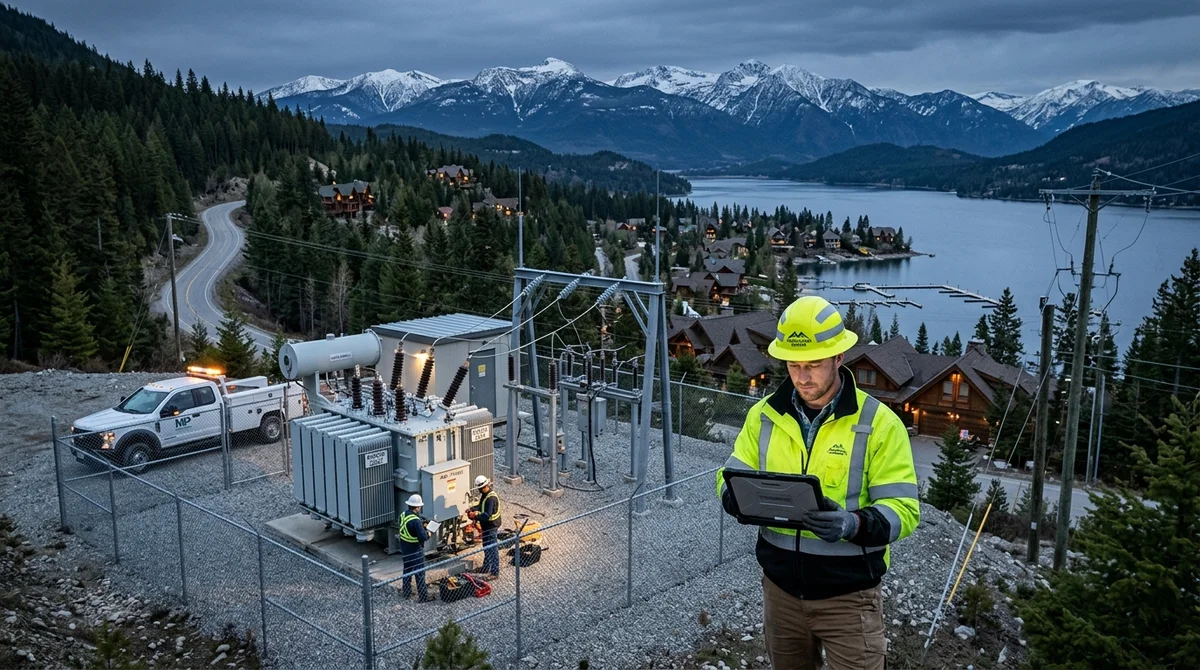
Lake Tahoe, a resort region popular with Silicon Valley residents, risks facing more expensive electricity as early as next year. The reason is the expiration of the current energy supply contract and a shortage of capacity amid explosive demand from AI data centers across the American West.
Why This Is Happening
By May 2027, the agreement between Liberty Utilities and NV Energy expires, under which Tahoe receives part of its electricity from Nevada. After that, NV Energy will redirect its capacity to other consumers within the state — precisely when Nevada is experiencing a boom in construction of major data centers.
Formally, both companies claim that the contract's termination was planned in advance, and that data centers are not to blame. But the market works simply: when new customers are ready to purchase massive amounts of electricity at almost any price, the negotiating position of ordinary consumers and small regions weakens sharply.
The scale of this pressure is evident from connection requests. NV Energy alone has requests for new load that exceed 22 gigawatts — more than 40 times Lake Tahoe's peak consumption. Against this backdrop, the small mountain region looks not like a priority, but like a minor customer. Had there been no data center boom, Liberty Utilities and NV Energy could probably have quietly renewed their partnership. Now electricity has become a resource competed for not only by cities and utilities, but by infrastructure for training and maintaining AI models.
Why Tahoe Is Vulnerable
Tahoe's problem is not only the general growth in demand, but also the network's configuration. The region's power lines are more closely tied to Nevada's energy system than California's. Therefore, simply switching to a neighboring state won't work. The community needs to find a new supplier either within the NV Energy zone or on the broader market of western states. And there, free capacity is shrinking just as new computing projects are reserving it for years to come.
- Current contract with NV Energy expires in May 2027
- NV Energy's load requests exceed 22 GW
- Utah has already approved a data center project on 40,000 acres with consumption of up to 9 GW
- The more such projects in the region, the higher the probability of rate increases for ordinary customers
Neighboring Utah shows why hopes for cheap energy are few. There, construction was recently approved for a data center complex spanning 40,000 acres that will be able to consume up to 9 gigawatts once completed. For comparison, today the entire state of Utah uses about 4 gigawatts. Even if the project is introduced in phases, the very fact of such volumes changes supplier and market expectations: electricity in the American West is not getting more expensive at one point, but across the entire supply chain.
Who Will Feel the Impact
Local residents will feel the impact most strongly, because for them electricity is not an abstract budget item, but a basic utility service. But the increase will also affect owners of vacation homes, among whom there are many wealthy Silicon Valley residents. There is symbolism in this: the San Francisco Bay Area itself has long remained relatively insulated from the direct consequences of the AI infrastructure boom due to expensive land and high connection costs. Now that effect is returning through the resort region, which is closely tied to Nevada's grid.
"The main injustice of the energy crisis around AI is that those who
suffered most had almost no influence over the technology itself or the pace of its implementation."
Additional pressure comes from the broader energy market. Demand is growing, free supply is shrinking, and geopolitical risks are pushing energy costs upward. In such an environment, small utility systems have little chance of competing with data center operators, who build their business on reserving megawatts in advance and paying a premium for reliability. The Lake Tahoe story shows that AI affects not only tech companies and cloud budgets: it is already changing prices for basic infrastructure in places that don't build computing campuses themselves.
What This Means
Lake Tahoe has become a clear example of how the AI boom extends beyond data centers and starts hitting the household economy of neighboring regions. For the market, this is a signal: competition for electricity will increasingly be decided against the interests of small communities. For residents and businesses — a reminder that AI development is already converting into higher utility bills.
Want to stop reading about AI and start using it?
AI News is a curated feed of AI/tech news. Hamidun Academy teaches you to use AI systematically in your work.
The AI world, distilled — once a week
Seven stories that actually mattered, hand-picked. No noise, no reposts, no press releases.
Done! Check your inbox for a confirmation.