Uber and OpenAI roll out AI assistants and voice ride booking for drivers and passengers
Uber is expanding its use of OpenAI in its app: for drivers, the company has launched an AI assistant with guidance on earnings and navigating the platform, and
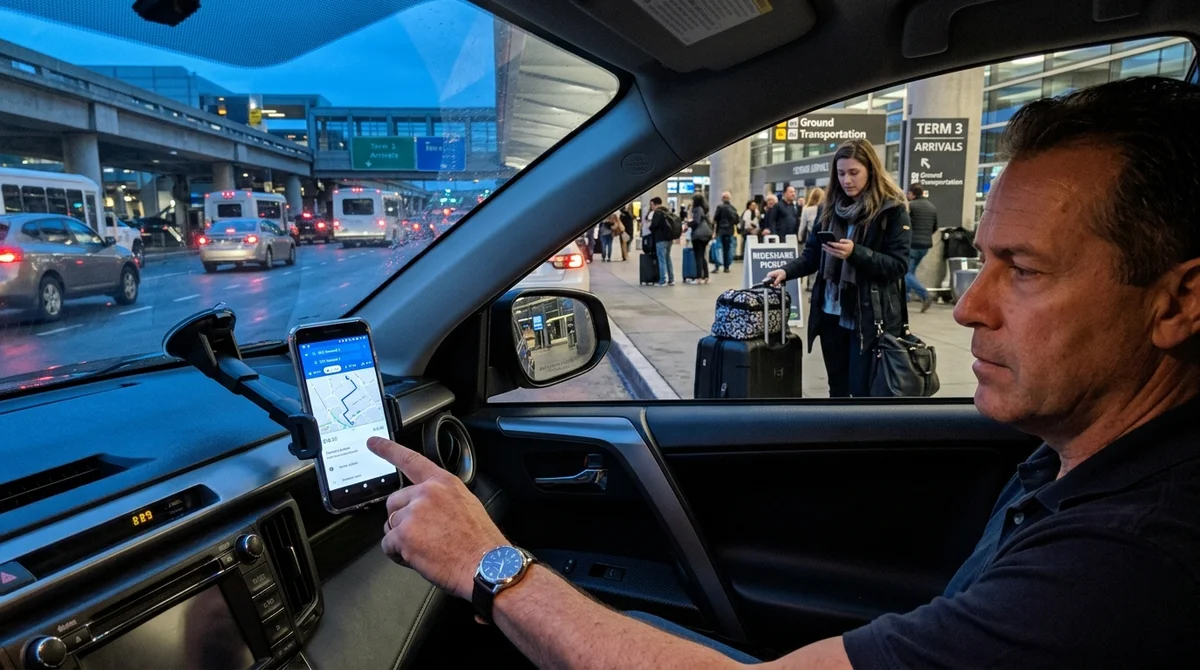
Uber expands collaboration with OpenAI: the company has embedded AI tools for two key audiences at once — drivers and passengers. For the former, these are tips about where and when it's more profitable to work; for the latter, faster ride booking by voice directly in the app.
Driver Assistant
Uber operates a massive and constantly changing market: according to the company, the service processes around 40 million rides per day, unites 10 million drivers and couriers, and operates in 15 thousand cities across more than 70 countries. In such a system, a driver has to make dozens of small decisions on the go. Uber uses OpenAI models to transform this stream of signals into short and clear recommendations, rather than leaving a person alone with graphs and heatmaps.
The main product here is Uber Assistant, an AI assistant for drivers and couriers. It accompanies the user throughout their journey within the platform: from onboarding and first rides to daily earnings optimization. A driver can ask a question in plain language and get an answer without needing to understand the complex internal logic of the marketplace.
Essentially, Uber is trying to reduce cognitive load: less time interpreting data, more time on actual orders. According to OpenAI, access to the beta version has already been provided to hundreds of thousands of drivers in the USA.
- Suggestions about where to be right now
- Scenario comparison: rides, delivery, airport
- Explanation of why today's earnings differ from yesterday
- Help for new drivers at the start
Architecture of Trust and Speed
For Uber, it's not enough to just provide a plausible answer. If the earnings tip is inaccurate and the interface is slow, a user will quickly stop trusting the system. That's why the company built a multi-agent architecture: different types of requests are directed to different specialized circuits.
Questions about onboarding, earnings, positioning recommendations, and transactional actions are processed differently, taking into account context and accuracy requirements. This is particularly critical in an app where a decision is needed in seconds. A separate layer within this scheme is AI Guard, an internal management level that checks tips and answers for compliance with safety, privacy, and quality policies.
For simple and fast tasks, Uber uses lighter models, while for complex ones it uses reasoning models with deeper analysis. Such an approach is needed not for architectural elegance, but for practical reasons: minimal latency in a mobile app and predictable answers matter more than demonstrating AI "magic."
"If users don't trust the system, you lose them very quickly."
Voice Ride Booking
The second notable part of the project is voice scenarios for passengers. Instead of step-by-step clicking through menus, a user can tap the microphone icon in the search bar and describe the situation in plain speech. For example, say that they need a transfer to the airport, with luggage and several fellow passengers.
The system interprets the intent, takes into account saved addresses and customer context, and then offers a suitable ride option and synchronizes the voice and visual response. For Uber, this is not just convenience, but a way to make the service more accessible. Voice is especially important for people who find it uncomfortable to work with the screen for a long time: elderly users, people with visual impairments, or those who simply want to solve the task faster.
On the driver side, such interfaces are also useful: less manual actions in the app, more opportunity to interact with the service without distraction from typing. The company clarifies that Voice Booking is rolling out gradually in the coming weeks.
What It Means
The Uber and OpenAI partnership shows how generative AI is moving from demonstration mode into operational products with strict requirements for speed, safety, and benefit. Here AI doesn't "write text," but helps make real-time decisions within a huge marketplace. If the rollout proves successful, similar logic will quickly appear in other services where you need to simultaneously work with logistics, demand, user behavior, and voice interfaces.