Sea rolls out Codex across its entire engineering organization, betting on AI-native development
Sea Limited is scaling OpenAI Codex across its entire engineering organization. The company says the main payoff is not faster typing of code, but a better grasp of large microservice systems, faster debugging and agent workflows running directly in CI/CD. According to internal data, 87% of Codex users are active weekly, and among developers who rated it favorably, 73% would recommend the tool to colleagues.
AI-processed from OpenAI Blog; edited by Hamidun News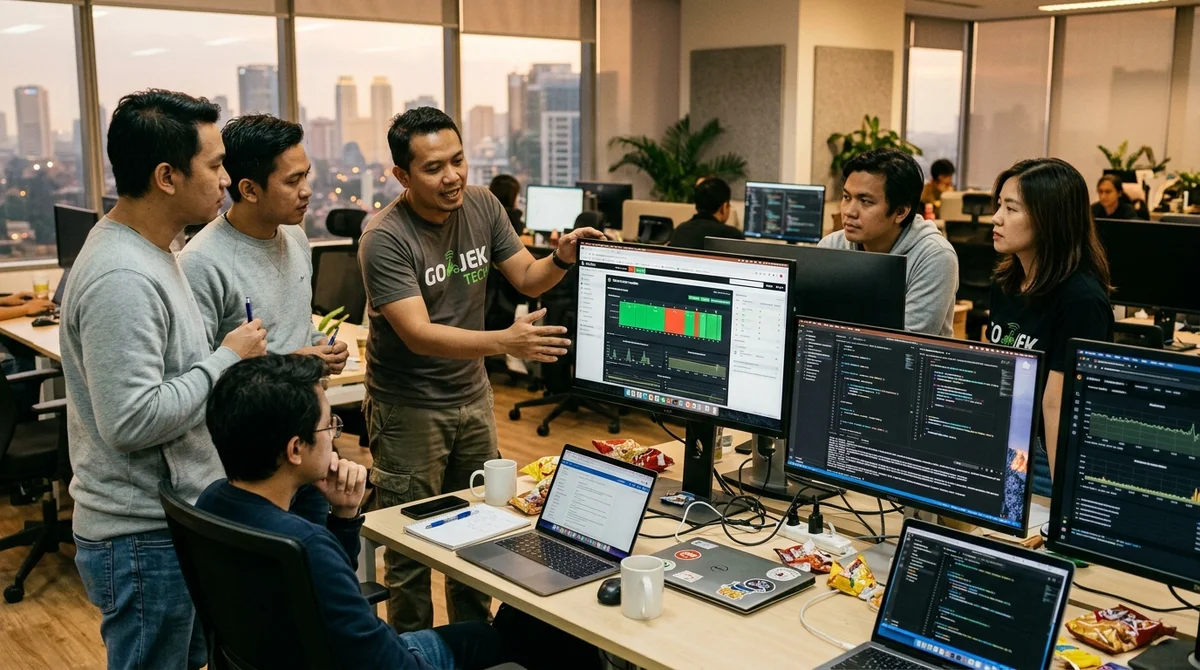
Sea Limited has begun rolling out Codex across its entire engineering organization and treats it as a bet on a new model of software development. The company believes AI agents should do more than speed up code writing: they should change how teams understand complex systems, test changes and bring ideas to production.
Why Sea chose Codex
For Sea, development is not just about building new features. The company runs large products across Southeast Asian markets, where it has to handle e-commerce, payments, logistics and the local specifics of different countries at the same time. At that scale, the main bottleneck is not how fast code gets typed, but how quickly engineers can make sense of distributed systems, dependencies between services and legacy logic that cannot simply be rewritten from scratch.
This is where Codex stood out from ordinary AI tools, according to David Chen, Sea co-founder and Shopee CPO. He describes it not as an advanced autocomplete but as a system with deep context across large, heterogeneous codebases. For a team with a massive microservice architecture, that means less time manually wading through unfamiliar services and more attention to architectural decisions, reliability and launching new product ideas.
How development is changing
In internal feedback, Sea sees strong demand for Codex in three scenarios: code comprehension, debugging and developing new features. The company says 87% of Codex users are active every week. Another metric covers developers who rated the tool 4 or 5 out of 5: 73% of them would recommend it to colleagues. For Sea, this signals that the tool is not used sporadically but is becoming part of the daily workflow.
The most important shift Sea sees is the move from AI as a passive assistant to agent workflows inside the engineering loop. According to Chen, developers use Codex not only to write faster but to think better about the system. The agent is already embedded in CI/CD pipelines: it analyzes requirements, proposes implementations in a test-driven development style, surfaces possible edge cases in distributed systems and speeds up the debugging cycle. At the same time, it helps not only raise the pace but also systematically reduce technical debt.
- Get up to speed faster on unfamiliar services and dependencies
- Prototype several implementation options without lengthy manual preparation
- Expand test coverage and find weak spots earlier
- Speed up debugging loops in complex distributed systems
A bet on the region
Sea considers Southeast Asia a natural proving ground for AI-native development. The region has repeatedly leapfrogged classic technology adoption cycles, from mobile-first models to super apps. Developers here have to tackle multilingual, fragmented problems across several domains at once: commerce, payments, communications and logistics. Against this backdrop, AI agents look less like a trendy layer on top of existing processes and more like a tool that can take some of the operational load off and strengthen small teams.
"The winners will be those who are already rebuilding engineering culture and processes today around human-AI collaboration."
This logic extends beyond Sea itself. Together with OpenAI, the company is launching the first regional Codex Hackathon Series in Asia. It starts in Singapore, and the program is then expected to move to Indonesia, Taiwan and Vietnam. The goal is not just to showcase a new tool but to narrow the gap in access to cutting-edge AI tools for the local community. Sea expects this to help developers move faster from curiosity to building scalable AI-native applications, and gradually grow a homegrown engineering school around agent-based development in the region.
What this means
Sea's story shows how large Asian tech companies are starting to see AI coding not as just another productivity tool but as the foundation for rebuilding engineering processes. If this approach takes hold, the developer's role could indeed begin shifting from manual implementation toward system design, quality control and orchestrating the work of AI agents.
- Nov 12, 2026Jensen Huang steps down as Nvidia CEO: company loses $1.4 trillion in two weeks
- Nov 12, 2026Oakland Union Wins Retraining Instead of AI Layoffs: 94.1% Vote for Strike
- Nov 12, 2026Eight Countries, OpenAI and Anthropic Promise an AI "Kill Switch" — but Set No Deadlines or Penalties
- Nov 12, 2026OpenAI and ModRetro Launch a $200 Console for Games Written in Codex
Key Questions Answered
Why Sea chose Codex?
For Sea, development is not just about building new features. The company runs large products across Southeast Asian markets, where it has to handle e-commerce, payments, logistics and the local specifics of different countries at the same time. At that scale, the main bottleneck is not how fast code gets typed, but how quickly engineers can make sense of distributed systems, dependencies between services and legacy logic that cannot simply be rewritten from scratch.
How development is changing?
In internal feedback, Sea sees strong demand for Codex in three scenarios: code comprehension, debugging and developing new features. The company says 87% of Codex users are active every week. Another metric covers developers who rated the tool 4 or 5 out of 5: 73% of them would recommend it to colleagues. For Sea, this signals that the tool is not used sporadically but is becoming part of the daily workflow.
What are the key details on A bet on the region?
Sea considers Southeast Asia a natural proving ground for AI-native development. The region has repeatedly leapfrogged classic technology adoption cycles, from mobile-first models to super apps. Developers here have to tackle multilingual, fragmented problems across several domains at once: commerce, payments, communications and logistics.
Build & Ship Production AI Agents Without Boilerplate Code
Start your free 72-hour trial at Hamidun Academy (academy.hamidun.com) — interactive lessons on Claude Code & Cursor, live Tech Radar, and production agent templates.
The AI world, distilled — once a week
Seven stories that actually mattered, hand-picked. No noise, no reposts, no press releases.
Done! Check your inbox for a confirmation.