Yandex has moved all Station and TV Station devices to a more powerful Alice model
Yandex has updated Alice across all Station speakers and TV Station televisions. Previously, the more powerful model was available only in Alice Plus; now it runs on mass-market devices as well. According to internal measurements, responses improved in 60% of comparisons, average length increased by 37%, users became less likely to ask the same question again, and the assistant now handles questions about movies, trips, games, and household scenarios better.
AI-processed from 3DNews AI; edited by Hamidun News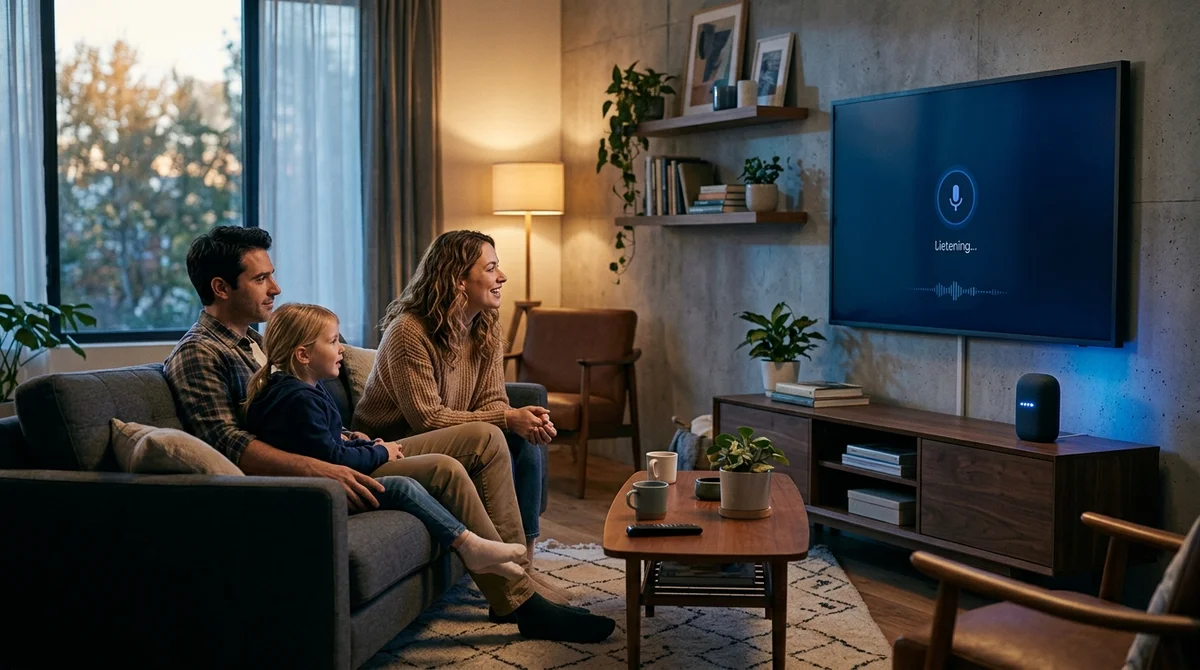
Yandex moved smart speakers from the "Station" series and "TV Station" televisions to a more advanced AI model. Previously, this level of responses was available only to users of the paid "Alice Plus" option, but now the company makes it standard for its entire line of home devices.
What Changed
The update affected Yandex's entire smart device ecosystem, where Alice has long served not just as a voice assistant, but as the primary interface for search, recommendations, and daily routines. The company says this is the biggest model update on devices in the past year. The idea is clear: if people are used to asking complex questions in a chatbot, then at home through a speaker or TV they expect the same quality, not a simplified version of the assistant.
Until now, access to a more powerful model was essentially tied to the paid "Alice Plus" option. Now Yandex removes this limitation precisely on its own devices. For the user, the difference should manifest not in abstract improvements, but in more understandable and complete answers on the first try.
This is especially important for topics where voice assistants used to easily slip into overly general or formal answers: movies, games, travel, choosing household solutions, and other everyday requests.
How Quality Grew
Yandex claims that improvements are noticeable not just from the team's internal impressions, but also from blind comparison measurements of responses. The new model more often correctly understands the question, better maintains conversation context, and is more willing to give a detailed answer without unnecessary clarifications. This is important for a voice interface: users usually don't want to have a long conversation with a speaker and expect the assistant to immediately grasp the task, limitations, and desired answer format.
- In 60% of comparisons, the new model answered better than the previous one
- Users asked for clarification 9.9% less often
- Average answer length increased by 37%
- Alice started being thanked 10% more often
- Average dialogue length increased by 8.8%
Behind these numbers lies a fairly practical change in the assistant's behavior. If previously an answer could be brief and end the conversation, now the system more often explains complex things through simple analogies and better accounts for a set of conditions in a single request. As an example, the company describes a situation where a family needs a movie with several constraints at once: adults like arthouse, the child is scared of sharp scenes, and they don't want to spend more than three hours watching. The updated Alice should not just name a couple of options, but explain why they fit.
Why This Is Important for Devices
Moving a powerful language model to a chatbot format and adapting it for a speaker or TV are not the same thing. On a voice device, the answer should be fast enough, logical to the ear, and not overloaded, otherwise even a good result in terms of content will be irritating. Therefore, Yandex specifically emphasizes that for smart devices, the models have to be reworked for a different usage scenario.
This is not a showcase to demonstrate capabilities, but an environment where a person asks for advice while cooking, chooses a movie from the couch, or clarifies a route on the go. In practice, this means a higher bar for the entire home assistant segment. Users are already used to chatbots that can parse compound requests, remember details, and explain without bureaucratic language.
If a speaker at home answers noticeably worse, the gap is felt immediately. Yandex is trying to close this gap and make interaction with Alice on different platforms feel like a single experience, not like two different products with different levels of intelligence.
What This Means
For Yandex, this is a shift from a paid differentiator to basic product quality: a powerful model becomes not a bonus for part of the audience, but a standard for the entire device ecosystem. For the market, this is a signal that competition in the smart home is shifting from command sets to dialogue quality, context, and the assistant's ability to truly help with everyday tasks.
Need AI working inside your business — not just in your newsfeed?
I build production AI for companies — custom CRM, internal tools, autonomous agents, workflow automation. Owned by you, shaped to your process, no per-seat tax. Built by Zhemal Khamidun, CPO of AlpinaGPT (AI platform, 6,000+ users).
The AI world, distilled — once a week
Seven stories that actually mattered, hand-picked. No noise, no reposts, no press releases.
Done! Check your inbox for a confirmation.