Jefferies: Market is only entering the AI transformation, while tech already lifts the S&P 500
Jefferies believes the market is only entering the main phase of AI transformation. Lori Goodman says tech stocks are already driving the S&P 500 higher, but the main economic impact of AI on companies and asset valuations is still ahead. Against that backdrop, private markets, including private credit, remain a difficult area: liquidity is lower, repricing is slower and sensitivity to risk is higher.
AI-processed from Bloomberg Tech; edited by Hamidun News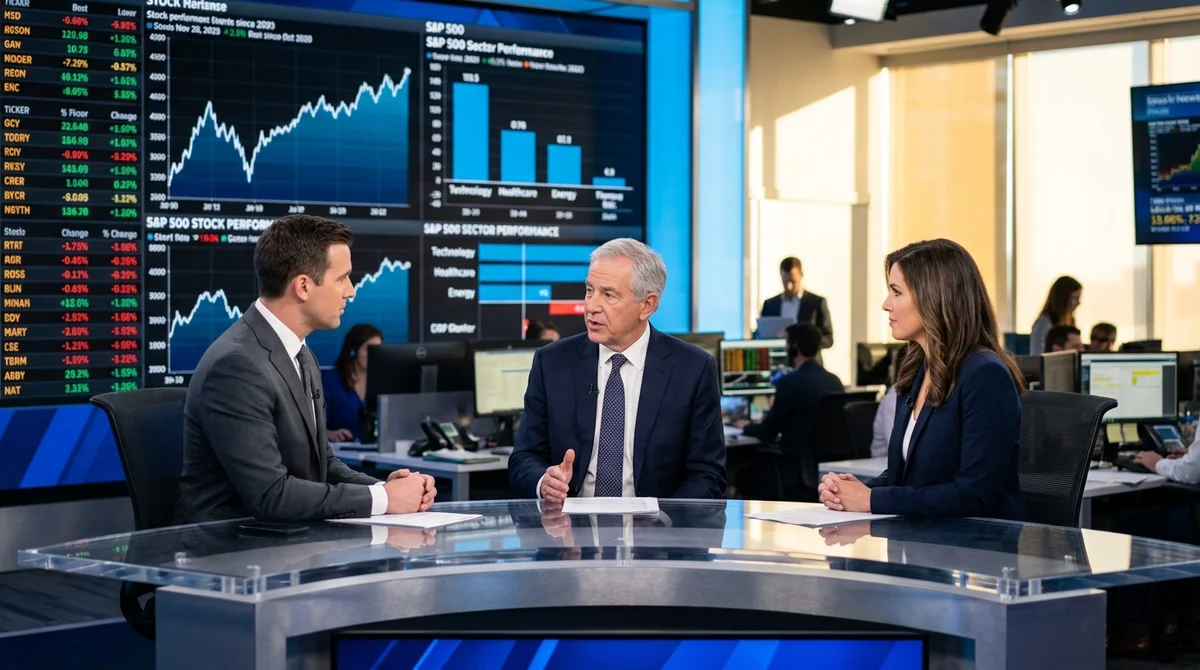
Tech has again set the tone in the US market, but Jefferies believes this is only the start of a deeper restructuring. According to Lori Goodman, the story of AI's impact on companies and asset valuations is still far from a mature stage.
Tech is pulling the index
On Bloomberg, Goodman tied the market's positive close primarily to technology stocks. In her assessment, they remain the main engine of movement within the S&P 500, because investors see them as the most direct bet on AI. When the market needs a clear growth driver, capital usually goes where future revenue and margin expansion are easier to explain. That logic now favors chipmakers, cloud platforms and enterprise software providers, which are credited with a key role in the new wave of automation.
Importantly, this is no longer just speculation around a few high-profile names. The market is looking wider: from data center infrastructure to applied services, companies have a chance to plug into a single AI spending chain. Even if the effect is only partly visible in earnings so far, investors are ready to price in the coming overhaul of business processes. That is why tech's leadership is seen not as a temporary burst of interest, but as a bet on the foundation of the next investment cycle.
AI is still early
Goodman's main thesis is simple: we are still at an early stage of AI disruption. The market has begun repricing the technology's future role, but the transformation of business is only unfolding. Companies are still testing where generative AI delivers measurable returns, how quickly investments pay back and which processes make sense to automate first. In Jefferies' logic, the current rise in tech stocks is not the last stage of overheating but the early phase of a long cycle in which the winners have not yet been finally determined.
In practice, this scenario can play out in several directions at once:
"We are still at the beginning of the AI disruption story."
- rising spending on chips, cloud and data centers
- a review of costs for back-office functions and customer service
- pressure on companies that are slow to adopt automation
- new winners emerging beyond the largest tech giants
This view shifts the focus from daily price swings to the question of how long the effect lasts. If AI really changes the structure of productivity, the main competition will be not over one strong quarter but over companies' ability to deploy tools for years without an explosive rise in costs. The winners will not be only model developers. A significant premium may also go to those who can turn AI into faster sales, cheaper operations, better service and sharper internal analytics.
Private markets are stalling
At the same time, Jefferies is not ignoring the more difficult areas of the financial market. Goodman separately pointed to persistent problems in private markets, including private credit. The picture here is far less transparent than in the public tech sector: liquidity is lower, deals are repriced more slowly, and investor sentiment is not reflected in prices as quickly. So even strong optimism around AI does not mean money flows equally easily through all asset classes.
For investors, this creates a dual situation. Public tech companies offer a clear growth story and instant market feedback, while private capital and credit still demand care in assessing risk, exit timing and borrower quality. Over time AI may change this segment too, but clearly not at the speed at which the share prices of large tech players move. For now the effect is distributed unevenly: public beneficiaries get their premium sooner, while private participants remain in a tougher financing environment.
What this means
Jefferies' signal is this: the market has already begun pricing in AI, but the main economic effect is still ahead. For business, this is a good moment not to stop at experiments. The greatest value will go to companies that can turn AI not into a presentation slide but into real productivity, more resilient margins and a noticeable operational advantage.
Key Questions Answered
What are the key details on Tech is pulling the index?
On Bloomberg, Goodman tied the market's positive close primarily to technology stocks. In her assessment, they remain the main engine of movement within the S&P 500, because investors see them as the most direct bet on AI. When the market needs a clear growth driver, capital usually goes where future revenue and margin expansion are easier to explain. That logic now favors chipmakers, cloud platforms and enterprise software providers, which are credited with a key role in the new wave of automation. Importantly, this is no longer just speculation around a few high-profile n
What are the key details on AI is still early?
Goodman's main thesis is simple: we are still at an early stage of AI disruption. The market has begun repricing the technology's future role, but the transformation of business is only unfolding. Companies are still testing where generative AI delivers measurable returns, how quickly investments pay back and which processes make sense to automate first. In Jefferies' logic, the current rise in tech stocks is not the last stage of overheating but the early phase of a long cycle in which the winners have not yet been finally determined. In practice, this scenario can play ou
What are the key details on Private markets are stalling?
At the same time, Jefferies is not ignoring the more difficult areas of the financial market. Goodman separately pointed to persistent problems in private markets, including private credit. The picture here is far less transparent than in the public tech sector: liquidity is lower, deals are repriced more slowly, and investor sentiment is not reflected in prices as quickly. So even strong optimism around AI does not mean money flows equally easily through all asset classes. For investors, this creates a dual situation. Public tech companies offer a clear growth story and in
Ship AI Faster with Founders, Engineers & Weekly Architecture Reviews
Inside Vibe Club (hamidun.com/club) — weekly live masterminds with Zhemal Khamidun, Tech Radar, full LMS access, and 370+ production Claude Code skills.
The AI world, distilled — once a week
Seven stories that actually mattered, hand-picked. No noise, no reposts, no press releases.
Done! Check your inbox for a confirmation.