AliveCor brings its AI-powered pocket ECG system Kardia 12L to Europe
AliveCor has received the European CE Mark for Kardia 12L and is launching the device in France, Germany, Italy, Spain and the UK. Kardia 12L is a pocket-sized 12-lead ECG system for healthcare professionals. It uses five electrodes and a single cable, and weighs 130 grams. Its KAI 12L AI detects 35 cardiac conditions in the European version, including acute myocardial infarction and ischemia.
AI-processed from TNW; edited by Hamidun News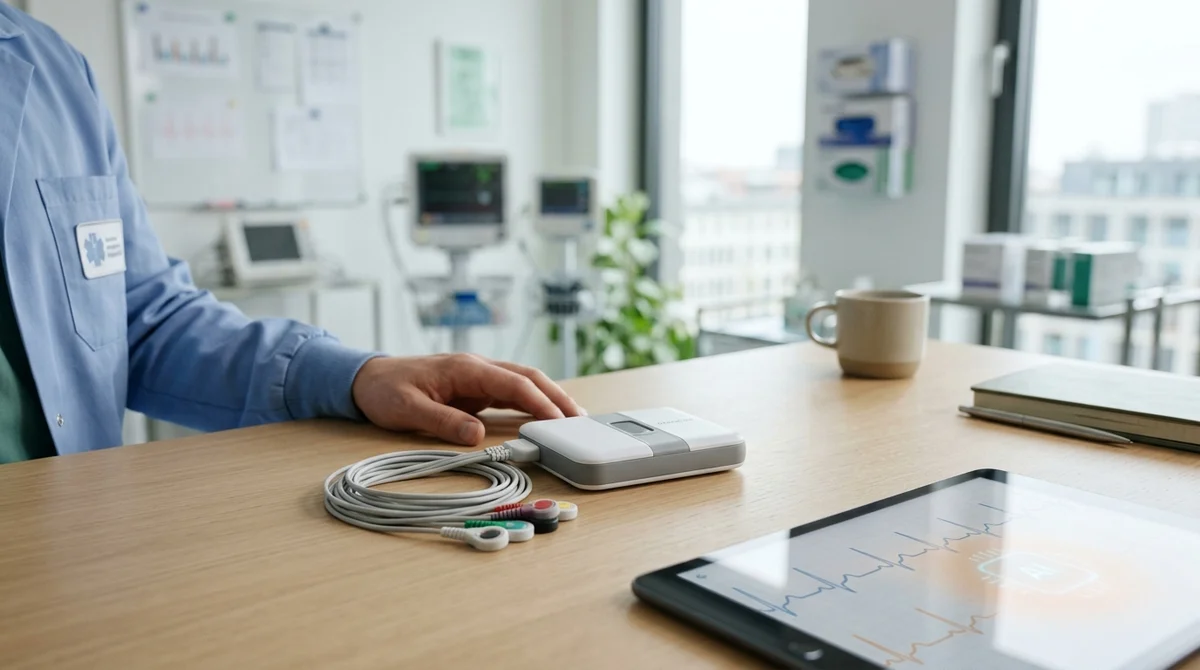
AliveCor has received European CE Mark certification for Kardia 12L, and on April 15, 2026, it began rolling the system out in France, Germany, Italy, Spain and the UK. Kardia 12L is a pocket-sized 12-lead ECG for healthcare professionals. Instead of the familiar cart with a tangle of wires, it uses five electrodes, one cable and built-in AI to analyze cardiac data quickly.
What AliveCor is launching
This is not a consumer gadget. It is a clinical tool for doctors, nurses and other staff who need to record an ECG quickly outside a fully equipped exam room. The CE Mark lets the company sell the system across the European Economic Area, and the first shipments are going straight to five major markets.
AliveCor bills Kardia 12L as the first portable, AI-powered 12-lead ECG system with a single-cable design, built for use right at the point of care. At launch, Europe gets the KAI 12L version, which can deliver 35 cardiac determinations: 14 for rhythm and 21 for waveform morphology.
The list covers more than common arrhythmias. It also includes more critical scenarios, such as acute myocardial infarction and common types of ischemia. That matters because the standard ECG remains the go-to way to spot dangerous changes fast, yet access to one outside the hospital is often limited by the size and complexity of conventional systems.
What sets Kardia 12L apart
A conventional 12-lead ECG machine is a cart or a stationary system with ten electrodes, wires and noticeable setup time. Kardia 12L targets exactly that operational burden. The device weighs about 130 grams, runs on a battery and fits in a lab coat pocket.
A recording takes five electrodes and one cable: the system captures eight diagnostic leads and synthesizes the remaining four. That makes it usable where bulky equipment is impractical — in primary care, emergency departments, pharmacies, rural clinics and on home visits.
- Weighs about 130 grams and runs on a battery
- Five electrodes and one cable instead of the bulky conventional setup
- 35 determinations in the European version, including arrhythmias, myocardial infarction and ischemia
- Captures an ECG almost 30% faster than the standard setup
- Shares recordings with colleagues via the KardiaPro web platform
The simpler setup benefits patients as well as clinics. According to the company and a published study, it cuts ECG acquisition time by almost 30% compared with the standard setup. Patients don't need to fully undress, and staff need only minimal self-guided training.
For hospitals, that means faster patient throughput. For smaller care sites, it is a chance to offer 12-lead ECGs at all, without dedicated bulky infrastructure.
What the rollout has shown so far
Kardia 12L already has a track record in the US. After FDA clearance and its US commercial launch on June 25, 2024, the system was deployed in more than 250 clinical practices and used on tens of thousands of patients.
AliveCor's product page currently cites more than 27,000 patients tested and more than 4,000 cases of myocardial infarction and ischemia the system helped detect. Outside the US, the platform has also launched in India, Australia, New Zealand, Vietnam and Canada.
There is also an important regulatory detail. On January 13, 2026, the FDA cleared an expanded version of KAI 12L with 39 cardiac determinations in the US, but the European release starts with 35. The gap has nothing to do with hardware: the feature set depends on geography and separate approvals.
According to AliveCor, the KAI 12L algorithms were trained and validated on more than 1.75 million ECGs from leading US medical centers. In the medtech market, that is a strong selling point: the company is selling not just a compact device, but the clinical evidence it has already built up around it.
What it means
AliveCor isn't trying to replace the cardiologist with a smartphone for the mass market. It is pushing a different idea: making a full 12-lead ECG mobile and available in places where one simply wasn't at hand before.
If the European launch succeeds, the market will get another example of narrowly specialized medical AI fitting not into flashy demos, but into a clinician's real workflow — with clear gains in time, access and how quickly patients get routed to care.
Key Questions Answered
What AliveCor is launching?
This is not a consumer gadget. It is a clinical tool for doctors, nurses and other staff who need to record an ECG quickly outside a fully equipped exam room. The CE Mark lets the company sell the system across the European Economic Area, and the first shipments are going straight to five major markets. AliveCor bills Kardia 12L as the first portable, AI-powered 12-lead ECG system with a single-cable design, built for use right at the point of care. At launch, Europe gets the KAI 12L version, which can deliver 35 cardiac determinations: 14 for rhythm and 21 for waveform mor
What sets Kardia 12L apart?
A conventional 12-lead ECG machine is a cart or a stationary system with ten electrodes, wires and noticeable setup time. Kardia 12L targets exactly that operational burden. The device weighs about 130 grams, runs on a battery and fits in a lab coat pocket. A recording takes five electrodes and one cable: the system captures eight diagnostic leads and synthesizes the remaining four. That makes it usable where bulky equipment is impractical — in primary care, emergency departments, pharmacies, rural clinics and on home visits. Weighs about 130 grams and runs on a battery Fiv
What the rollout has shown so far?
Kardia 12L already has a track record in the US. After FDA clearance and its US commercial launch on June 25, 2024, the system was deployed in more than 250 clinical practices and used on tens of thousands of patients. AliveCor's product page currently cites more than 27,000 patients tested and more than 4,000 cases of myocardial infarction and ischemia the system helped detect. Outside the US, the platform has also launched in India, Australia, New Zealand, Vietnam and Canada. There is also an important regulatory detail. On January 13, 2026, the FDA cleared an expanded ve
Build & Ship Production AI Agents Without Boilerplate Code
Start your free 72-hour trial at Hamidun Academy (academy.hamidun.com) — interactive lessons on Claude Code & Cursor, live Tech Radar, and production agent templates.
The AI world, distilled — once a week
Seven stories that actually mattered, hand-picked. No noise, no reposts, no press releases.
Done! Check your inbox for a confirmation.