Linus Torvalds approves AI code rules for Linux: the human bears responsibility
Linux has set out its first rules for AI-generated code in the kernel: developers can use Copilot, Claude and other tools, but only with full manual review and personal responsibility. The developer must sign off under the DCO themselves and, where appropriate, add an Assisted-by tag. The main unresolved question is the provenance of generated fragments, and the licensing risks that follow for the project, patch authors and maintainers.
AI-processed from ZDNet AI; edited by Hamidun News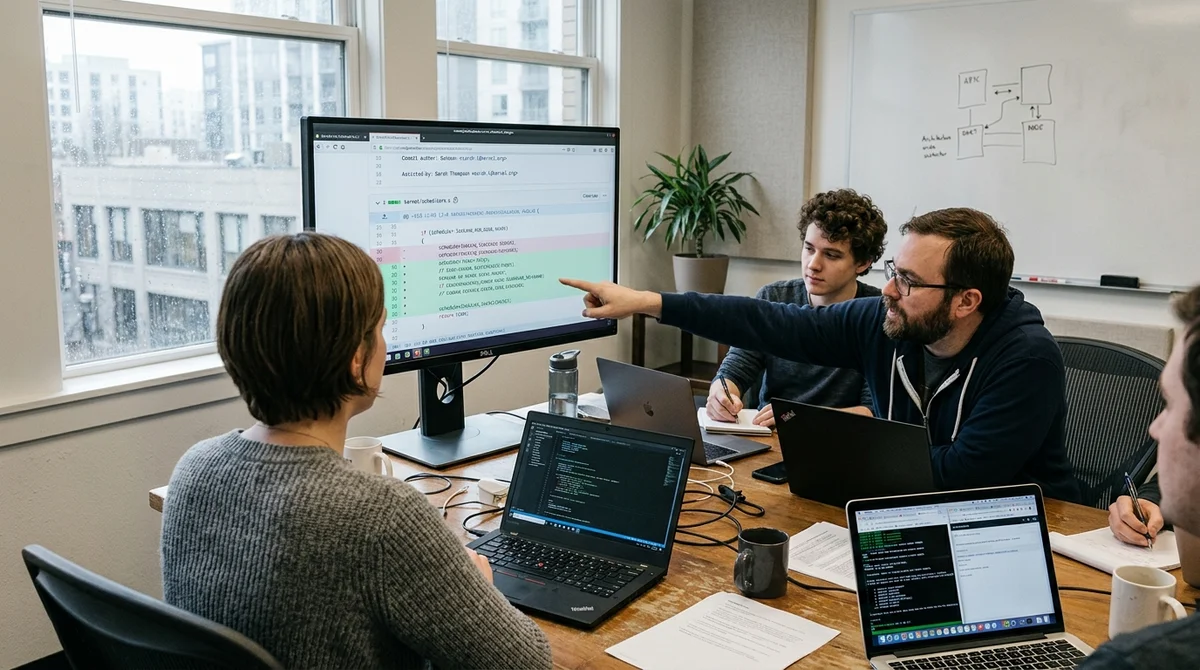
Linus Torvalds and the Linux maintainers have adopted the first official rules for code written with the help of AI. The policy does not ban Copilot, Claude or other tools, but it makes the human fully responsible for every line, every bug and every licensing risk.
What changed
The kernel documentation now has a dedicated section called AI Coding Assistants. In it, the Linux team formally acknowledges that developers will use generative tools anyway, so it matters more to set clear rules of the game than to impose symbolic bans.
The core principle is simple: AI is a tool, not an author. Any patch that lands in the kernel must therefore still go through the usual process of review, discussion and manual verification.
The new rules require all code to remain compatible with the GPL-2.0-only license and files to carry correct SPDX identifiers. They also state explicitly that an AI agent may not add a Signed-off-by tag: the tag is tied to the Developer Certificate of Origin and represents a legal certification by a human. Only a living developer can sign such a patch, and that person takes full responsibility for the contribution.
How to submit patches now
In practice, this means not a revolution for developers but an extra layer of transparency. Using AI is no longer a violation in itself, as long as the person can explain what exactly the tool did and how the result was checked.
Put simply, a model can help write a patch or a description, but it cannot replace the author, who understands the code, tests it and is ready to defend the changes before maintainers.
- Review all generated code manually instead of relying on the model's output
- Make sure the fragments do not violate the kernel's licensing requirements
- Add your own Signed-off-by, certifying the DCO on behalf of a human
- Add Assisted-by with the tool name and model version
- Do not present ordinary tools such as git, gcc, make or an editor as AI contributions
This approach did not come out of nowhere. Months of debate over "AI slop" and the quality of patches sent by people with only a minimal grasp of what the model actually generated pushed the maintainers to formalize the rules. Cases where AI involvement was not disclosed up front caused particular uproar: the patch looked like the normal work of an experienced developer, but it later emerged that a significant part of the text and code had been written by an LLM.
The main unresolved problem
Practical as it is, the new policy does not remove the most uncomfortable question: where the code comes from. The documentation requires the human to verify the license cleanliness of AI output, but it offers no way to prove where a specific line actually came from. If a model generates a fragment too similar to someone else's code under incompatible terms, an Assisted-by tag will not fix the problem. The patch submitter remains responsible, even if they physically cannot trace the model's full training path.
There is a second gap: the policy does little against bad-faith contributors. Torvalds said directly that the documentation is written for good-faith participants, and people who send junk code will not honestly label it as AI-generated. In other words, Linux chose not a ban but personal accountability: if the code is good, it will be considered; if it is a hallucination, a regression or a poorly understood patch, whoever hit send will have to answer for it.
"The documentation is for good-faith contributors," is how
Torvalds explained his approach to AI patches.
What this means
Linux did not declare war on AI tools, and it did not pretend the problem doesn't exist. The project chose a mature model: you can use AI, you cannot hide it, you cannot sign on the model's behalf, and the human bears the legal and technical consequences.
For the whole open source industry this is an important signal: the next big argument will not be about whether to allow AI, but about how to prove the provenance and quality of generated code.
- Nov 1, 2026Local models lose to Opus and Codex: 0.21 on a MacBook versus 1.00 for Codex
- Nov 1, 2026Kimi scores 96.2% on a 1C database analytics test and emerges as a fallback if Claude access is blocked
- Nov 1, 2026OpenAI Rewrites GPT Behavior Rules: Five Values and a Chain of Command
- Nov 1, 2026Google admits AI Mode cuts search revenue, shares fall 15%
Key Questions Answered
What changed?
The kernel documentation now has a dedicated section called AI Coding Assistants. In it, the Linux team formally acknowledges that developers will use generative tools anyway, so it matters more to set clear rules of the game than to impose symbolic bans. The core principle is simple: AI is a tool, not an author. Any patch that lands in the kernel must therefore still go through the usual process of review, discussion and manual verification. The new rules require all code to remain compatible with the GPL-2.0-only license and files to carry correct SPDX identifiers. They a
How to submit patches now?
In practice, this means not a revolution for developers but an extra layer of transparency. Using AI is no longer a violation in itself, as long as the person can explain what exactly the tool did and how the result was checked. Put simply, a model can help write a patch or a description, but it cannot replace the author, who understands the code, tests it and is ready to defend the changes before maintainers. Review all generated code manually instead of relying on the model's output Make sure the fragments do not violate the kernel's licensing requirements Add your own Si
What are the key details on The main unresolved problem?
Practical as it is, the new policy does not remove the most uncomfortable question: where the code comes from. The documentation requires the human to verify the license cleanliness of AI output, but it offers no way to prove where a specific line actually came from. If a model generates a fragment too similar to someone else's code under incompatible terms, an Assisted-by tag will not fix the problem. The patch submitter remains responsible, even if they physically cannot trace the model's full training path. There is a second gap: the policy does little against bad-faith
Build & Ship Production AI Agents Without Boilerplate Code
Start your free 72-hour trial at Hamidun Academy (academy.hamidun.com) — interactive lessons on Claude Code & Cursor, live Tech Radar, and production agent templates.
The AI world, distilled — once a week
Seven stories that actually mattered, hand-picked. No noise, no reposts, no press releases.
Done! Check your inbox for a confirmation.