The Guardian asks whether you should say 'thank you' to Alexa and other AI assistants
The Guardian has opened up a mundane but telling question for debate: should you say "please" and "thank you" to Alexa, Siri, and chatbots? Readers split into two camps. One side sees politeness as a useful habit that shapes how people talk to each other. The other points to AI's energy costs and the risk of treating a machine as a living being with a personality and rights.
AI-processed from Guardian; edited by Hamidun News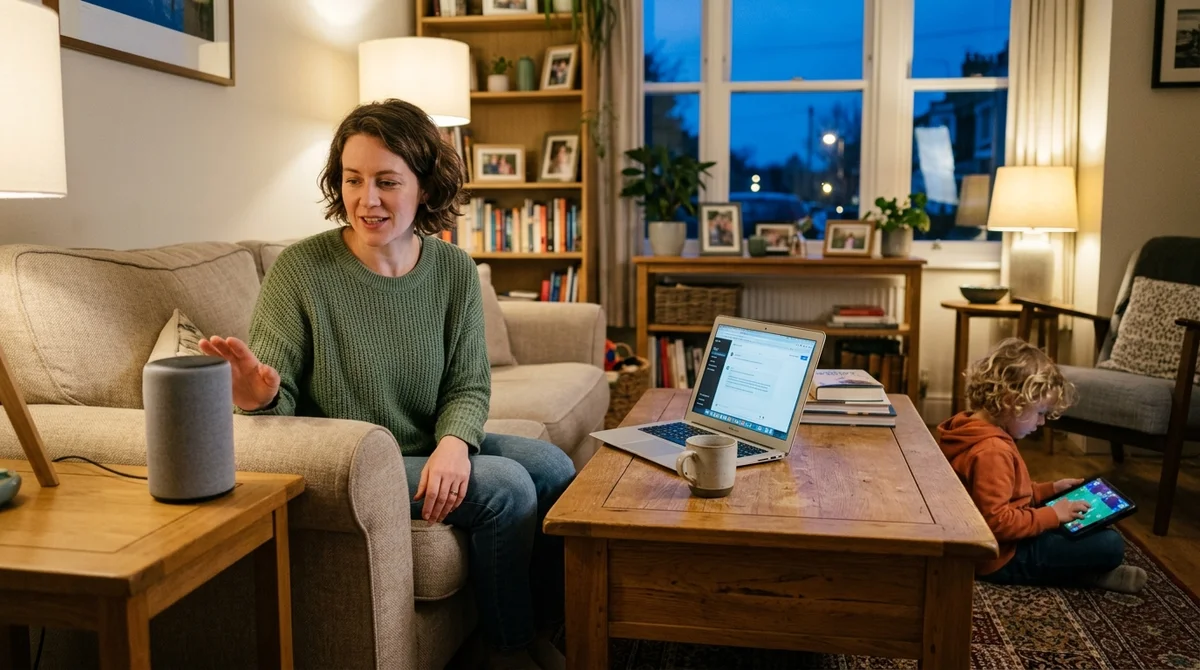
The Guardian has published a selection of reader responses to a question that has long since stopped being just a household habit: should you be polite to voice assistants and AI services? The discussion quickly moved away from the feelings of machines and toward how these conversations change the people having them.
Where politeness comes from
Some participants are convinced that saying "please" and "thank you" to Alexa or a chatbot benefits the user, not the device. In this view, politeness works like muscle memory: people repeat the same communication pattern over and over, then carry it into everyday life. This matters especially for children and teenagers, who increasingly talk to technology at least as much as they talk to people. If a curt, commanding tone becomes the norm at home, it can easily seep into conversations with cashiers, colleagues, or family. One reader put it as simply as possible: even if AI feels nothing, people are still responsible for their own manners.
Several responses returned to the same idea: rudeness toward an interface that can't answer back is convenient precisely because it carries no social cost. But the habit of speaking harshly, venting frustration, and barking orders without softening them gets reinforced over time. For supporters of this view, being polite to a machine is a form of self-discipline, not an act of sympathy.
"They're not people, but I am a person — and I try to be a decent one."
The case against
Skeptics in the same discussion point out that excessive politeness toward AI has side effects of its own. Their main argument is that we shouldn't humanize systems that only imitate engagement, understanding, and emotion. If you keep responding to them as if they were a conversation partner with an inner life, the line between a tool and a quasi-person starts to blur. For some readers, this is not a harmless verbal habit but a cultural shift: people increasingly attribute intentions, character, and even moral status to a machine that has none of them.
There's also a more down-to-earth argument: extra words in every request mean extra computation. One participant directly linked "thank you" and "please" to additional energy and water consumption, while another recalled Sam Altman's remark that responding to users' polite phrases costs OpenAI tens of millions of dollars. From a practical standpoint, the argument goes like this: if AI is a utility, why load it with phrases that don't change the meaning of the command?
Where to draw the line
In the end, the discussion went beyond a simple "yes" or "no." Even many supporters of politeness clarify that they don't consider assistants living beings and regularly remind themselves of that. Their position is more about everyday speech hygiene than about recognizing AI as a subject. Skeptics, for their part, aren't necessarily calling for rudeness: they suggest speaking briefly, clearly, and without theatrical courtesy. The reader responses show that the real question is broader: what should our standard be for talking to machines that speak in a human voice?
- Politeness as practice for everyday manners
- The risk of carrying a commanding tone into conversations with people
- The danger of humanizing a soulless tool
- Extra energy, water, and compute costs
What it means
The debate over saying "thank you" to Alexa turned out to be a marker of a bigger issue: interfaces are becoming so conversational that people have to renegotiate the rules for talking to technology. While some see politeness as a useful social reflex, others want to keep a hard line between human and machine. For the industry, this is an important signal: the more human AI sounds, the more a product affects not just convenience but users' everyday habits.
- Oct 31, 2026Worldwide Express hands disputed invoices to AI agents and cuts unresolved disputes by 75%
- Oct 30, 2026AWS gives coding agents a live site preview straight from an isolated session
- Oct 30, 2026MoEngage Opens 400 Private APIs to AI Agents Through AgentCore Gateway, Without Building Its Own MCP Servers
- Oct 29, 2026NVIDIA Nemotron 3.5 Super VL: 120B Parameters, 12B Active, Running on AWS
Key Questions Answered
Where politeness comes from?
Some participants are convinced that saying "please" and "thank you" to Alexa or a chatbot benefits the user, not the device. In this view, politeness works like muscle memory: people repeat the same communication pattern over and over, then carry it into everyday life. This matters especially for children and teenagers, who increasingly talk to technology at least as much as they talk to people. If a curt, commanding tone becomes the norm at home, it can easily seep into conversations with cashiers, colleagues, or family. One reader put it as simply as possible: even if AI
What are the key details on The case against?
Skeptics in the same discussion point out that excessive politeness toward AI has side effects of its own. Their main argument is that we shouldn't humanize systems that only imitate engagement, understanding, and emotion. If you keep responding to them as if they were a conversation partner with an inner life, the line between a tool and a quasi-person starts to blur. For some readers, this is not a harmless verbal habit but a cultural shift: people increasingly attribute intentions, character, and even moral status to a machine that has none of them. There's also a more d
Where to draw the line?
In the end, the discussion went beyond a simple "yes" or "no." Even many supporters of politeness clarify that they don't consider assistants living beings and regularly remind themselves of that. Their position is more about everyday speech hygiene than about recognizing AI as a subject. Skeptics, for their part, aren't necessarily calling for rudeness: they suggest speaking briefly, clearly, and without theatrical courtesy. The reader responses show that the real question is broader: what should our standard be for talking to machines that speak in a human voice? Politene
Test Frontier LLMs & Autonomous Agents in One Workspace
Run Claude Opus 5.5, GPT-6, Gemini 3.1, and DeepSeek side-by-side in Nomad AI (nomadnet.ai) — unified model routing, deep research, and multimodal workflows under one subscription.
The AI world, distilled — once a week
Seven stories that actually mattered, hand-picked. No noise, no reposts, no press releases.
Done! Check your inbox for a confirmation.