C the Signs explains how AI helps detect cancer at its earliest stages
Bea Bakshi of C the Signs says the next big shift in oncology is not just new drugs but earlier detection of risk. AI helps doctors match symptoms, medical history and risk factors faster, so people get sent for the right tests sooner. The idea is not to replace the doctor, but to cut the number of cases missed at the start.
AI-processed from Bloomberg Tech; edited by Hamidun News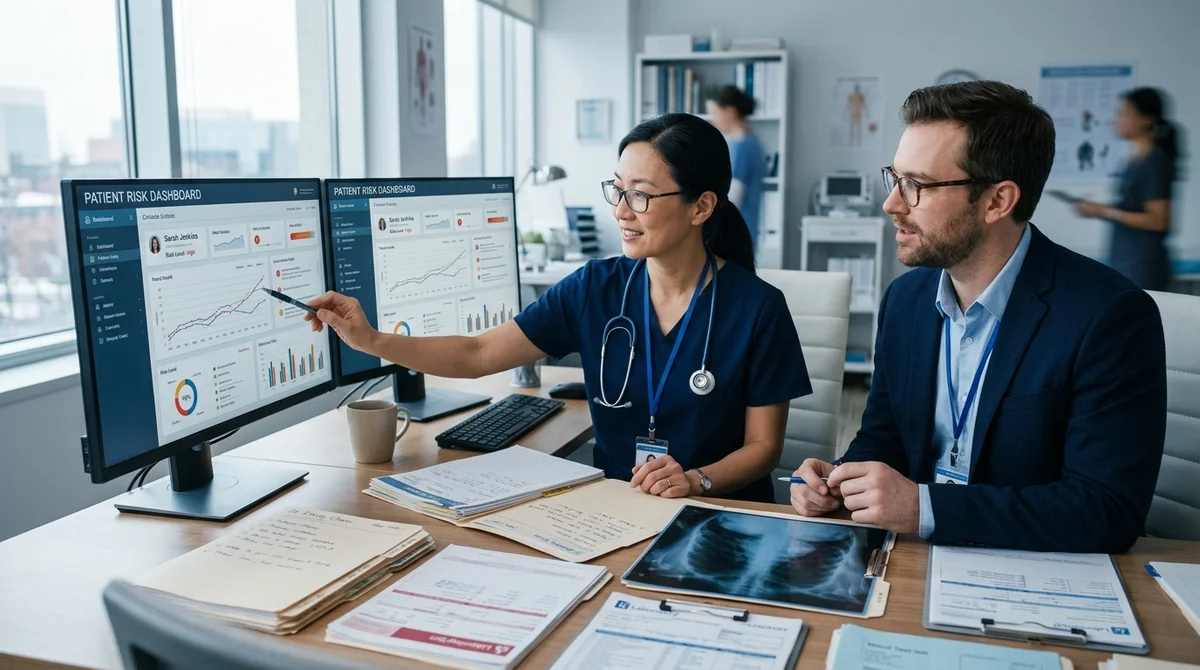
Bea Bakshi, CEO and co-founder of C the Signs, talking about the future of cancer diagnostics, focused not on treatment but on the moment when the disease can still be caught earlier. In her words, AI is already becoming a working early-warning tool: it does not make a diagnosis on its own, but it helps spot risk faster and keeps patients from being lost at the first stage.
Why the start matters
In oncology, time often matters more than how loud the symptoms are. In the early stages, many cancers pass for ordinary complaints: fatigue, weight loss, changes in appetite, recurring pain that is easy to put down to stress or other conditions. The problem is not only that a single symptom looks minor, but that the doctor and the system need to assemble many weak signals into one picture in time. This is where digital tools can deliver a noticeable gain.
Bakshi essentially describes AI as an extra layer of attentiveness within primary care. Instead of waiting until the clinical picture becomes obvious, algorithms can flag earlier that a set of complaints, medical history and risk factors warrants a check. This approach matters most where doctors have little time per appointment and where a patient's path to specialist testing already stretches over weeks, months and several repeat visits.
Where AI helps
This is not a "magic button" that finds cancer without human involvement. AI's strength lies elsewhere: it can quickly cross-reference scattered data and single out cases that deserve closer attention. In early detection this can work at several levels at once, from the first complaint in a GP's office to the decision on whether a patient needs a fast-track route to lab tests, imaging or a specialist consultation.
- Analyze combinations of symptoms that look routine on their own
- Match complaints against age, family history and other risk factors
- Suggest when a patient should be referred faster for further testing
- Reduce the chance that a warning sign gets lost in a stream of routine appointments
For platforms like C the Signs, the value here lies not in a polished model demo but in a concrete clinical pathway. If the system helps a doctor order the right test earlier, or avoid missing a repeat visit with the same complaints, that is a practical effect. The sooner a well-founded suspicion arises, the greater the chance that treatment starts before a severe stage, when options are no longer as broad.
Not instead of the doctor
Bakshi does not present AI as a replacement for clinical judgment. Even an accurate model works only in context: the examination, medical history, test results and an understanding of what is happening to a specific person, not to the average patient in a dataset, all matter. So such systems face two main tests: usefulness in a real appointment and quality of routing, not just a high metric on a test set.
AI is part of the solution at the very earliest stages.
There are also obvious limits. Any early screening system has to balance sensitivity against the number of false alarms: if there are too many alerts, doctors stop trusting them; if the threshold is too high, an important case can be missed again. So the next step for such products is not only to improve the models but to build them into clinic workflows so that prompts are explainable, timely and actually speed up the patient's path to diagnosis.
What this means
The core point is simple: a breakthrough in oncology is not only new drugs but an earlier moment of intervention. If AI helps surface risk before the disease becomes obvious, its value shows up not as hype but in missed cases avoided and cases found in time.
Key Questions Answered
Why the start matters?
In oncology, time often matters more than how loud the symptoms are. In the early stages, many cancers pass for ordinary complaints: fatigue, weight loss, changes in appetite, recurring pain that is easy to put down to stress or other conditions. The problem is not only that a single symptom looks minor, but that the doctor and the system need to assemble many weak signals into one picture in time. This is where digital tools can deliver a noticeable gain. Bakshi essentially describes AI as an extra layer of attentiveness within primary care. Instead of waiting until the cl
Where AI helps?
This is not a "magic button" that finds cancer without human involvement. AI's strength lies elsewhere: it can quickly cross-reference scattered data and single out cases that deserve closer attention. In early detection this can work at several levels at once, from the first complaint in a GP's office to the decision on whether a patient needs a fast-track route to lab tests, imaging or a specialist consultation. Analyze combinations of symptoms that look routine on their own Match complaints against age, family history and other risk factors Suggest when a patient should
What are the key details on Not instead of the doctor?
Bakshi does not present AI as a replacement for clinical judgment. Even an accurate model works only in context: the examination, medical history, test results and an understanding of what is happening to a specific person, not to the average patient in a dataset, all matter. So such systems face two main tests: usefulness in a real appointment and quality of routing, not just a high metric on a test set. AI is part of the solution at the very earliest stages. There are also obvious limits. Any early screening system has to balance sensitivity against the number of false al
Test Frontier LLMs & Autonomous Agents in One Workspace
Run Claude Opus 5.5, GPT-6, Gemini 3.1, and DeepSeek side-by-side in Nomad AI (nomadnet.ai) — unified model routing, deep research, and multimodal workflows under one subscription.
The AI world, distilled — once a week
Seven stories that actually mattered, hand-picked. No noise, no reposts, no press releases.
Done! Check your inbox for a confirmation.