Andrew Guthrie Ferguson: how smart devices and biometrics undermine the right to privacy
Andrew Guthrie Ferguson warns that data from smartwatches, health apps, and cameras is increasingly serving not the user, but the police in the US. The article examines how period trackers, DNA databases, and facial recognition systems aid investigations while also blurring the boundaries of privacy. The main problem is that the law still has not kept pace with the scale of digital self-surveillance.
AI-processed from Wired; edited by Hamidun News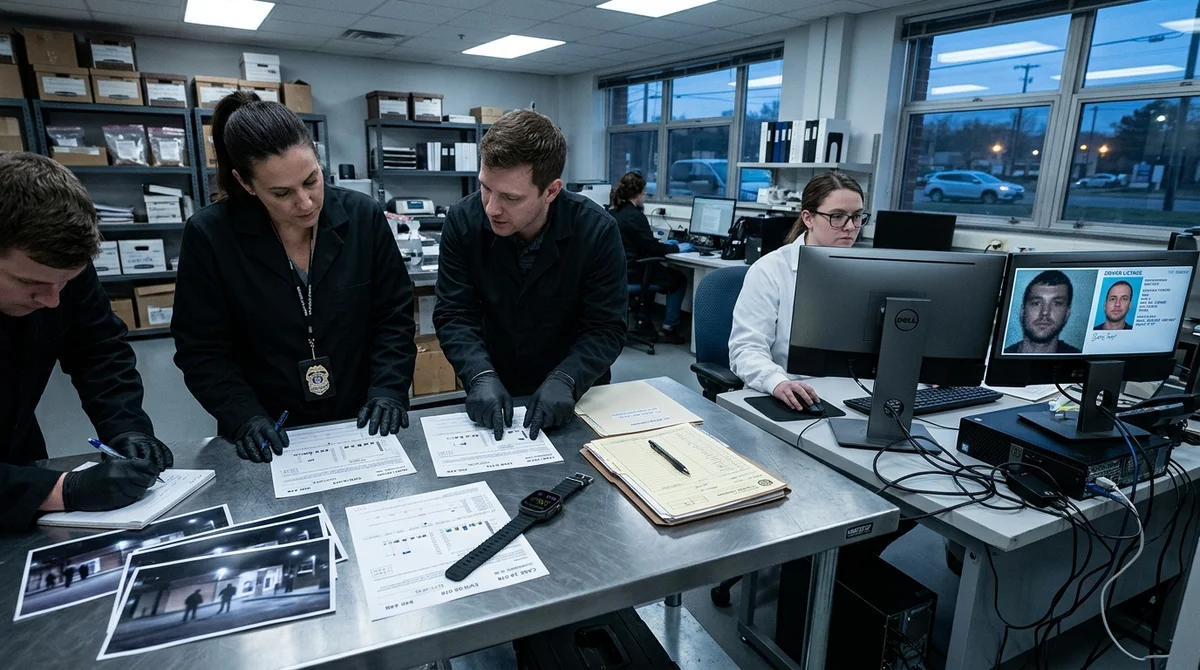
Lawyer and digital surveillance researcher Andrew Guthrie Ferguson describes an alarming shift: data that people voluntarily leave in smart devices and biometric systems increasingly becomes evidence for police. The more services that monitor the body, habits, and movements, the weaker our conventional understanding of privacy becomes.
The Body as Evidence
Ferguson begins with a simple observation: smartwatches, fitness trackers, and medical gadgets know too much about a person. They record heart rate, blood pressure, sleep, mood, menstrual cycle, sexual activity, and dozens of other parameters. For the user, this looks like a convenient self-monitoring service, but for investigators, it's already a ready-made digital trail.
If a device can show when someone slept, moved, felt nervous, or stopped breathing, then this data is potentially of interest not only to doctors but also to police. The problem manifests most acutely in reproductive and mental health apps. The author notes that nearly a third of women in the US use cycle trackers, and such services collect not only dates and symptoms but also geolocation, information about partners, and other sensitive details.
With restrictions on abortion, such a data array could become a body of evidence. Similar logic applies to online therapy services: information about depression, medications, or crisis states can first go to advertising platforms and then become accessible to the state.
Where Traces Are Collected
The problem has long extended beyond apps. The FBI is developing a massive biometric system NGI, which collects voice profiles, palm prints, face templates, iris scans, tattoos, and fingerprints. Separately, there is CODIS — a DNA database with 21.7 million profiles. Ferguson shows that the state and private companies are increasingly building infrastructure where biological data is stored for years and then used far from its original purpose.
- In California, some defendants had DNA samples taken in exchange for dropping minor charges.
- In New Jersey, newborn blood samples after screening were stored for 23 years.
- Police were able to request a baby's DNA to connect his father to a crime from 15 years ago.
- New methods allow genetic material to be collected directly from the environment, without a separate blood draw.
"If a DNA sample is available, it is used for prosecution."
Errors and Loopholes
A separate risk is associated with facial recognition. The article contains two illustrative cases: in one, the system helped quickly find a package thief from a camera recording, in another, it led to the wrongful arrest of Nijeria Parks, who spent 10 days in jail despite not being at the crime scene at all. The author emphasizes that even when a person formally remains "in the loop" of decision-making, the algorithm already sets the direction of suspicion.
And if such tools are applied even to minor cases, they can easily become standard for mass investigations. The problem is that law is poorly adapted to this scale of surveillance. American privacy protection logic long assumed that a face, voice, or traces left in public are not truly hidden from the state.
But in 1973, no one anticipated that cities could be covered with thousands of HD cameras, linked in a network, and have faces automatically compared to police databases. The same logic applies to "abandoned DNA": if a person inevitably leaves biological material everywhere, they formally lose control over it, although in reality it's the most intimate information.
What This Means
Ferguson's thesis is not that biometrics and smart devices are useless: they really do help treat people and solve crimes. His conclusion is different — without new legal restrictions, the convenience of digital services will increasingly be paid for by the loss of bodily and behavioral privacy. For users, this is a bad trade, because it's much harder to recover leaked biodata or cancel a large-scale surveillance system than it is to once click "I agree."
Need AI working inside your business — not just in your newsfeed?
I build production AI for companies — custom CRM, internal tools, autonomous agents, workflow automation. Owned by you, shaped to your process, no per-seat tax. Built by Zhemal Khamidun, CPO of AlpinaGPT (AI platform, 6,000+ users).
The AI world, distilled — once a week
Seven stories that actually mattered, hand-picked. No noise, no reposts, no press releases.
Done! Check your inbox for a confirmation.