US utilities plan $1.4 trillion in investment by 2030 as AI data centers drive a power boom
US utilities intend to channel $1.4 trillion in capital spending through 2030, roughly twice as much as in the previous decade. The main demand driver is data centers running AI workloads: more than 30 utilities named them as a key source of growth. Against that backdrop, the average electricity price for American households is already forecast to rise 5.1% in 2026.
AI-processed from TNW; edited by Hamidun News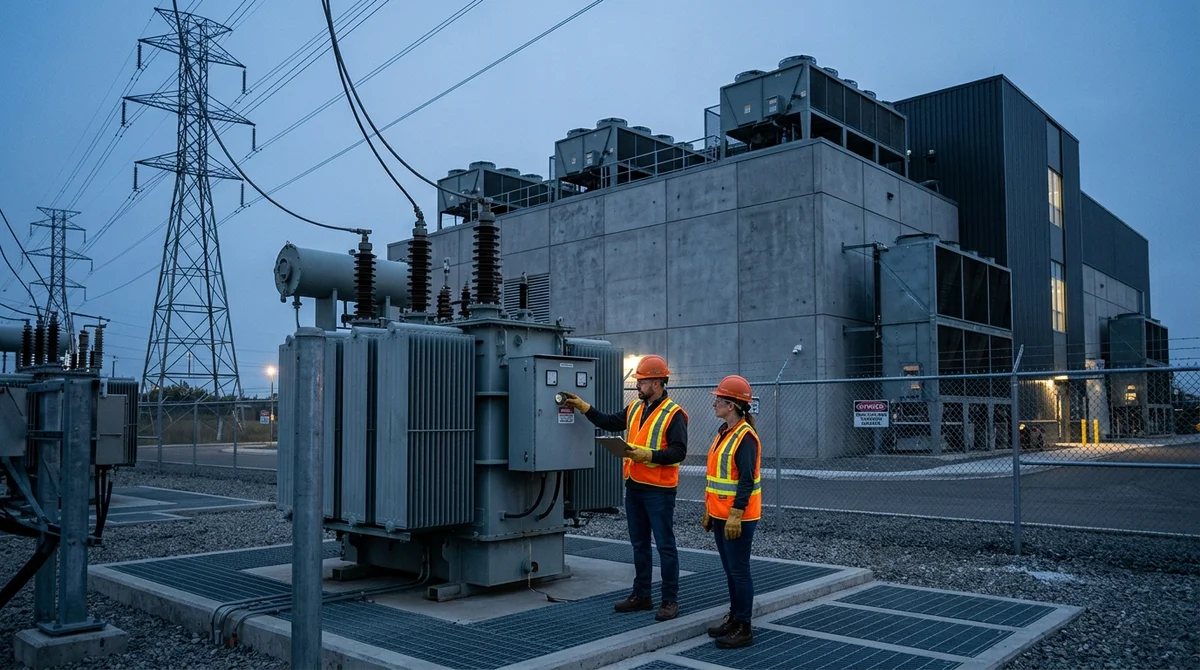
The AI boom in the US is increasingly constrained not by models but by electricity. According to a report that examined the plans of 51 investor-owned utilities, the power sector intends to invest $1.4 trillion by 2030 to cope with load growth, and a significant share of that demand comes from data centers.
Where the figure comes from
For American utilities, this is a very large spending cycle. The $1.4 trillion is roughly double the investment of the previous decade, which means this is not spot modernization but a large-scale expansion of infrastructure. These companies deliver power to households and businesses, so their capital spending typically goes into grids, substations, generation and connecting new capacity. In other words, the power system is preparing for demand that cosmetic upgrades can no longer meet.
The source of this demand for new capacity matters too. More than 30 companies explicitly named data centers as one of the main growth drivers. That changes the planning logic: where demand once grew relatively smoothly, large facilities with high, near-continuous load now enter the picture, and they must be connected quickly and without reliability gaps. For regions, this means revisiting investment plans years ahead.
Why demand is growing
AI data centers are not just another type of commercial real estate. Training and serving models requires dense computing infrastructure that consumes a lot of power and runs almost without pause. For power systems, this means not only more kilowatt-hours per year but also new requirements for connection speed, reserves and grid stability around large tech clusters, especially where several sites are being built in parallel.
- Large data centers request new connections of tens and hundreds of megawatts.
- Load becomes flatter and round-the-clock rather than peaking only at certain times.
- Grids need new substations, lines and capacity reserves.
- Any delay in the power sector slows the commissioning of AI infrastructure and the launch of services.
That is why the AI race increasingly extends beyond software and chips. Even if tech companies have access to GPUs, they still depend on how quickly local utilities and regulators approve connection, construction and upgrades. Electricity is turning from a background service into one of the main limits on market growth. For investors and data center operators, this is already an operational risk, not an abstract infrastructure question.
Who will pay for the growth
There is a sensitive side to this story for ordinary consumers. The average electricity price for American households is already forecast to rise 5.1% in 2026. Not all of the rise in rates can be automatically attributed to AI alone, but the sharp jump in capital spending creates obvious pressure: utilities will want to recoup their investment, and regulators will have to decide how to split costs among tech giants, businesses and households, starting now.
That raises an uncomfortable political question: who exactly should pay for the infrastructure needed for the new technology boom. If data centers become the main driver of demand, it is logical to expect tougher negotiations over special tariffs, long-term power contracts and direct participation by data center operators in building capacity. Otherwise, public discontent over rising bills could quickly turn AI energy into a subject of political fights. And this dispute is almost inevitable at the state level and on the federal agenda.
What this means
The AI race in the US is no longer just a contest of models, chips and startup investment. Its pace is increasingly set by transformers, power lines and tariff decisions: whoever gets power for data centers faster will gain the advantage.
Key Questions Answered
Where the figure comes from?
For American utilities, this is a very large spending cycle. The $1.4 trillion is roughly double the investment of the previous decade, which means this is not spot modernization but a large-scale expansion of infrastructure. These companies deliver power to households and businesses, so their capital spending typically goes into grids, substations, generation and connecting new capacity. In other words, the power system is preparing for demand that cosmetic upgrades can no longer meet. The source of this demand for new capacity matters too. More than 30 companies explicitl
Why demand is growing?
AI data centers are not just another type of commercial real estate. Training and serving models requires dense computing infrastructure that consumes a lot of power and runs almost without pause. For power systems, this means not only more kilowatt-hours per year but also new requirements for connection speed, reserves and grid stability around large tech clusters, especially where several sites are being built in parallel. Large data centers request new connections of tens and hundreds of megawatts. Load becomes flatter and round-the-clock rather than peaking only at cert
Who will pay for the growth?
There is a sensitive side to this story for ordinary consumers. The average electricity price for American households is already forecast to rise 5.1% in 2026. Not all of the rise in rates can be automatically attributed to AI alone, but the sharp jump in capital spending creates obvious pressure: utilities will want to recoup their investment, and regulators will have to decide how to split costs among tech giants, businesses and households, starting now. That raises an uncomfortable political question: who exactly should pay for the infrastructure needed for the new techn
Test Frontier LLMs & Autonomous Agents in One Workspace
Run Claude Opus 5.5, GPT-6, Gemini 3.1, and DeepSeek side-by-side in Nomad AI (nomadnet.ai) — unified model routing, deep research, and multimodal workflows under one subscription.
The AI world, distilled — once a week
Seven stories that actually mattered, hand-picked. No noise, no reposts, no press releases.
Done! Check your inbox for a confirmation.