Memory card makers cut speeds amid flash memory shortage
Demand for NAND memory from AI infrastructure is driving the flash storage market into shortage. Memory card makers are already cutting model speeds and capacities to keep prices in the mass market. At the same time, storage devices have risen in price by an average of 124%, with some products up 261%. Buyers will need to pay closer attention to speed class, not just the brand.
AI-processed from CNews AI; edited by Hamidun News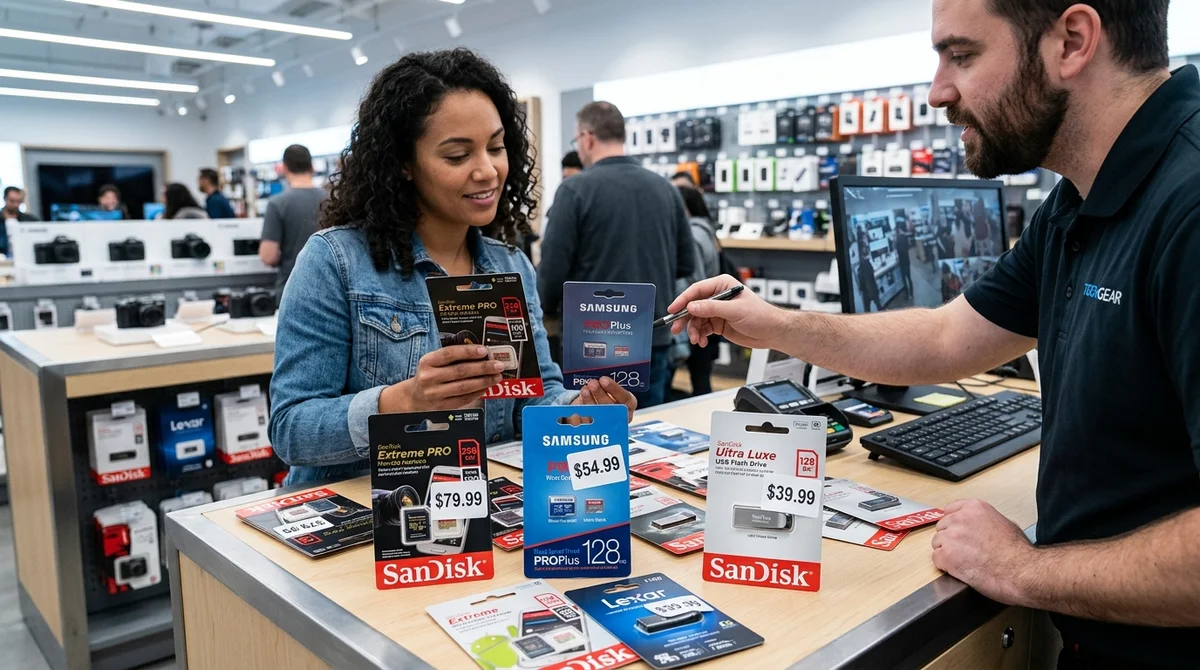
The memory card and flash storage market is shifting against the interests of consumers: manufacturers are increasingly releasing slower and lower-capacity models to keep prices within reasonable limits. The reason is a shortage of NAND chips, which has intensified due to growing demand from artificial intelligence infrastructure.
Why the Shortage Emerged
It's not that AI is directly 'consuming' microSD cards. The problem is different: the same manufacturing capacity and the same types of NAND memory are increasingly being directed toward servers, data center SSDs, and corporate storage systems. Against the backdrop of the generative AI boom, suppliers find it more profitable to service large infrastructure contracts than the cheap consumer segment. As a result, the consumer market receives fewer chips, and each shipment costs more.
The effect is already visible in prices. According to the material, the average increase in storage cost was 124%, with some items rising by as much as 261%. This means that some models have actually approached prices that, until recently, would have been considered absurd for everyday accessories like memory cards for cameras, smartphones, dash cams, and gaming consoles.
If the shortage persists, manufacturers will have to choose between further price increases and reducing specifications in order to maintain an affordable shelf presence.
How the Market is Cheapening Cards
To avoid completely deterring buyers, brands are changing the products themselves. Instead of fast, high-capacity cards, they are increasingly offering models with more modest read and write speeds, as well as lower storage capacity. To the mass market, this looks like an imperceptible assortment adjustment, but in essence it's about lowering the bar. It's easier for a manufacturer to release a card that formally remains price-accessible than to explain why the familiar model now costs two or three times more.
- Lower write speed — worse for 4K video and burst shooting
- Lower capacity — more frequent file transfers and cleanup
- Reduced durability — less convenient for cameras, drones, and dash cams
- Harder selection — a familiar brand no longer guarantees the same performance class
This is particularly acute for users in categories where a memory card is not a secondary accessory but a critical component. Action cameras, drones, mirrorless cameras, portable gaming consoles, and automotive dash cams depend on stable write speeds. If the storage device can't keep up, the device may limit recording modes, interrupt recording, or buffer noticeably worse.
In other words, formal price reduction doesn't make the product more advantageous: the buyer pays less at checkout but gets a device with many more compromises.
The paradox is that performance degradation is happening simultaneously with price increases. The buyer is not just overpaying but overpaying for a weaker configuration.
This is already a familiar scenario in electronics: when the cost of a key component skyrockets, vendors first optimize the product line, then reconfigure SKUs for a new budget, and eventually what was once considered entry-level becomes the new norm. If pressure from AI infrastructure doesn't ease, slow cards—which the market would have simply rejected years ago—could become this new normal.
What This Means
For the average consumer, the message is simple: you'll need to look not only at price and brand, but also at the actual specifications of each card—speed class, capacity, memory type, and use case.
For the market as a whole, this is a signal that the AI boom is no longer affecting only GPUs and servers, but also the consumer electronics around us.
Cheap storage will remain on sale, but the concept of 'cheap' will increasingly mean 'compromised in capability'. Especially where storage is critical for recording video, games, or work files.
Build & Ship Production AI Apps with Vibe Coding
Join Zhemal Khamidun's hands-on Vibe Coding Intensive at hamidun.com/vibecoding — master Claude Code, Cursor, and autonomous agentic workflows.
The AI world, distilled — once a week
Seven stories that actually mattered, hand-picked. No noise, no reposts, no press releases.
Done! Check your inbox for a confirmation.