Microsoft, NVIDIA and IBM Make the List of 2026's 19 Top AI Red Teaming Tools
AI red teaming is quickly shifting from a niche practice to a mandatory check before release. Microsoft PyRIT, NVIDIA Garak, IBM AIF360 and Mindgard stand out in a new list of 19 tools. Teams use them to catch data leaks, bias, prompt injection and behavioral failures in LLMs and AI agents ahead of time, and then build those tests directly into CI/CD.
AI-processed from MarkTechPost; edited by Hamidun News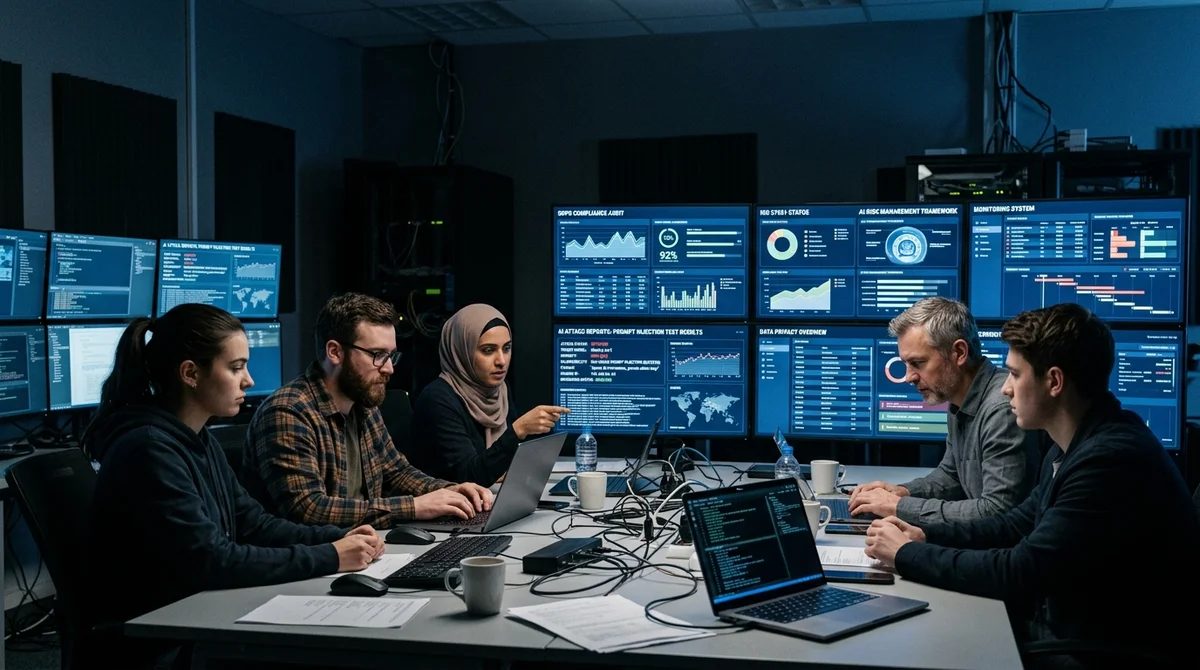
AI red teaming has gone from a narrow research practice to a required step before models reach production. A new guide to 19 tools shows that security teams now test for more than how easily a model can be broken: they also probe data leaks, bias, jailbreak scenarios and how well AI agents resist malicious instructions.
Why this became the norm
Generative models are now more deeply embedded in products, customer service and internal processes, and the cost of a mistake has grown with them. It used to be enough for companies to check the API, access controls and classic application vulnerabilities. Now they need to understand how the model itself behaves under pressure: will it reveal hidden instructions, leak confidential data, let someone bypass its safety rules, or confidently hallucinate in a critical scenario?
Unlike a conventional pentest, AI red teaming does not target only known bugs. It models the behavior of a real attacker: it tries prompt injection, jailbreaks, poisoning, bypassing protective filters, extracting system prompts, exploiting bias, attacking through RAG, and triggering failures in agent chains in production. That is why the practice is increasingly part of formal requirements for high-risk AI systems, rather than a voluntary check for peace of mind.
Who made the guide
The list covers 19 tools and platforms, from open-source libraries to commercial products for continuous monitoring. Among the most notable are Mindgard, for automated red teaming and model vulnerability assessment; Garak from NVIDIA, an open-source LLM vulnerability scanner; and PyRIT from Microsoft, which helps teams systematically run generative systems through malicious scenarios and repeatable multi-step attacks in real development pipelines and on live models.
The market has clearly split into several classes of solutions. Some tools look for vulnerabilities at the level of model behavior, others at the level of fairness and robustness, and still others help embed checks into the corporate DevSecOps loop and run them regularly rather than ad hoc. Some cover adjacent tasks: monitoring production, checking the retrieval layer, tracking risks in agent integrations and helping teams record regressions after updates.
- Mindgard, HiddenLayer, SPLX — platforms for enterprise teams that need continuous control of AI risks and work with production environments.
- Garak, PyRIT, DeepTeam, FuzzyAI — tools for automated adversarial testing, fuzzing and checking LLMs against typical attack scenarios.
- AIF360 and ART from IBM — focus on fairness, adversarial robustness and measurable model reliability metrics.
- Foolbox, Meerkat, Giskard — toolkits for practical robustness testing, visualizing problems and generating tests.
- Pentera, Snyk, Guardrails, Dreadnode, Galah, Penligent — solutions at the intersection of application security, AI governance and protection of agent systems.
How teams adopt it
The review's central point is that red teaming is no longer a one-off manual exercise before release. Best practice now centers on continuous testing: attack scenarios run in CI/CD, results are tied to specific versions of the model and system prompt, and the failures they uncover become requirements for guardrails, data and access policy. This matters most where AI is connected to search, a CRM, company documents or external tools.
Another shift is the mix of manual and automated work. Automation provides breadth of coverage and quickly runs hundreds of standard attacks, but unconventional bypasses, multi-step manipulation and contextual leaks are still better caught by human red team specialists. As a result, companies increasingly build a hybrid process: an internal security team, external auditors, and a set of open-source or commercial tools that can be re-run after every change to the model, prompt, retrieval settings or connected tools.
What it means
The AI security market is maturing fast: companies no longer settle for input filters and the hope that the model will not "break on its own." The teams that win will be those that build red teaming into the regular development cycle and check AI systems as routinely as they check code, infrastructure and access controls.
- Nov 1, 2026Google's StreamVibe video agent beats other models by 10.7% on response timing and quality
- Oct 30, 2026Mistral opens Large 4 weights: strong at code, but Chinese models score 32 to its 26
- Oct 30, 2026128 AI Agents With No Boss Passed 49% More Tests Than One
- Oct 29, 2026Stanford AI tool verifies part of Signal's code in half a day for under $500, versus five months of expert work
Key Questions Answered
Why this became the norm?
Generative models are now more deeply embedded in products, customer service and internal processes, and the cost of a mistake has grown with them. It used to be enough for companies to check the API, access controls and classic application vulnerabilities. Now they need to understand how the model itself behaves under pressure: will it reveal hidden instructions, leak confidential data, let someone bypass its safety rules, or confidently hallucinate in a critical scenario? Unlike a conventional pentest, AI red teaming does not target only known bugs. It models the behavior
Who made the guide?
The list covers 19 tools and platforms, from open-source libraries to commercial products for continuous monitoring. Among the most notable are Mindgard, for automated red teaming and model vulnerability assessment; Garak from NVIDIA, an open-source LLM vulnerability scanner; and PyRIT from Microsoft, which helps teams systematically run generative systems through malicious scenarios and repeatable multi-step attacks in real development pipelines and on live models. The market has clearly split into several classes of solutions. Some tools look for vulnerabilities at the le
How teams adopt it?
The review's central point is that red teaming is no longer a one-off manual exercise before release. Best practice now centers on continuous testing: attack scenarios run in CI/CD, results are tied to specific versions of the model and system prompt, and the failures they uncover become requirements for guardrails, data and access policy. This matters most where AI is connected to search, a CRM, company documents or external tools. Another shift is the mix of manual and automated work. Automation provides breadth of coverage and quickly runs hundreds of standard attacks, b
Test Frontier LLMs & Autonomous Agents in One Workspace
Run Claude Opus 5.5, GPT-6, Gemini 3.1, and DeepSeek side-by-side in Nomad AI (nomadnet.ai) — unified model routing, deep research, and multimodal workflows under one subscription.
The AI world, distilled — once a week
Seven stories that actually mattered, hand-picked. No noise, no reposts, no press releases.
Done! Check your inbox for a confirmation.