BetBoom: AI Agents Are Changing Software Development and Forcing Engineers to Relearn the Job
AI agents for code review, testing and routine tasks are moving from fashionable experiment to working tool for development teams. The key question is no longer whether they will replace developers, but who can integrate them fully and safely without losing control over quality, access and cloud infrastructure costs. An author from BetBoom describes a moment many developers will recognize: you finally master the modern stack, and the market already demands work with AI agents. His main conclusion is that AI does not abolish the profession, but it quickly changes the engineer's role, security requirements and companies' reliance on cloud infrastructure.
AI-processed from Habr AI; edited by Hamidun News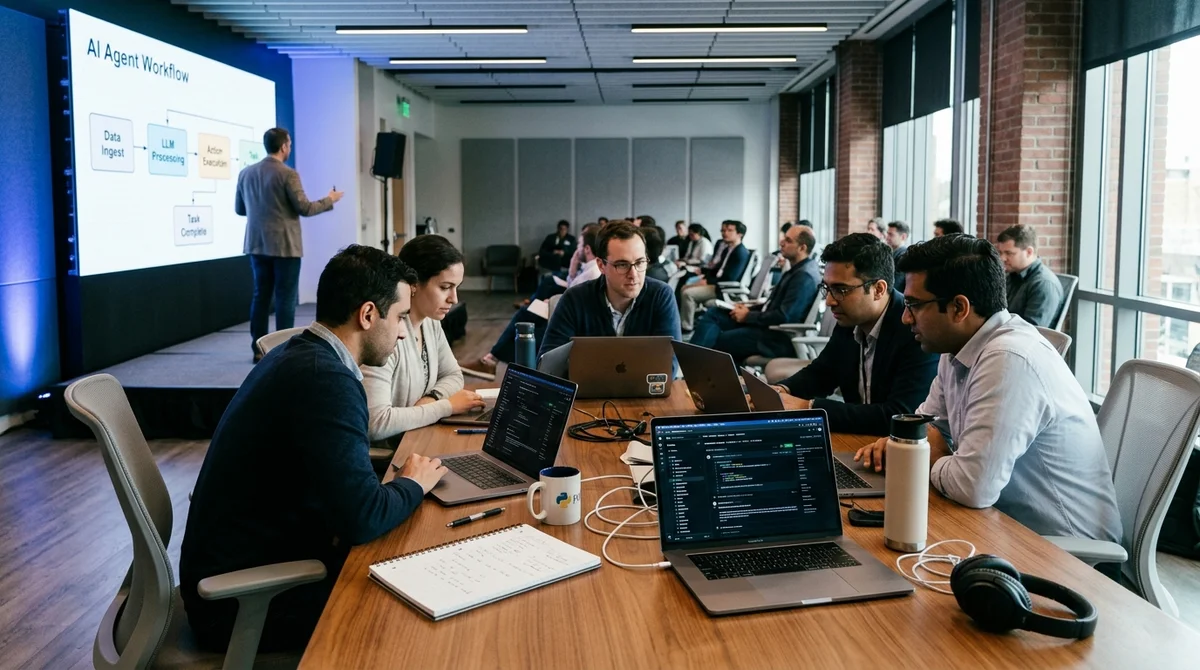
An author from BetBoom described a moment familiar to many developers: you barely finish learning the modern stack, and the market already demands work with AI agents. His main conclusion: AI does not abolish the profession, but it quickly changes the engineer's role, security requirements and companies' dependence on cloud infrastructure.
How the profession is changing
The text starts with a personal story of returning to development after a long break. In that time, the familiar world of CMSs and all-purpose webmasters disappeared: frontend and backend have fully split, frameworks have become a required foundation, and entering the profession has become harder. Once the basics were back in place, generative AI arrived.
At first, ChatGPT looked like a crutch for those who don't want to figure things out themselves, but within two years it became an everyday tool that replaces search, forums and part of routine analysis. Against this backdrop, the author felt a new sense of falling behind: it is no longer enough to simply write code, you need to understand how agents work with code.
Agents enter the process
The next step was learning about adoption practice through conferences and professional communities. After a Yandex event, it became clear that businesses are no longer discussing whether to use AI at all, but how to measure its effectiveness, what arguments to give management and how to fit new tools into team processes. At the MTS "Russkoe Tekhno" conference, this gap felt even sharper: cases of AI agents reviewing pull requests, automating routine work and speeding up standard tasks already sounded like a normal part of the engineering pipeline, not an experiment for enthusiasts.
The author was especially struck by Sber's approach, where agents are evaluated almost like employees: through KPIs, person-hours, task cost and actual usefulness. This model helps explain the value of automation to the business, but it also feeds developers' fear that an agent will be seen as a direct replacement for a junior or mid-level engineer. The article, however, also reaches a more grounded conclusion: even if an agent can write tests, find bugs and propose changes, responsibility for defining the task, verifying the result and the business logic still rests with a human.
Security and dependence
The article does not dispute the practical value of agents, but its main emphasis shifts to risks. If such a tool can run commands, work with a repository and access internal services, the cost of a mistake rises sharply. The author relays recommendations from the stage: start not with maximum permissions but with maximum restrictions, run agents in isolated environments and treat security as a baseline requirement, not an optional extra.
"Use at least rootless
Docker, but it is better to move toward fully isolated infrastructure."
- Spin up a separate environment for each specific task
- Run the agent only inside that perimeter
- Store artifacts in external storage
- Destroy the environment when the work is done
- Limit the lifetime of tokens and keys
A separate point in the article concerns the economics of the whole race around agent systems. The author suggests that the biggest winners of the current boom are the owners of cloud platforms and services with per-second billing. That is convenient for companies: they can automate processes faster, cut routine work and scale experiments. But the more deeply a business ties its development to such providers, the higher the risk of vendor lock-in: the team gets used to agents, processes are rebuilt around them, and then the provider gains room to raise prices.
What this means
The conversation about AI agents in development has moved from hype to operational practice. For engineers, this means not the end of the profession but a shift in focus, from pure code writing to managing agents, verifying results, designing a secure environment and understanding the real cost of such automation.
- Nov 1, 2026Local models lose to Opus and Codex: 0.21 on a MacBook versus 1.00 for Codex
- Nov 1, 2026Kimi scores 96.2% on a 1C database analytics test and emerges as a fallback if Claude access is blocked
- Nov 1, 2026OpenAI Rewrites GPT Behavior Rules: Five Values and a Chain of Command
- Nov 1, 2026Google admits AI Mode cuts search revenue, shares fall 15%
Key Questions Answered
How the profession is changing?
The text starts with a personal story of returning to development after a long break. In that time, the familiar world of CMSs and all-purpose webmasters disappeared: frontend and backend have fully split, frameworks have become a required foundation, and entering the profession has become harder. Once the basics were back in place, generative AI arrived. At first, ChatGPT looked like a crutch for those who don't want to figure things out themselves, but within two years it became an everyday tool that replaces search, forums and part of routine analysis. Against this backd
What are the key details on Agents enter the process?
The next step was learning about adoption practice through conferences and professional communities. After a Yandex event, it became clear that businesses are no longer discussing whether to use AI at all, but how to measure its effectiveness, what arguments to give management and how to fit new tools into team processes. At the MTS "Russkoe Tekhno" conference, this gap felt even sharper: cases of AI agents reviewing pull requests, automating routine work and speeding up standard tasks already sounded like a normal part of the engineering pipeline, not an experiment for ent
What are the key details on Security and dependence?
The article does not dispute the practical value of agents, but its main emphasis shifts to risks. If such a tool can run commands, work with a repository and access internal services, the cost of a mistake rises sharply. The author relays recommendations from the stage: start not with maximum permissions but with maximum restrictions, run agents in isolated environments and treat security as a baseline requirement, not an optional extra. "Use at least rootless Docker, but it is better to move toward fully isolated infrastructure." Spin up a separate environment for each sp
Test Frontier LLMs & Autonomous Agents in One Workspace
Run Claude Opus 5.5, GPT-6, Gemini 3.1, and DeepSeek side-by-side in Nomad AI (nomadnet.ai) — unified model routing, deep research, and multimodal workflows under one subscription.
The AI world, distilled — once a week
Seven stories that actually mattered, hand-picked. No noise, no reposts, no press releases.
Done! Check your inbox for a confirmation.