Oracle raises $16.3 billion for Stargate campus as banks step aside for PIMCO
Oracle has closed the largest debt package ever raised for a single technology facility: $16.3 billion for a data center campus in Michigan, part of the Stargate project. PIMCO took almost $10 billion of the bond tranche after some American banks pulled back. It is a strong signal: the AI infrastructure market keeps growing, but confidence that it will pay off over the long term is no longer unconditional.
AI-processed from TNW; edited by Hamidun News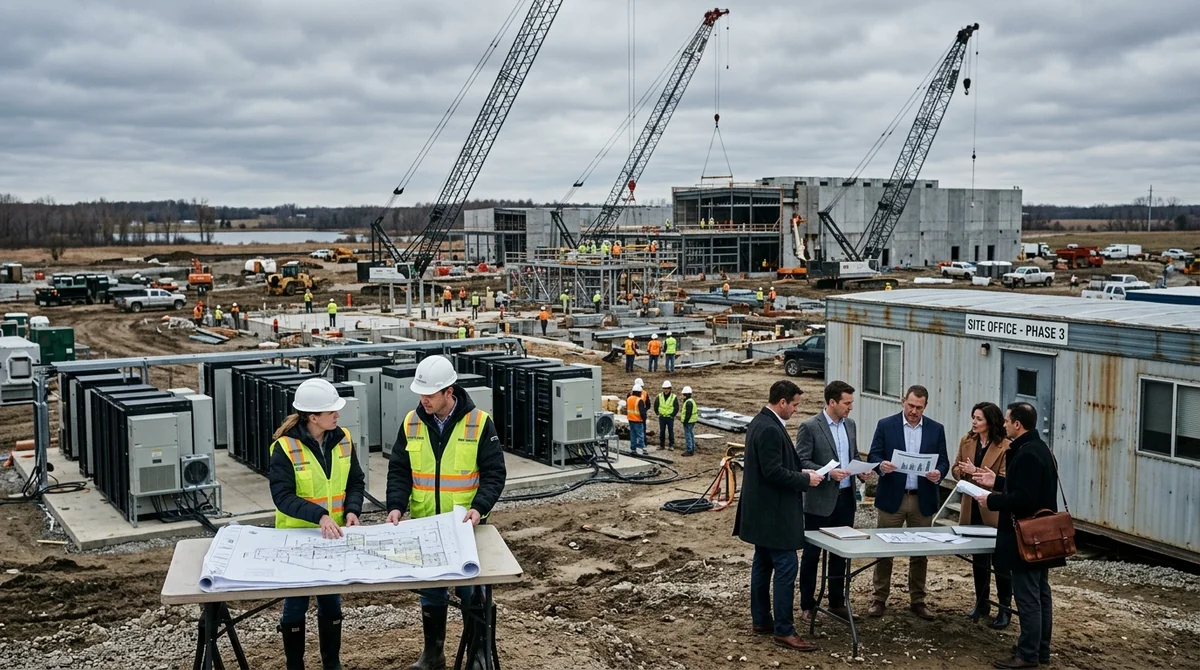
Oracle has closed $16.3 billion in financing for a single data center campus in Saline Township, Michigan. It is the largest debt package ever raised for one technology facility, and PIMCO became its main anchor investor after some American banks walked away from the deal.
How the deal is structured
The site is expected to deliver more than 1 gigawatt of capacity and will be part of the Stargate infrastructure, a joint project of Oracle, OpenAI and SoftBank announced in January 2025. Most of the financing came through bonds: about $14 billion in a debt tranche, of which PIMCO bought roughly $10 billion. Related Digital Infrastructure and Blackstone added about $2 billion in equity, and Bank of America structured the deal.
The terms look harsh even by the standards of a large infrastructure project. The bonds carry a 7.5% coupon and a term of 19.5 years. The first six years are interest-only, followed by 13 years of debt amortization.
An important nuance: investors are not lending against Oracle's entire balance sheet, but against a specific campus in Michigan. The collateral is the facility itself and its future cash flows, which is why this debt costs more than the company's ordinary corporate borrowing.
Why the banks stepped back
The key story here is not the size of the check but who is lending. American banks have grown more cautious about financing Oracle's data centers and doubt that demand for AI infrastructure at this scale will stay stable over decades. For banks it is also a question of regulatory limits: risk concentration, capital requirements and a reluctance to go too deep into a single asset with a long payback period.
- one campus, not a diversified portfolio of assets
- project financing tied to a specific facility, not to Oracle as a whole
- expensive debt with a term of nearly 20 years
- heavy reliance on capacity being occupied almost from day one
- notable concentration of obligations on one large customer, OpenAI
This is where PIMCO came in. For large asset managers, this kind of risk can be acceptable: they have longer horizons and more freedom in assessing returns. But the signal to the market is stark. If the largest data center in the history of the tech sector has to be financed through a bond fund, then even at the peak of the AI boom money is no longer handed out automatically. Demand for compute exists, but investors are looking harder at who will pay for this race, and how, five, ten and fifteen years from now.
The scale of Oracle's bet
The Michigan campus is only part of a much larger program. Oracle has already raised at least $72 billion in debt financing for data centers in Michigan, Texas, Wisconsin and New Mexico. At the same time, the company is sharply increasing its capital expenditures: for fiscal 2026 they could reach roughly $50 billion, more than double the previous level. Unsurprisingly, rating agencies S&P and Moody's have issued a negative outlook on its investment-grade rating.
Oracle has an argument in its defense: at the end of the third quarter of fiscal 2026, the company had $553 billion in future revenue from contracts already signed. But there is a weak spot here too: a substantial part of these commitments is tied to OpenAI. Formally, this is not speculative demand but signed contracts. In practice, the market is asking how durable the customers themselves are, since they promise to fill this capacity and also to fund their own expansion.
Against this backdrop, data centers are increasingly financed like real estate or energy infrastructure rather than a classic IT business. Servers matter, but so do electricity, grid connection, cooling, water, permits and construction timelines. One gigawatt of capacity is a level at which a mistake in demand forecasting is very costly. If Oracle guesses the pace of AI market growth correctly, it will gain a strategic advantage. If not, the industry may get a new example of tech overbuilding that pays back much more slowly than promised.
What it means
Oracle's story shows that the main question of the AI boom is shifting from models to infrastructure financing. The winners will not only be those with the stronger product, but also those able to raise tens of billions for risky, long-dated and energy-hungry projects.
- Nov 1, 2026Local models lose to Opus and Codex: 0.21 on a MacBook versus 1.00 for Codex
- Nov 1, 2026Kimi scores 96.2% on a 1C database analytics test and emerges as a fallback if Claude access is blocked
- Nov 1, 2026OpenAI Rewrites GPT Behavior Rules: Five Values and a Chain of Command
- Nov 1, 2026Google admits AI Mode cuts search revenue, shares fall 15%
Key Questions Answered
How the deal is structured?
The site is expected to deliver more than 1 gigawatt of capacity and will be part of the Stargate infrastructure, a joint project of Oracle, OpenAI and SoftBank announced in January 2025. Most of the financing came through bonds: about $14 billion in a debt tranche, of which PIMCO bought roughly $10 billion. Related Digital Infrastructure and Blackstone added about $2 billion in equity, and Bank of America structured the deal. The terms look harsh even by the standards of a large infrastructure project. The bonds carry a 7.5% coupon and a term of 19.5 years. The first six y
Why the banks stepped back?
The key story here is not the size of the check but who is lending. American banks have grown more cautious about financing Oracle's data centers and doubt that demand for AI infrastructure at this scale will stay stable over decades. For banks it is also a question of regulatory limits: risk concentration, capital requirements and a reluctance to go too deep into a single asset with a long payback period. one campus, not a diversified portfolio of assets project financing tied to a specific facility, not to Oracle as a whole expensive debt with a term of nearly 20 years he
What are the key details on The scale of Oracle's bet?
The Michigan campus is only part of a much larger program. Oracle has already raised at least $72 billion in debt financing for data centers in Michigan, Texas, Wisconsin and New Mexico. At the same time, the company is sharply increasing its capital expenditures: for fiscal 2026 they could reach roughly $50 billion, more than double the previous level. Unsurprisingly, rating agencies S&P and Moody's have issued a negative outlook on its investment-grade rating. Oracle has an argument in its defense: at the end of the third quarter of fiscal 2026, the company had $553 billi
Test Frontier LLMs & Autonomous Agents in One Workspace
Run Claude Opus 5.5, GPT-6, Gemini 3.1, and DeepSeek side-by-side in Nomad AI (nomadnet.ai) — unified model routing, deep research, and multimodal workflows under one subscription.
The AI world, distilled — once a week
Seven stories that actually mattered, hand-picked. No noise, no reposts, no press releases.
Done! Check your inbox for a confirmation.