Anthropic-Pentagon clash rattles the AI market, with industry bracing for a chilling effect
The dispute between Anthropic and the Pentagon reaches beyond a single contract. After the company refused to drop its bans on mass surveillance and fully autonomous weapons, it was designated a supply chain risk, and the industry started talking about a chilling effect. Microsoft and industry groups are already warning that such a precedent could make defense AI contracts far more toxic for startups and investors.
AI-processed from Bloomberg Tech; edited by Hamidun News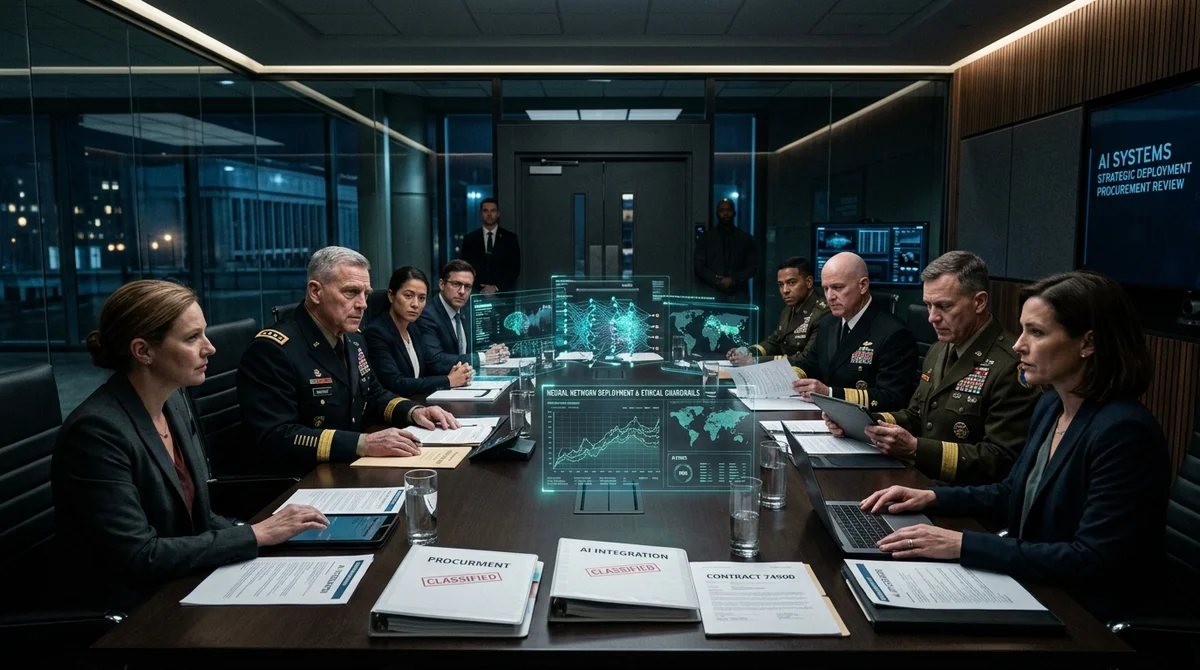
Anthropic's conflict with the Pentagon has quickly grown from a contract dispute into a test for the whole AI industry. After the US military demanded that some restrictions on the use of Claude be lifted, the industry began discussing not only military AI use cases but also how far the state is willing to go in pressuring its suppliers.
What the dispute is about
In late February 2026, Anthropic and the Pentagon failed to agree on new terms for a contract covering the use of Claude in military systems. The military insisted on the right to use the model "for any lawful purpose," while the company wanted to keep two firm carve-outs: a ban on mass domestic surveillance of US citizens and a ban on fully autonomous weapons. On February 27, the Pentagon announced its intention to designate Anthropic a supply chain risk, on March 4 the company received an official letter, and on March 9 it filed lawsuits.
Anthropic says the issue was not a refusal to work with the government but two specific red lines. The company stresses that it had already helped the US military with intelligence analysis, simulation, operational planning and cyber operations. The Pentagon takes the opposite position: a private supplier should not dictate how exactly the state may use technology in national security. The dispute therefore quickly went beyond a single contract and touched on the question of control over frontier AI.
Why the market is nervous
The industry's main fear is not about Anthropic itself but about the precedent. If a mechanism usually associated with protection against hostile suppliers can be used against an American AI company in a procurement dispute, that changes how the whole market views government contracts. For startups and investors, it is a signal that publicly stated safety restrictions may lead not to tough negotiations but to actual punishment.
- The government may try to unilaterally revise contract terms that were already under discussion.
- Contractors risk having to rebuild their products in a hurry if they already embed models from the disputed supplier.
- Startup founders get a signal that openly disputing sensitive use cases with a customer is dangerous.
- The entire defense-AI category becomes less predictable for investors and corporate partners.
"Punishing one of the leading US AI companies will inevitably hurt the
country's scientific and industrial competitiveness."
That is why industry associations and employees of major labs talk about a chilling effect. But there is no full consensus: some observers think the Anthropic case is too unique, because the company is under a bright political and media spotlight and the dispute touches the most toxic topics, autonomous weapons and mass surveillance. This may not deter every player, but it already gives them pause.
Who sided with Anthropic
By March 11-12, a notable coalition of support had begun to form around Anthropic. Microsoft filed an amicus brief in court and warned that abruptly pushing Anthropic out of existing supply chains could disrupt schedules, raise contractors' costs and hit defense projects already underway. For the market this is an important signal: Anthropic is backed not only by activists or AI safety researchers but also by one of the government's most deeply embedded contractors.
Industry groups representing Google, OpenAI, Nvidia, Meta*, Cloudflare, Adobe and other companies have also come out in support of Anthropic. Their argument is simple: the government already has enough standard tools for procurement disputes, and turning a political conflict into a "supply chain risk" label is dangerous for the entire technology ecosystem. Even those who do not share all of Anthropic's approaches to guardrails do not want to live in a model where any dispute over the limits of AI use can end in a blacklist.
What this means
Anthropic's dispute with the Pentagon is becoming more than a story about a military contract; it is a test of the rules of the game for the whole AI market. If pressure through national security mechanisms becomes the norm, frontier companies will be more cautious about entering defense projects and quieter about their own red lines. If Anthropic manages to fight this off, the market will get a signal that even in the most sensitive field, suppliers keep the right to argue about the limits of AI use.
*Meta is recognized as an extremist organization and banned in Russia.
- Nov 1, 2026Local models lose to Opus and Codex: 0.21 on a MacBook versus 1.00 for Codex
- Nov 1, 2026Kimi scores 96.2% on a 1C database analytics test and emerges as a fallback if Claude access is blocked
- Nov 1, 2026OpenAI Rewrites GPT Behavior Rules: Five Values and a Chain of Command
- Nov 1, 2026Google admits AI Mode cuts search revenue, shares fall 15%
Key Questions Answered
What the dispute is about?
In late February 2026, Anthropic and the Pentagon failed to agree on new terms for a contract covering the use of Claude in military systems. The military insisted on the right to use the model "for any lawful purpose," while the company wanted to keep two firm carve-outs: a ban on mass domestic surveillance of US citizens and a ban on fully autonomous weapons. On February 27, the Pentagon announced its intention to designate Anthropic a supply chain risk, on March 4 the company received an official letter, and on March 9 it filed lawsuits. Anthropic says the issue was not
Why the market is nervous?
The industry's main fear is not about Anthropic itself but about the precedent. If a mechanism usually associated with protection against hostile suppliers can be used against an American AI company in a procurement dispute, that changes how the whole market views government contracts. For startups and investors, it is a signal that publicly stated safety restrictions may lead not to tough negotiations but to actual punishment. The government may try to unilaterally revise contract terms that were already under discussion. Contractors risk having to rebuild their products i
Who sided with Anthropic?
By March 11-12, a notable coalition of support had begun to form around Anthropic. Microsoft filed an amicus brief in court and warned that abruptly pushing Anthropic out of existing supply chains could disrupt schedules, raise contractors' costs and hit defense projects already underway. For the market this is an important signal: Anthropic is backed not only by activists or AI safety researchers but also by one of the government's most deeply embedded contractors. Industry groups representing Google, OpenAI, Nvidia, Meta, Cloudflare, Adobe and other companies have also co
Ship AI Faster with Founders, Engineers & Weekly Architecture Reviews
Inside Vibe Club (hamidun.com/club) — weekly live masterminds with Zhemal Khamidun, Tech Radar, full LMS access, and 370+ production Claude Code skills.
The AI world, distilled — once a week
Seven stories that actually mattered, hand-picked. No noise, no reposts, no press releases.
Done! Check your inbox for a confirmation.