Pentagon and Anthropic clash over Claude as the military weighs AI for target prioritization
The Pentagon is considering generative AI as a tool for ranking targets and speeding up military analysis. At the same time, it is in conflict with Anthropic: the company refused to lift Claude's restrictions on mass surveillance and fully autonomous weapons, and was then designated a supply chain risk. Meanwhile, OpenAI and xAI have already gained access to classified military environments.
AI-processed from MIT Technology Review; edited by Hamidun News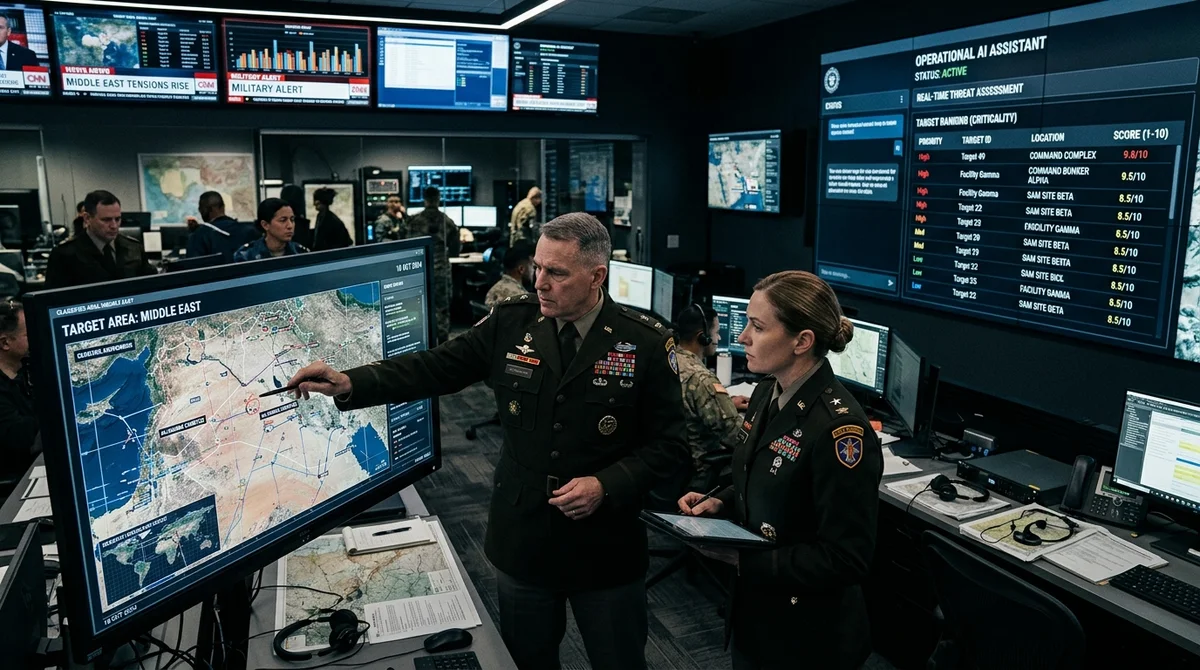
The Pentagon is discussing a bigger role for generative AI in the military chain: such systems could help rank targets and suggest which to strike first. At the same time, the US Department of Defense has entered a harsh conflict with Anthropic, which does not want to lift Claude's restrictions on surveillance and fully autonomous weapons.
How it could work
According to MIT Technology Review, a US Department of Defense official familiar with the matter described a scenario in which a list of potential targets is fed into a generative system running in a classified environment. Military personnel could then ask the model to analyze the data, factor in context such as the location of aircraft, and produce priorities: which target is more urgent and which can wait. The key caveat is that the final check and decision stay with a human.
Importantly, the official was speaking about a possible setup and did not confirm that such a process is already in use in exactly this form. But the description shows where US military infrastructure is heading. This is no longer only about recognizing objects in video or satellite imagery, but about a conversational interface on top of combat analytics that can speed up data retrieval and the preparation of recommendations.
From Maven to chatbots
This story did not come out of nowhere. Since 2017, the US military has used Project Maven, a system that analyzes large volumes of images and video, including drone footage, and helps identify potential targets. Previously, an operator had to work through maps, dashboards and visual markers. Now large language models such as Claude, ChatGPT or Grok may be layered on top of that stack, turning data search and sorting into a dialogue.
The shift has both an upside and a problem. Generative models are easier for people to use: you can simply ask which targets look highest priority and why. But their answers are harder to verify than a map or a table of raw data. After strikes where questions later surface about the underlying data and verification procedures, this shift becomes especially sensitive.
- Project Maven has worked with computer vision and intelligence data for many years
- The generative layer adds a conversational interface and text recommendations
- In December 2025, the Pentagon launched GenAI.mil for millions of military personnel on non-combat, unclassified tasks
- Only a few models are so far cleared for classified environments
Why Claude is in dispute
The sharpest conflict centers on Anthropic. According to US media reports, Claude may have been used alongside military systems in operations linked to Iran and Venezuela. The Pentagon then demanded broader terms of use, and Anthropic refused to accept vague wording that, in the company's view, would not have prevented the model from being used for mass surveillance of Americans or for fully autonomous weapons systems.
"We cannot in good conscience agree to this," is how
Dario Amodei described the Pentagon's demands.
The Pentagon's response was harsh: it designated the company a supply chain risk, which could push Claude out of defense contracts. Against this backdrop, OpenAI publicly announced on 28 February 2026 an agreement with the Pentagon to work in classified environments, and xAI also received clearance for Grok. Formally, everyone talks about human control, but the dispute is no longer about whether AI is needed in the military decision chain. It is about who sets the limits and how binding they are.
What this means
The main news here is not that the military wants a "chatbot for war," but that generative AI is becoming one more layer on top of existing targeting and analysis systems. That speeds up the decision cycle but also blurs the line of responsibility: if a model proposes target priorities, it gets harder for a human to prove they independently verified the recommendation rather than simply approving it.
- Nov 1, 2026Local models lose to Opus and Codex: 0.21 on a MacBook versus 1.00 for Codex
- Nov 1, 2026Kimi scores 96.2% on a 1C database analytics test and emerges as a fallback if Claude access is blocked
- Nov 1, 2026OpenAI Rewrites GPT Behavior Rules: Five Values and a Chain of Command
- Nov 1, 2026Google admits AI Mode cuts search revenue, shares fall 15%
Key Questions Answered
How it could work?
According to MIT Technology Review, a US Department of Defense official familiar with the matter described a scenario in which a list of potential targets is fed into a generative system running in a classified environment. Military personnel could then ask the model to analyze the data, factor in context such as the location of aircraft, and produce priorities: which target is more urgent and which can wait. The key caveat is that the final check and decision stay with a human. Importantly, the official was speaking about a possible setup and did not confirm that such a pr
What are the key details on From Maven to chatbots?
This story did not come out of nowhere. Since 2017, the US military has used Project Maven, a system that analyzes large volumes of images and video, including drone footage, and helps identify potential targets. Previously, an operator had to work through maps, dashboards and visual markers. Now large language models such as Claude, ChatGPT or Grok may be layered on top of that stack, turning data search and sorting into a dialogue. The shift has both an upside and a problem. Generative models are easier for people to use: you can simply ask which targets look highest prio
Why Claude is in dispute?
The sharpest conflict centers on Anthropic. According to US media reports, Claude may have been used alongside military systems in operations linked to Iran and Venezuela. The Pentagon then demanded broader terms of use, and Anthropic refused to accept vague wording that, in the company's view, would not have prevented the model from being used for mass surveillance of Americans or for fully autonomous weapons systems. "We cannot in good conscience agree to this," is how Dario Amodei described the Pentagon's demands. The Pentagon's response was harsh: it designated the comp
Test Frontier LLMs & Autonomous Agents in One Workspace
Run Claude Opus 5.5, GPT-6, Gemini 3.1, and DeepSeek side-by-side in Nomad AI (nomadnet.ai) — unified model routing, deep research, and multimodal workflows under one subscription.
The AI world, distilled — once a week
Seven stories that actually mattered, hand-picked. No noise, no reposts, no press releases.
Done! Check your inbox for a confirmation.