OpenAI, SoftBank and Oracle Argue Over Stargate as Mega Data Center Project Stalls
Stargate, meant to become OpenAI’s infrastructure backbone, is increasingly bogged down by disagreements with SoftBank and Oracle. While the partners argue over
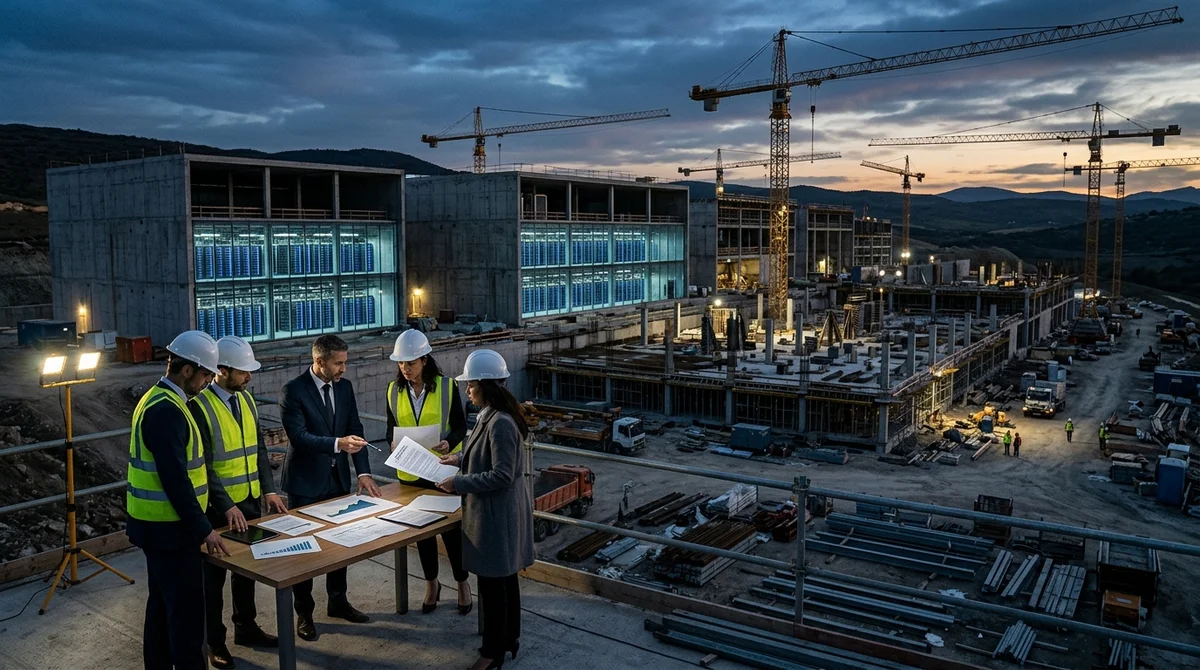
The Stargate mega-project, which was supposed to become the computational foundation for OpenAI, has begun to stall even before its full launch. On the surface, this looks like a typical construction delay, but it increasingly reveals a conflict of interests between OpenAI, SoftBank, and Oracle.
Why Stargate Is Stalling
Stargate was announced on January 21, 2025, as an AI infrastructure project worth up to $500 billion over four years. The idea was simple: build a network of data centers that would give OpenAI and its partners enough computing power to train the next generation of models. But a year after the high-profile announcement, it became clear that a gap has emerged between the presentation and actual execution.
According to The Information, the joint venture still has not assembled a dedicated full team, and the participants themselves have been arguing over basic issues: how the project structure should be organized, who is responsible for what, and exactly where to build new facilities. It is telling that the data center in Abilene, which OpenAI calls Stargate I, is being built not by the JV itself, but by Crusoe for Oracle, and work there began before the official announcement.
- The project lacks the pace promised at launch
- Participants disagree on structure and governance
- Key construction in Texas is proceeding outside the traditional JV framework
- OpenAI is in parallel seeking capacity from other providers
As a result, Stargate increasingly resembles not a unified mechanism but a cover under which each participant pursues its own agenda. This is a poor signal for the market: when an infrastructure project worth hundreds of billions begins to fragment into separate deals, investors inevitably ask questions about its real status.
Money and Control
OpenAI, SoftBank, and Oracle initially had different interests, and now this has become too obvious to ignore. OpenAI needs computing power, but without a massive burden on its own balance sheet. Oracle needs to grow its cloud business and secure major contracts, but debt financing for such a race is becoming increasingly difficult. SoftBank, in turn, views the project as an opportunity to entrench itself in the most scarce layer of the AI market — infrastructure.
"Stargate is not yet formed," is how
Oracle CEO Safra Catz described the project's status to investors.
This is where the main shift in power dynamics becomes apparent. If Stargate was previously presented as an alliance for a new era of AI, it now increasingly looks like a platform for negotiating control over land, energy, contracts, and future data centers. In this logic, SoftBank doesn't necessarily have to believe in the rapid arrival of AGI: it is enough for it to understand that rights to electricity, facilities, and capacity will remain valuable even in a cooler market.
For Oracle, the situation is also nerve-wracking. The company has already taken on serious infrastructure burdens, and any doubts about Stargate hit not only the project's reputation but also investor expectations for the cloud segment. If the pace of construction and contract signing doesn't match the promises, the pressure on Oracle and its cost of capital will only increase.
What OpenAI Is Doing
Against this backdrop, OpenAI is increasingly hedging itself through parallel channels. The company has already deepened its collaboration with Oracle directly, continued to purchase capacity from CoreWeave, and signed agreements with AWS and Google Cloud. Separately, it is working with alternatives to Nvidia, including AMD and Cerebras.
In other words, OpenAI is no longer betting only on one mega-project, even as it continues to publicly support the idea of Stargate. A symptom of this pressure is ChatGPT's own monetization. On January 16, 2026, OpenAI announced that it would begin testing ads in the free and Pro tiers in the US, and on February 9 launched a pilot.
Ads appear separately from the model's response and do not affect paid subscriptions, but the fact itself is important: the company is seeking new money not only in the capital markets but also within a product that has hundreds of millions of users. This doesn't mean OpenAI is abandoning its ambitions. Rather the opposite: the company is trying to maintain access to computing power at any cost, without committing itself to a single organizational structure.
But precisely for this reason, Stargate ceases to be the center of the entire story. If capacity can be sourced through separate partners, the role of the joint venture inevitably becomes diluted.
What It Means
The Stargate story shows that the race around AI has entered a phase of harsh economics. Flashy announcements are no longer enough: now the market looks at debt burdens, ownership structures, actual construction, and revenue sources. For OpenAI, this means a transition from a flashy facade to a more pragmatic growth model, and for the entire industry, it is a test of how much real demand exists in the infrastructure boom versus expectations.
Хотите не читать про ИИ, а внедрить его?
«AI News» — это полезные новости из мира ИИ. Системно научиться работать с нейросетями и применять их в работе — в Hamidun Academy.