Zhipu AI releases GLM-OCR, a compact 0.9B-parameter OCR model for documents
Zhipu AI has unveiled GLM-OCR, a compact multimodal OCR model with 0.9 billion parameters built to parse real-world documents. It handles tables, formulas and field extraction, and Multi-Token Prediction speeds up decoding by roughly 50%. The model supports local deployment through vLLM, SGLang and Ollama, and is designed for production use, not just demos.
AI-processed from MarkTechPost; edited by Hamidun News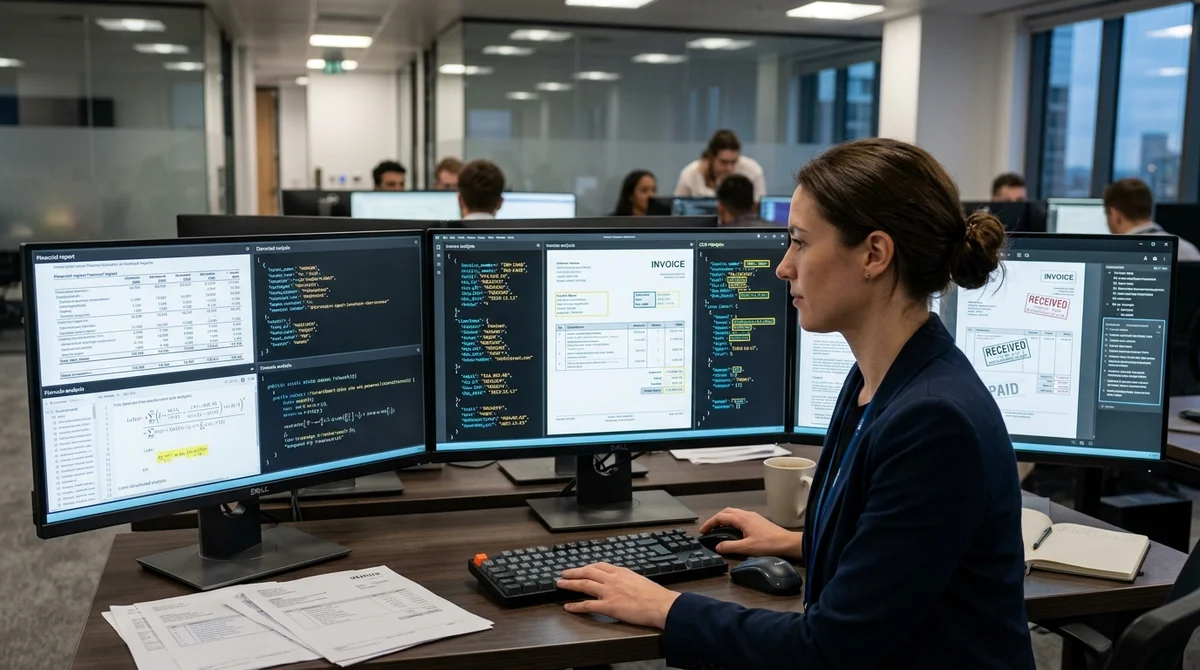
Zhipu AI, together with researchers from Tsinghua University, has introduced GLM-OCR, a multimodal OCR model with 0.9 billion parameters for parsing real-world documents. The bet is not on maximum size but on a balance of quality, speed and inference cost.
Why OCR is hard
Conventional OCR has long handled clean text on flat scans reasonably well, but real documents are far messier. They mix tables, formulas, stamps, handwritten fields, code blocks, columns and unconventional reading order. These are the cases where classic pipelines break: they can recognize characters, but they lose the page structure and the meaning of the relationships between blocks.
Large multimodal models improve understanding of the document as a whole, but they bring a different problem: cost and speed. If a model reads a page like an ordinary vision-language system and generates its answer one token at a time, inference becomes expensive and slow. For production, where invoices, contracts, reports and forms must be processed in a continuous stream, this is an engineering constraint, not an academic detail.
How GLM-OCR works
GLM-OCR combines a 0.4-billion-parameter CogViT visual encoder, a lightweight cross-modal connector and a 0.5-billion-parameter GLM language decoder.
The main technical idea is Multi-Token Prediction. Instead of predicting strictly one token per step, the model was trained to produce ten tokens at a time, and at inference it generates 5.2 tokens per step on average. According to the authors, this yields about a 50% throughput gain without a sharp rise in memory use, thanks to a parameter-sharing scheme.
At the system level, the model also does not work in a flat "read the whole page at once" mode. First, PP-DocLayout-V3 divides the document into semantic regions, and then GLM-OCR recognizes the individual regions in parallel. For document parsing, the output is structured Markdown and JSON. For KIE (key information extraction), the full document image is fed in together with a prompt, and the model directly generates JSON according to a given schema.
- Splits pages into regions before recognition
- Processes the detected blocks in parallel
- Returns structured Markdown and JSON
- Supports a separate KIE mode for field extraction
- Works with both a cloud API and local deployment
What the tests showed
On public benchmarks the model's results are strong, but it is not the universal leader. GLM-OCR scored 94.6 on OmniDocBench v1.5, 94.0 on OCRBench for text recognition, 96.5 on UniMERNet for formulas and 86.0 on TEDS_TEST for tables. On field extraction tasks, the model scored 93.7 on Nanonets-KIE and 86.1 on Handwritten-KIE. This is a good set of numbers for a model of this size, especially compared with noticeably heavier multimodal systems.
The authors themselves note important caveats. On PubTabNet, GLM-OCR is not first: MinerU 2.5 scores 88.4 against its 85.2. And in the reference-model column, Gemini-3-Pro posts higher results in KIE. So the accurate way to put it is that GLM-OCR is among the leaders of open and compact solutions, but it does not beat everything in every scenario.
In practical terms, the project does not look purely laboratory-bound. The authors state support for vLLM, SGLang and Ollama, as well as fine-tuning via LLaMA-Factory. The report gives a throughput of 0.67 images per second and 1.86 PDF pages per second in their test configuration. For cloud use, a MaaS API is available at 0.2 yuan per million tokens: by the team's estimates, one yuan covers roughly 2000 A4 scans or 200 simple ten-page PDFs.
What this means
The document AI market is shifting more and more from giant general-purpose models toward more compact, specialized systems, where predictable cost matters alongside quality. For businesses this is a good signal: parsing invoices, contracts, scientific papers and internal forms in production is getting easier without excessive spending on hardware and inference.
- Nov 2, 2026Karpathy builds a YouTube clone with 6454 videos from Hacker News recommendations in two hours
- Nov 2, 2026Karpathy used Claude to build HackerTube from 6,454 videos recommended on Hacker News
- Nov 2, 2026Anthropic needs to grow revenue 32% a year to cover $850 billion in contracts
- Nov 2, 2026Bun creator uses Claude Code to port 750K lines from Zig to Rust in 11 days
Key Questions Answered
Why OCR is hard?
Conventional OCR has long handled clean text on flat scans reasonably well, but real documents are far messier. They mix tables, formulas, stamps, handwritten fields, code blocks, columns and unconventional reading order. These are the cases where classic pipelines break: they can recognize characters, but they lose the page structure and the meaning of the relationships between blocks. Large multimodal models improve understanding of the document as a whole, but they bring a different problem: cost and speed. If a model reads a page like an ordinary vision-language system
How GLM-OCR works?
GLM-OCR combines a 0.4-billion-parameter CogViT visual encoder, a lightweight cross-modal connector and a 0.5-billion-parameter GLM language decoder. The main technical idea is Multi-Token Prediction. Instead of predicting strictly one token per step, the model was trained to produce ten tokens at a time, and at inference it generates 5.2 tokens per step on average. According to the authors, this yields about a 50% throughput gain without a sharp rise in memory use, thanks to a parameter-sharing scheme. At the system level, the model also does not work in a flat "read the w
What the tests showed?
On public benchmarks the model's results are strong, but it is not the universal leader. GLM-OCR scored 94.6 on OmniDocBench v1.5, 94.0 on OCRBench for text recognition, 96.5 on UniMERNet for formulas and 86.0 on TEDS_TEST for tables. On field extraction tasks, the model scored 93.7 on Nanonets-KIE and 86.1 on Handwritten-KIE. This is a good set of numbers for a model of this size, especially compared with noticeably heavier multimodal systems. The authors themselves note important caveats. On PubTabNet, GLM-OCR is not first: MinerU 2.5 scores 88.4 against its 85.2. And in
Ship AI Faster with Founders, Engineers & Weekly Architecture Reviews
Inside Vibe Club (hamidun.com/club) — weekly live masterminds with Zhemal Khamidun, Tech Radar, full LMS access, and 370+ production Claude Code skills.
The AI world, distilled — once a week
Seven stories that actually mattered, hand-picked. No noise, no reposts, no press releases.
Done! Check your inbox for a confirmation.