OpenAI could enter US military systems in the Iran conflict, from target selection to drone defense
OpenAI's deal with the Pentagon is taking concrete shape. The company's technology could be used in the Iran conflict to prioritize targets, for counter-drone defense through Anduril, and in the everyday work of the US Department of Defense through GenAI.mil. The key question is no longer the fact of a military contract itself, but how deeply the model will be embedded in the chain of combat decisions.
AI-processed from MIT Technology Review; edited by Hamidun News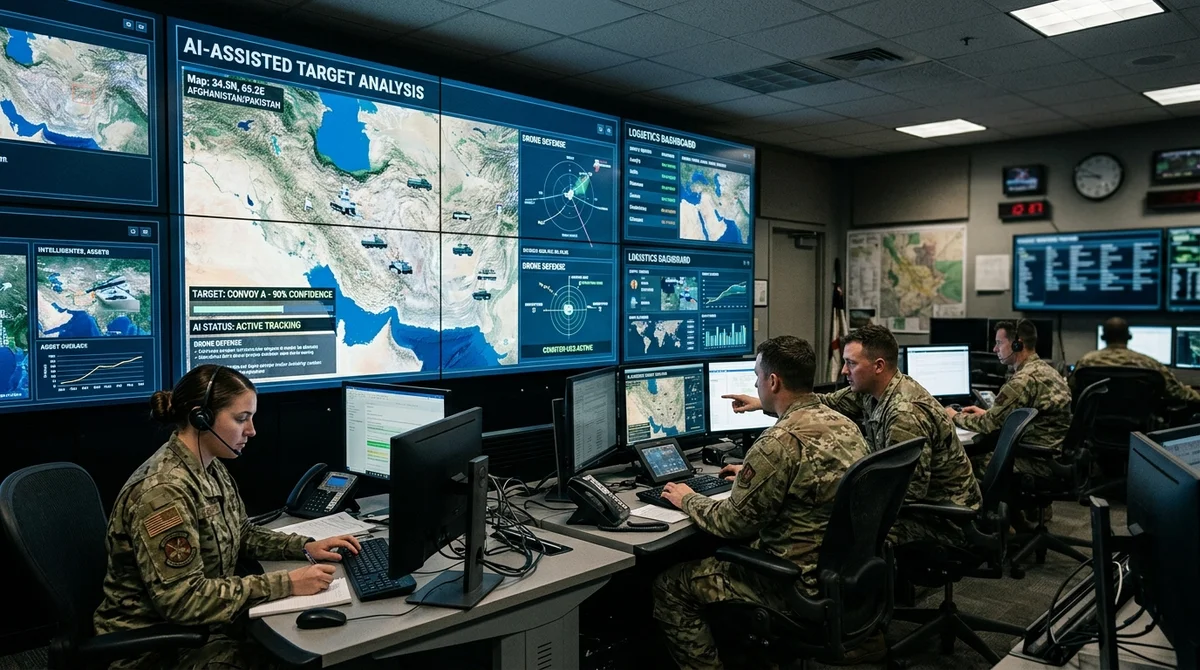
After OpenAI's deal with the Pentagon, the question is no longer whether the company will allow military use of its models. The question is where exactly this technology could show up in the Iran conflict, from target selection to counter-drone defense and the everyday infrastructure of the US Department of Defense.
Targets and strikes
One of the most sensitive scenarios involves analyzing targets for strikes. The logic runs like this: military analysts load lists of potential objects into the model, and the system helps set priorities by cross-referencing intelligence, logistics, images, video and text reports. Formally, a human must make the final decision, but the value of such a tool lies in speeding up the cycle of assessment and selection. The more trust placed in the model's suggestions, the more strongly AI shapes the actual sequence of combat operations.
This is a notable shift from earlier military AI systems. Previously, algorithms such as Maven mostly picked out objects in drone video and helped sort large volumes of data. Now we are talking about a generative model that people can talk to in natural language, and that returns not just analysis but recommendations: which targets matter more, where equipment is located, which factors change the urgency of a strike. The move from a recognition tool to an adviser on combat decisions is what makes the OpenAI story especially contentious.
"The military will not be able to use our technology to create
autonomous weapons."
On paper, this line looks firm, but in practice it is less clear-cut. If the system does not pull the trigger itself and only helps a human choose a target faster, the debate over what is permissible gets complicated at once. In a prolonged conflict, pressure to speed up such processes is almost inevitable, which means the limits on the model's use will be tested not in theory but inside real strike-approval procedures. This is where the sharpest line of dispute over such contracts runs.
Drone defense
The second likely channel is OpenAI's partnership with Anduril, announced in late 2024. It involves real-time analysis of attacking drones and help intercepting them. OpenAI explains this scenario by saying that company policy prohibits systems that cause harm to people, but allows the use of its technology against unmanned aircraft as technical targets. That wording is precisely what opens the way to very close contact between a civilian generative model and combat infrastructure.
Anduril is already building large counter-drone defense networks and developing the Lattice interface, through which the military controls sensors, platforms and elements of autonomous systems. If OpenAI's models prove useful inside such a network, they could become one more layer on top of existing military data and commands. The stakes are not abstract: after the Iranian drone attack on March 1, 2026, in which American service members were killed in Kuwait, demand for speeding up and automating such decisions has only grown.
From headquarters to the front
The third scenario looks less dramatic but may prove the largest in scale: bringing OpenAI into the Pentagon's everyday work through the GenAI.mil platform. It was originally created to provide safer access to commercial models for tasks such as contracts, procurement, logistics and document preparation. But tools like this gradually make AI a familiar part of the entire military machine, first in administrative processes, then closer to operational tasks, where trust in the system's suggestions is already higher.
Taking a broader view, the picture looks like this:
- OpenAI could help rank targets and analyze intelligence.
- The partnership with Anduril gives it a path into counter-drone defense systems.
- GenAI.mil embeds models in the Pentagon's everyday processes.
- The military gets used to interfaces where AI becomes part of the working decision.
- The line between "office" and "combat" use gradually blurs.
This is an important shift, and not only for one conflict. Not long ago, the main question was whether large AI companies should work with the military at all. Now the question is different: at what point in the decision chain will the model be tomorrow, in document workflow, in a counter-drone system, or next to the analysis of targets for a strike. And the deeper such models go into the infrastructure, the harder it becomes later to separate supporting software from the combat loop and the command logic of war.
What this means
The OpenAI story shows that the boundary between corporate AI and US military infrastructure is thinning fast. For the market, it signals that the debate over military use of models is no longer limited to statements about ethics: it is moving into concrete contracts, product integrations and real scenarios where the cost of error is far higher than in ordinary corporate software. That means the discussion will have to focus not on companies' intentions but on the actual role of their models in combat systems.
- Nov 1, 2026Local models lose to Opus and Codex: 0.21 on a MacBook versus 1.00 for Codex
- Nov 1, 2026Kimi scores 96.2% on a 1C database analytics test and emerges as a fallback if Claude access is blocked
- Nov 1, 2026OpenAI Rewrites GPT Behavior Rules: Five Values and a Chain of Command
- Nov 1, 2026Google admits AI Mode cuts search revenue, shares fall 15%
Key Questions Answered
What are the key details on Targets and strikes?
One of the most sensitive scenarios involves analyzing targets for strikes. The logic runs like this: military analysts load lists of potential objects into the model, and the system helps set priorities by cross-referencing intelligence, logistics, images, video and text reports. Formally, a human must make the final decision, but the value of such a tool lies in speeding up the cycle of assessment and selection. The more trust placed in the model's suggestions, the more strongly AI shapes the actual sequence of combat operations. This is a notable shift from earlier milit
What are the key details on Drone defense?
The second likely channel is OpenAI's partnership with Anduril, announced in late 2024. It involves real-time analysis of attacking drones and help intercepting them. OpenAI explains this scenario by saying that company policy prohibits systems that cause harm to people, but allows the use of its technology against unmanned aircraft as technical targets. That wording is precisely what opens the way to very close contact between a civilian generative model and combat infrastructure. Anduril is already building large counter-drone defense networks and developing the Lattice i
What are the key details on From headquarters to the front?
The third scenario looks less dramatic but may prove the largest in scale: bringing OpenAI into the Pentagon's everyday work through the GenAI.mil platform. It was originally created to provide safer access to commercial models for tasks such as contracts, procurement, logistics and document preparation. But tools like this gradually make AI a familiar part of the entire military machine, first in administrative processes, then closer to operational tasks, where trust in the system's suggestions is already higher. Taking a broader view, the picture looks like this: OpenAI c
Test Frontier LLMs & Autonomous Agents in One Workspace
Run Claude Opus 5.5, GPT-6, Gemini 3.1, and DeepSeek side-by-side in Nomad AI (nomadnet.ai) — unified model routing, deep research, and multimodal workflows under one subscription.
The AI world, distilled — once a week
Seven stories that actually mattered, hand-picked. No noise, no reposts, no press releases.
Done! Check your inbox for a confirmation.