Tailscale buys Border0 to protect corporate networks from a surge of AI agents
Tailscale has acquired Border0, the first M&A deal for the Canadian cybersecurity startup. The purchase adds technology for managing access to servers and internal systems just as companies begin connecting AI agents to their working infrastructure. The more permissions and autonomy such agents have, the more important it becomes to control where they go and what they can do.
AI-processed from Bloomberg Tech; edited by Hamidun News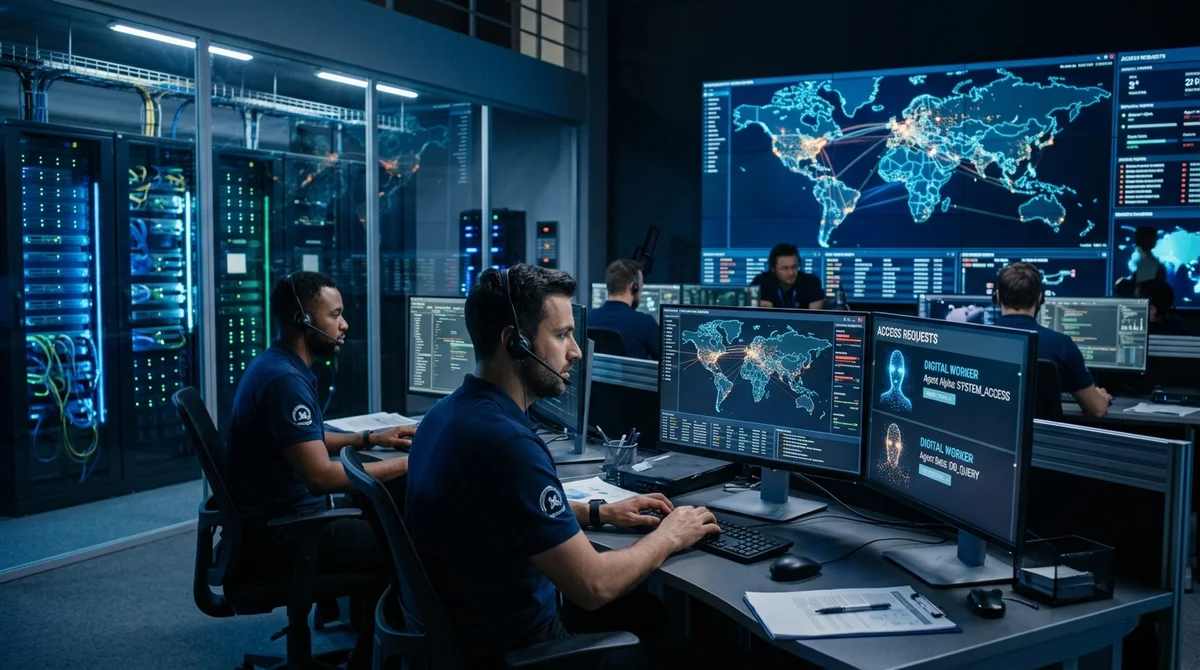
Tailscale has made the first acquisition in its history: the Canadian startup bought Border0, based in Vancouver. The deal is not only about widening the product line. It also responds to a new problem: AI agents increasingly get access to companies' servers, databases and internal networks.
Tailscale's first deal
For Tailscale, this is not just the purchase of a neighboring startup but a notable shift in strategy. The company is known for secure network access solutions, and it is now entering M&A for the first time to speed up product development. Border0 is a smaller team from Vancouver, and its technology is meant to strengthen what worries enterprise customers most right now: how to give new automated actors access to infrastructure without turning the network into chaos.
The very fact of a first deal shows that the cybersecurity market is changing fast. When a company decides not to build everything from scratch and instead buys ready-made expertise, it usually means two things: the window of opportunity has already opened, and customer demand is growing faster than internal teams can cover new scenarios. For Tailscale, that scenario is AI agents, which are moving beyond chats and starting to work directly inside corporate systems.
Why AI is the issue
Not long ago, companies mostly used AI as an interface for search, summarization or text generation. Now more and more tools are gaining the right not only to answer questions but to take actions: connect to servers, enter admin panels, pull data from internal services, launch tasks and pass results down the chain.
In practice, this means a new type of user is appearing in the infrastructure: neither humans nor classic scripts, but semi-autonomous agents. This is where a new risk zone emerges. An agent may hold access keys, tokens, service accounts and permissions to perform operations that were previously granted only to employees or to strictly controlled automation. When there are many such agents, companies need to know exactly who connects to what, which permissions have been granted, how quickly they can be revoked, and what to do if an agent starts behaving differently than expected.
That is why the conversation about AI increasingly comes down not to models but to access control.
What the acquisition brings
The Border0 purchase looks like an attempt to close precisely this layer. Put simply, businesses need tools that let them grant access selectively, isolate sensitive systems and see what happens on the network when not only employees but also software actors connect to it. For Tailscale, this is a logical extension: the more companies embed AI agents in daily processes, the higher the demand for a secure layer between the agent and the infrastructure.
Enterprise teams care less about abstract promises than about quite practical features:
- access based on the principle of least privilege
- separate policies for people, services and AI agents
- action logging and a verifiable trail of operations
- quick shutdown or rotation of credentials
- safer access to internal systems without needlessly exposing the network to the outside
The deal also shows how competition in security itself is changing. The winners will not be those who simply added the word AI to a presentation, but those who built security into the agents' real working loop. When an agent is allowed to do something on a server, the question is no longer how convincingly it writes text, but whether its scope of action can be limited and whether it can be stopped in time. This is the level at which new demand is now forming.
What this means
AI agents are starting to take a place next to ordinary users and services inside corporate infrastructure, which means the network security market will quickly reshape around this scenario. The Border0 purchase gives Tailscale a chance to position itself not merely as a networking tool but as one of the providers of baseline protection for the era of autonomous software.
- Nov 2, 2026DeepSeek open-sources Super-agent prototype: p95 task completion time of 15.7 minutes vs. 29.5
- Nov 2, 2026Bun creator uses Claude Code to port 750K lines from Zig to Rust in 11 days
- Nov 2, 2026Microsoft releases 4B model Mage-VL-Cowork, which solves 66.0% of OSWorld-Verified tasks
- Nov 2, 2026Meta's Muse assistant keeps dossiers on loved ones and gets root on Ubuntu by default
Key Questions Answered
What are the key details on Tailscale's first deal?
For Tailscale, this is not just the purchase of a neighboring startup but a notable shift in strategy. The company is known for secure network access solutions, and it is now entering M&A for the first time to speed up product development. Border0 is a smaller team from Vancouver, and its technology is meant to strengthen what worries enterprise customers most right now: how to give new automated actors access to infrastructure without turning the network into chaos. The very fact of a first deal shows that the cybersecurity market is changing fast. When a company decides n
Why AI is the issue?
Not long ago, companies mostly used AI as an interface for search, summarization or text generation. Now more and more tools are gaining the right not only to answer questions but to take actions: connect to servers, enter admin panels, pull data from internal services, launch tasks and pass results down the chain. In practice, this means a new type of user is appearing in the infrastructure: neither humans nor classic scripts, but semi-autonomous agents. This is where a new risk zone emerges. An agent may hold access keys, tokens, service accounts and permissions to perfor
What the acquisition brings?
The Border0 purchase looks like an attempt to close precisely this layer. Put simply, businesses need tools that let them grant access selectively, isolate sensitive systems and see what happens on the network when not only employees but also software actors connect to it. For Tailscale, this is a logical extension: the more companies embed AI agents in daily processes, the higher the demand for a secure layer between the agent and the infrastructure. Enterprise teams care less about abstract promises than about quite practical features: access based on the principle of lea
Test Frontier LLMs & Autonomous Agents in One Workspace
Run Claude Opus 5.5, GPT-6, Gemini 3.1, and DeepSeek side-by-side in Nomad AI (nomadnet.ai) — unified model routing, deep research, and multimodal workflows under one subscription.
The AI world, distilled — once a week
Seven stories that actually mattered, hand-picked. No noise, no reposts, no press releases.
Done! Check your inbox for a confirmation.