Fluidstack pulls out of €10 billion French AI project, refocuses on the US
Fluidstack has pulled out of a €10 billion AI project in France and is shifting its focus to the US. According to sources familiar with the situation, the startup won larger contracts there and decided to reallocate resources. For Europe, this is an unwelcome signal: even high-profile AI infrastructure initiatives lose out when paying demand and fast deals are concentrated in the American market.
AI-processed from Bloomberg Tech; edited by Hamidun News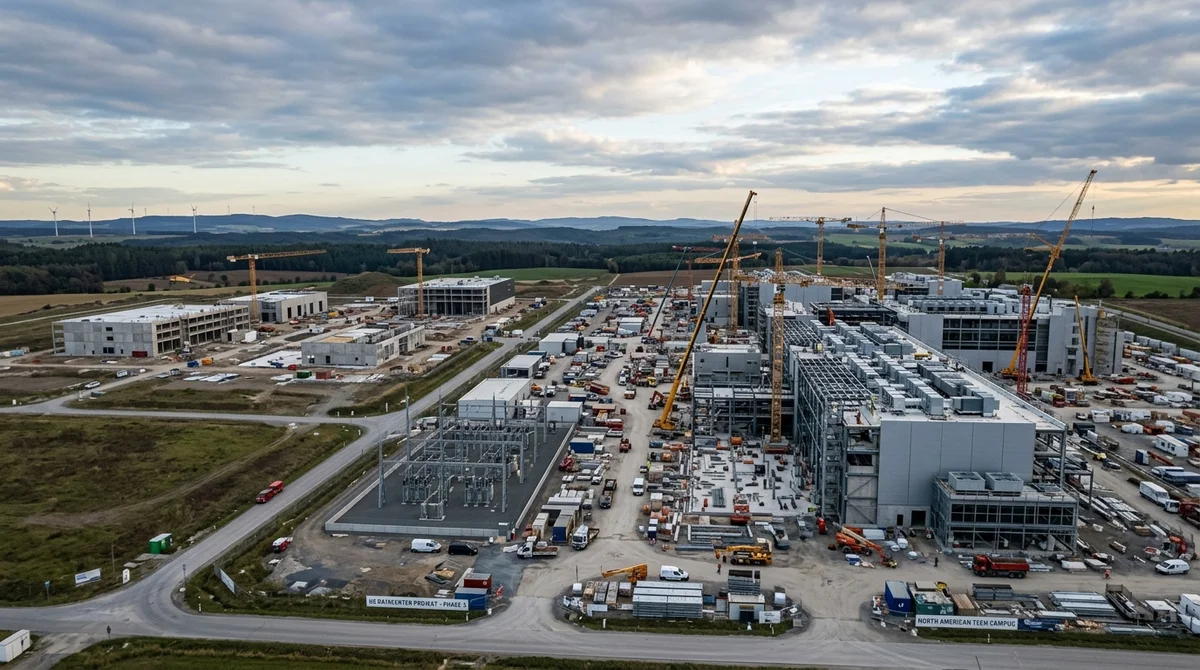
Cloud startup Fluidstack has pulled out of a high-profile €10 billion AI data center project in France. According to sources familiar with the situation, the company is changing its priorities and moving its main focus to the US, where it has managed to secure larger contracts.
Why Fluidstack walked away
Fluidstack is a notable player in cloud infrastructure for AI workloads. Its exit from the flagship French project looks less like a symbolic gesture and more like a hard reassessment of priorities. When a company gets larger deals in another market, especially in infrastructure, the choice often comes down not to ambition but to the allocation of people, capital and management attention.
For projects like these, it is not enough to simply announce a multibillion-euro budget. They need sites, access to electricity, supply chains, construction timelines and future utilization of capacity. If demand in the US is already backed by contracts, that is a strong argument for a pivot for a provider of computing infrastructure. In AI computing, the winner is not whoever announced a project the loudest, but whoever turns it into a working business the fastest.
Why the US matters
Fluidstack's turn toward the US looks pragmatic. That is where a significant share of large AI infrastructure customers is concentrated today: model developers, enterprise clients and companies that need large volumes of GPU capacity. For a provider, this means not only potentially bigger checks but also clearer logic for filling data centers after launch.
What focusing on the American market gives the company:
- larger contracts right from the start
- proximity to key buyers of AI capacity
- a better chance of filling expensive infrastructure faster
- an easier time building supply and an operations team around a single priority
In infrastructure, this is critical. A single new data center requires enormous investment before it starts generating revenue. That is why companies try to go where the likelihood of quick monetization is higher. Against this backdrop, Fluidstack's decision looks not like an exception but like a reflection of a broader trend: capital and computing capacity are being pulled to where demand has already been confirmed with money.
A signal for Europe
For France, and for Europe more broadly, this story is unwelcome not only because of Fluidstack's exit itself, but because it shows the balance of power in the market. European countries want to attract AI infrastructure, build their own computing clusters and depend less on outside players. But even a high-profile project with a declared cost of €10 billion does not guarantee that key participants will stay on until it is delivered.
It is also a reminder for investors and officials: big numbers in a press release are not enough. They need a commercial rationale, clear customer demand and speed of execution. In the AI data center industry, delays are especially painful because the market moves fast and hardware cycles follow one another in quick succession. If a launch drags on, customers can leave for places where capacity arrives sooner.
It is not yet clear how exactly the French project will be restructured after Fluidstack's exit, or whether this will affect its timeline. But the episode is already important as a marker: the competition between Europe and the US for AI infrastructure is being fought not in statements but in contracts, capacity utilization and the ability to bring megaprojects to launch quickly.
What this means
The Fluidstack story shows that in the race for AI infrastructure, the winners are the markets with the fastest demand and the biggest contracts. For Europe, this is a signal to speed up not only announcements but execution. For providers themselves, the choice of geography is no longer a matter of image but a direct decision about growth and revenue.
Key Questions Answered
Why Fluidstack walked away?
Fluidstack is a notable player in cloud infrastructure for AI workloads. Its exit from the flagship French project looks less like a symbolic gesture and more like a hard reassessment of priorities. When a company gets larger deals in another market, especially in infrastructure, the choice often comes down not to ambition but to the allocation of people, capital and management attention. For projects like these, it is not enough to simply announce a multibillion-euro budget. They need sites, access to electricity, supply chains, construction timelines and future utilizatio
Why the US matters?
Fluidstack's turn toward the US looks pragmatic. That is where a significant share of large AI infrastructure customers is concentrated today: model developers, enterprise clients and companies that need large volumes of GPU capacity. For a provider, this means not only potentially bigger checks but also clearer logic for filling data centers after launch. What focusing on the American market gives the company: larger contracts right from the start proximity to key buyers of AI capacity a better chance of filling expensive infrastructure faster an easier time building suppl
What are the key details on A signal for Europe?
For France, and for Europe more broadly, this story is unwelcome not only because of Fluidstack's exit itself, but because it shows the balance of power in the market. European countries want to attract AI infrastructure, build their own computing clusters and depend less on outside players. But even a high-profile project with a declared cost of €10 billion does not guarantee that key participants will stay on until it is delivered. It is also a reminder for investors and officials: big numbers in a press release are not enough. They need a commercial rationale, clear cust
Test Frontier LLMs & Autonomous Agents in One Workspace
Run Claude Opus 5.5, GPT-6, Gemini 3.1, and DeepSeek side-by-side in Nomad AI (nomadnet.ai) — unified model routing, deep research, and multimodal workflows under one subscription.
The AI world, distilled — once a week
Seven stories that actually mattered, hand-picked. No noise, no reposts, no press releases.
Done! Check your inbox for a confirmation.