Crypto.com cuts 12% of staff, citing a shift to AI tools
Crypto.com announced it is cutting about 12% of its staff and directly tied the decision to the growing capabilities of AI. The exchange says it is restructuring its business for a new technological reality in which some processes get automated. This sends a clear signal to the broader digital market and the crypto industry: AI now shapes not only the tools companies use, but also their cost structure, hiring priorities, and team size.
AI-processed from Bloomberg Tech; edited by Hamidun News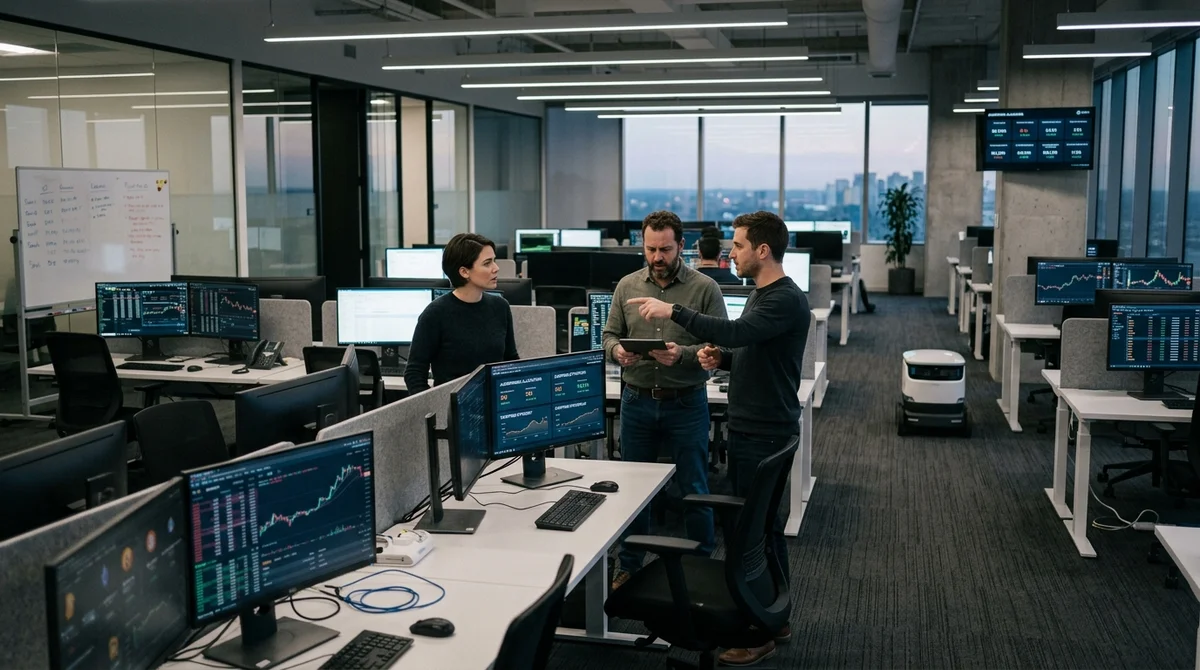
Crypto exchange Crypto.com announced it is cutting about 12% of its team and directly tied the decision to the growing capabilities of artificial intelligence. The company says it is restructuring its business for a new technological reality in which some processes can be handled differently: faster, cheaper, and with fewer people.
Why this is happening
The key detail here isn't just the scale of the layoffs but how the company framed the reason. Companies have long blamed layoffs on falling revenue, a weak market, restructuring, or cost-cutting. Crypto.com, by contrast, is effectively saying the business has to adapt to how quickly AI capabilities are advancing. That makes the news relevant not only to the crypto market but to the entire digital sector, where similar shifts are already happening in the background.
This doesn't necessarily mean AI is the only reason behind the decision. But it is the reason the company chose to put in its public explanation, which suggests it sees AI as a rationale the market will understand and one strong enough to justify a painful step. The brief announcement also doesn't make clear which departments are hit hardest. So for now, the main takeaway isn't in the details of the cuts but in the fact that AI has become an official justification for reshaping a workforce.
How the business is changing
For Crypto.com, this looks less like a one-off cost saving and more like an attempt to redefine how the company works internally. When leadership talks about adapting to AI's growing capabilities, it usually means rethinking roles, processes, and entire decision-making chains. In other words, the company isn't just rolling out a new tool; it's changing how work is split between people, automation, and management oversight.
A transition like this typically spans several areas at once:
- automating routine operations in support and the back office
- speeding up analytics, compliance, and internal reporting
- expecting employees to be more versatile and teams to move faster
- shifting part of the budget from hiring to infrastructure and AI tools
- keeping humans on tasks where oversight, risk assessment, and final decisions matter
The company hasn't yet disclosed a specific rollout plan or said which functions AI already handles. But the signal itself is unambiguous: the experimental phase is ending. Where such initiatives once often ran as pilots, they are now starting to affect headcount and how management evaluates the performance of individual departments. For the market, this is a practical indicator, not another declaration about digital transformation.
Why it matters for the market
Crypto.com is a prominent player in the digital asset industry, so statements like this quickly become a reference point for competitors. When a major platform openly links layoffs to AI's growing capabilities, it lowers the psychological barrier for everyone else. Other companies get a ready-made framing: automation is no longer a side story for individual processes but a full-fledged argument for overhauling business structure, spending, and HR policy. For the industry, it amounts to near-public permission to do the same.
It's especially telling that this argument comes from a digital platform whose processes are already heavily digitized. If leadership at a business like this sees room to shrink headcount for an AI transition, the same scenario looks viable for e-commerce, fintech, SaaS, and media. For employees, the signal is even harsher: a role's value is increasingly judged not by the set of tasks it covers but by how easily those tasks can be standardized, sped up, or handed off to a model.
What it means
The Crypto.com story marks a new stage of AI-driven reorganization. Companies are no longer just testing tools or limiting themselves to internal pilots; they're starting to tie staffing decisions and cost structures to them. For businesses, it's a reason to rethink processes ahead of time. For professionals, it's a cue to move toward work that depends on accountability, domain expertise, verifying AI output, managing systems, and making decisions where automation alone is no longer enough.
- Oct 31, 2026Author puts his script before an AI jury: the verdict cost 850 thousand tokens
- Oct 29, 2026OvisOCR3: an 0.8B-parameter model that reads documents better than specialized systems
- Oct 29, 2026Tencent releases Youtu-Parsing-Omni: one model parses documents, audio and video
- Oct 28, 2026Liquid AI releases LFM2.5-24B-A2B: an agent model with 2B active parameters
Key Questions Answered
Why this is happening?
The key detail here isn't just the scale of the layoffs but how the company framed the reason. Companies have long blamed layoffs on falling revenue, a weak market, restructuring, or cost-cutting. Crypto.com, by contrast, is effectively saying the business has to adapt to how quickly AI capabilities are advancing. That makes the news relevant not only to the crypto market but to the entire digital sector, where similar shifts are already happening in the background. This doesn't necessarily mean AI is the only reason behind the decision. But it is the reason the company cho
How the business is changing?
For Crypto.com, this looks less like a one-off cost saving and more like an attempt to redefine how the company works internally. When leadership talks about adapting to AI's growing capabilities, it usually means rethinking roles, processes, and entire decision-making chains. In other words, the company isn't just rolling out a new tool; it's changing how work is split between people, automation, and management oversight. A transition like this typically spans several areas at once: automating routine operations in support and the back office speeding up analytics, complia
Why it matters for the market?
Crypto.com is a prominent player in the digital asset industry, so statements like this quickly become a reference point for competitors. When a major platform openly links layoffs to AI's growing capabilities, it lowers the psychological barrier for everyone else. Other companies get a ready-made framing: automation is no longer a side story for individual processes but a full-fledged argument for overhauling business structure, spending, and HR policy. For the industry, it amounts to near-public permission to do the same. It's especially telling that this argument comes f
Ship AI Faster with Founders, Engineers & Weekly Architecture Reviews
Inside Vibe Club (hamidun.com/club) — weekly live masterminds with Zhemal Khamidun, Tech Radar, full LMS access, and 370+ production Claude Code skills.
The AI world, distilled — once a week
Seven stories that actually mattered, hand-picked. No noise, no reposts, no press releases.
Done! Check your inbox for a confirmation.