Google brings Gemini to cars with Google built-in and will update millions of vehicles
Google is bringing Gemini to cars with Google built-in and gradually replacing Google Assistant with it. The update is rolling out first in the US in English, not only for new vehicles but also for some existing ones via a software update. The assistant will be able to hold more natural conversations, suggest stops along the route, summarize messages, control vehicle functions, and answer based on information from the manual.
AI-processed from TechCrunch; edited by Hamidun News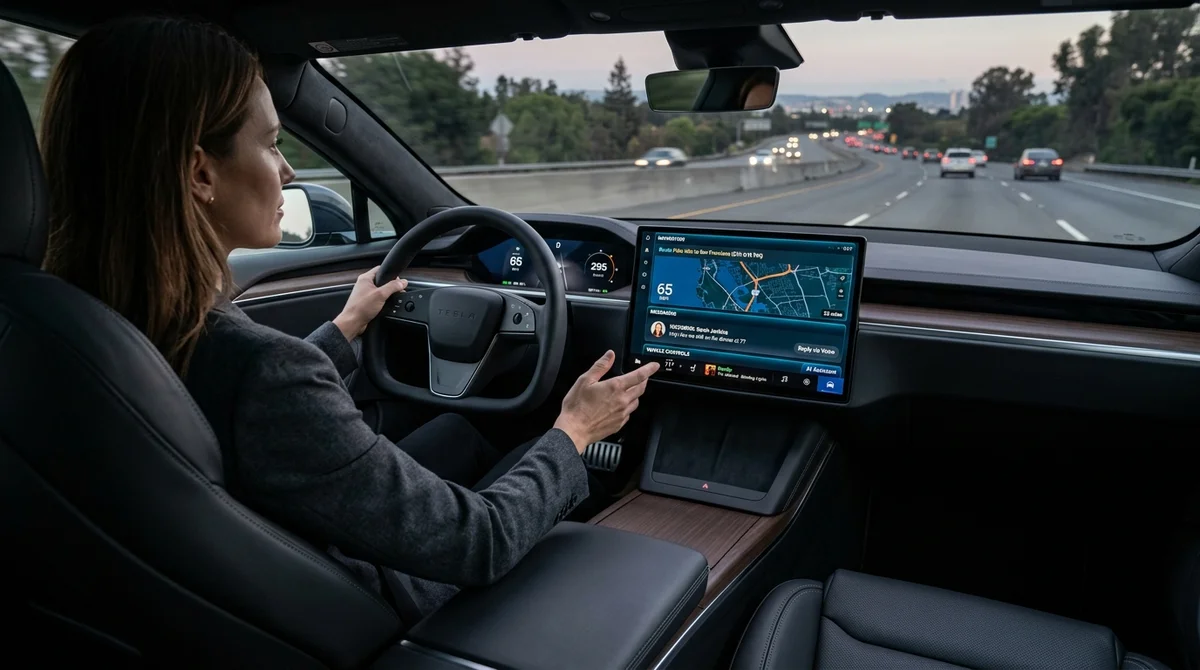
Google has begun rolling out Gemini to cars with Google built-in, replacing the current Google Assistant with a more conversational AI interface. The launch begins in the US in English and will affect not only new models, but also compatible cars already on the road, which will receive the update over the air.
How the rollout will work
Google announced the launch on April 30, 2026. Almost immediately, it became clear that this was not a niche experiment: a day earlier, on April 29, General Motors said that Gemini would appear in about 4 million 2022-and-newer model-year vehicles across the Cadillac, Chevrolet, Buick, and GMC brands. Google itself did not limit the news to GM, which means the rollout will likely extend to other automakers already using the Google built-in platform.
For drivers, the transition will look like a regular system update. If the vehicle is compatible and the owner is signed in to their Google account, a prompt to switch from Google Assistant to Gemini will appear on the screen. After activation, the assistant can be invoked by voice, with the steering-wheel button, or via the microphone on the home screen.
Google separately emphasizes that the feature will launch first in the US and only in English, and then expand to other countries and languages over the coming months.
What it can do on the road
The main change is a shift from rigid voice commands to more natural dialogue. Instead of short instructions, the driver will be able to speak almost as if to a person: for example, ask to find a good restaurant along the route with indoor or outdoor seating, and then follow up by asking whether there is parking nearby and whether the dishes fit specific dietary restrictions. Gemini uses Google Maps data and maintains context better, so the chain of follow-up questions does not break after the first reply.
Here are the scenarios Google and GM present as the baseline for the new version of the assistant:
- finding stops along the route with follow-up filters for rating, parking, and menu
- summarizing new messages and sending a reply without using the phone, including last-second edits
- controlling music, radio, and streaming with more flexible queries rather than exact station names
- traffic guidance, information about events along the way, and alerts about crashes or other road disruptions
- the conversational Gemini Live mode for learning, brainstorming, and questions about the destination
Google is also separately promoting Gemini Live, which is still in beta. It can be activated with a button in the interface or with the command “Hey Google, let’s talk”. In this mode, the assistant is useful not only for utilitarian tasks such as navigation or cabin climate, but also for longer conversations: you can ask it to briefly tell the history of the place you are driving to, help come up with a trip plan, discuss ideas before a meeting, or even rehearse a difficult conversation.
Deeper into the car system
The most interesting part of this launch is not only the conversational interface, but also tighter integration with the car itself. Google says Gemini will be able to answer questions using data from the owner’s manual provided by the automaker. That means queries such as “how do I prepare the car for an automatic car wash” or “how do I limit the trunk opening height in a low garage” should return an answer tied to the specific model. Still, the depth of such answers will depend on the brand and trim.
For electric vehicles, another useful layer is being added. The driver will be able to ask about the current battery charge, the projected charge on arrival, and nearby chargers, and then immediately follow up by asking whether there is a café or another place nearby to spend time while charging. Natural-language control of familiar car functions also remains: if you say that the cabin is cold and the windows are fogging up, Gemini should understand the intent and turn on heating and airflow on its own.
Google has also already outlined the next stage: the assistant will get deeper integration with Gmail, Google Calendar, and Google Home. This means the car is gradually turning from a standalone screen for navigation and music into another access point to Google’s personal ecosystem — with calendar, email, home devices, and trip context in a single interface.
What it means
Google is betting that generative AI will become not a standalone app, but a new control layer for the devices around the user — including the car. For automakers, this is a way to quickly add a smarter in-cabin interface without major in-house AI development, and for drivers, it is a chance to get a genuinely useful hands-free tool, if it really proves accurate, unobtrusive, and safe while driving.
Need AI working inside your business — not just in your newsfeed?
I build production AI for companies — custom CRM, internal tools, autonomous agents, workflow automation. Owned by you, shaped to your process, no per-seat tax. Built by Zhemal Khamidun, CPO of AlpinaGPT (AI platform, 6,000+ users).
The AI world, distilled — once a week
Seven stories that actually mattered, hand-picked. No noise, no reposts, no press releases.
Done! Check your inbox for a confirmation.