MIT conference: Karen Hao and Paola Ricaurte on the right course for AI
At an MIT conference, journalist Karen Hao and researcher Paola Ricaurte raised a key question: who sets the course of AI development — and in whose…
AI-processed from MIT News; edited by Hamidun News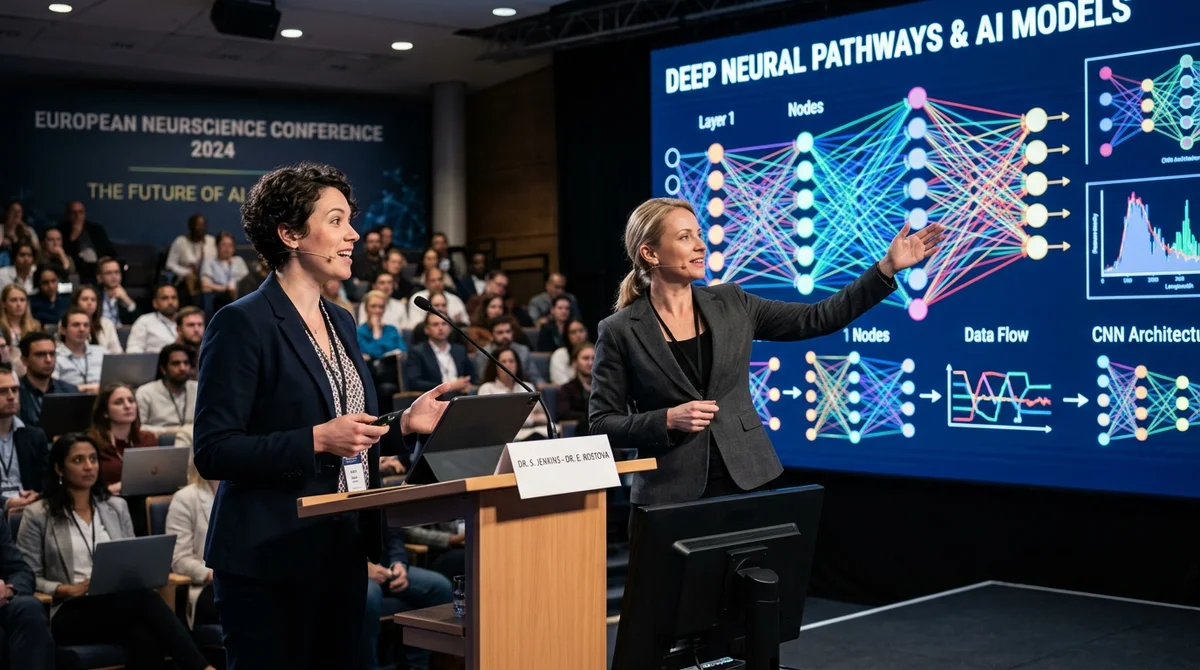
On the MIT conference, journalist Karen Hao and researcher Paola Ricaurte posed the central question of modern AI discussion: who determines the direction of artificial intelligence development — and in whose interests does this happen?
Who Sets the Course
Both speakers approached the topic from different angles, but reached a similar conclusion: the trajectory of AI development today is determined by an extremely narrow group of players. Primarily, these are large technology companies from the United States — they control both the infrastructure and the narrative around the technology.
Karen Hao is an investigative journalist known for her reporting on the inner workings of OpenAI and other leading AI laboratories. She has documented cases where publicly declared goals conflicted with actual business decisions: which research is funded, which topics are suppressed, who gains access to powerful tools. In her observation, the narrative about "AI for the benefit of humanity" often primarily serves the interests of investors.
Paola Ricaurte is a professor at Tecnológico de Monterrey — she studies how technologies from wealthy countries reproduce and amplify inequality in the Global South. Her research shows: countries of Latin America, Africa and Asia receive ready-made AI solutions without the ability to influence their parameters — but bear all the risks of implementation.
Technology in Service of People
Both speakers insist: the right path for AI runs through expanding the circle of those who participate in decision-making — not only as users, but as subjects of development.
Specific measures discussed at the conference:
- Involvement of local communities in designing and evaluating AI systems from the very beginning — not as a focus group after launch
- Data transparency and training datasets: who collected them, from whom and with what consent
- Consideration of cultural, linguistic and economic diversity when developing models
- International regulatory mechanisms that prevent monopolization of basic infrastructure
- Support for public and non-commercial AI initiatives as a counterweight to corporate dominance
The essence of the speakers' position — not to slow down progress, but to reorient its vector: from technology for technology's sake to technology for people's sake.
The Gap Between Speed and Control
A separate topic of discussion — the growing gap between the pace of AI development and the speed of forming mechanisms of public control. Systems are already operating in medicine, education, justice, hiring and lending — while regulators are still developing instruments of influence.
This gap is particularly dangerous in the context of digital colonialism: when technology is created in one cultural and economic environment, and implemented — in a completely different one. Assumptions embedded in algorithms can discriminate against entire population groups — invisibly to those who developed the system.
Additional complexity — knowledge asymmetry. Companies that possess data and computing power can assess the risks of their decisions. Most users — cannot. This raises the question not just of regulation, but of how responsibility is distributed in AI systems.
What This Means
The MIT conference records an important shift: the global AI discussion ceases to be purely technical. The question "what can we build?" increasingly gives way to the question "for whom and why?" Karen Hao and Paola Ricaurte are among those who consistently translate this conversation from academic halls into public space. And the faster technology develops, the more acute becomes the question of who is at the helm.
Want to stop reading about AI and start using it?
AI News is a curated feed of AI/tech news. Hamidun Academy teaches you to use AI systematically in your work.