BlackRock CEO Larry Fink: The AI Boom Will Deepen Inequality Unless People Start Investing
BlackRock's Larry Fink has warned that the artificial intelligence boom may deepen inequality if most of the profits go to large pools of capital. In his view, AI is making rich companies and investors even richer, and the key question now is whether ordinary people can take part in market growth instead of watching it from the sidelines. Fink argues the issue is no longer just how fast AI is adopted, but how widely people can share in the growth of the markets.
AI-processed from Bloomberg Tech; edited by Hamidun News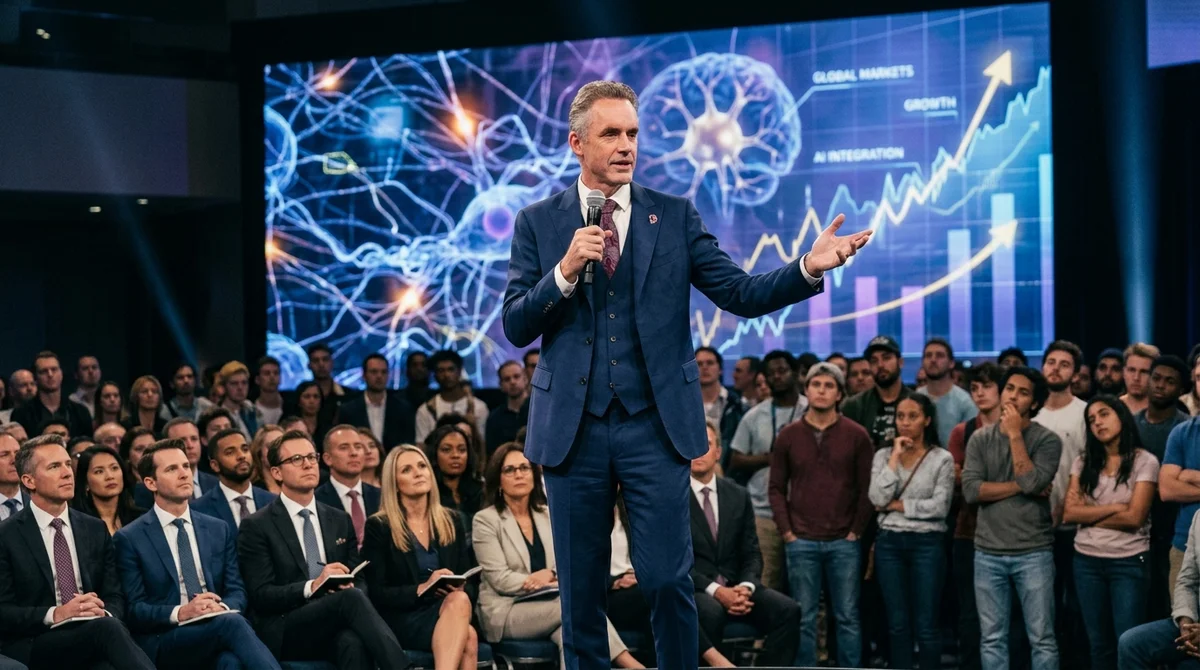
BlackRock CEO Larry Fink has warned that the artificial intelligence boom may deepen social and wealth divides if the gains go mostly to large companies and investors. In his view, the question is no longer only how fast AI is adopted, but how widely people can take part in market growth.
The risk of a new divide
Fink describes AI not as just another wave of automation but as a mechanism for redistributing economic power. Companies with access to capital, computing resources and top talent will build new models into production, sales, logistics and management faster. That lets them widen margins, launch products sooner and push out less prepared competitors. If this growth shows up in share prices and profits, the main winners are those who already own assets or can invest in the leaders of this cycle.
The problem the BlackRock chief points to is that a technological leap does not, by itself, make society richer evenly. It can raise productivity and widen the gap between those who control capital and those who live mainly on wages. If AI lifts company valuations faster than the incomes of ordinary households grow, the wealth gap starts to widen almost automatically. In this scenario, the industry's own success becomes a driver of new inequality.
Who gets the growth
Fink's logic is simple: the AI boom is already creating a new premium for owners of capital, and without broader public participation that premium will stay at the top. This is not only about billionaires or venture funds. Any entity with significant stakes in companies that can monetize AI faster than the market benefits. By contrast, people without savings, brokerage accounts or pension investments risk being left as bystanders just as value is being created especially fast.
- Large corporations gain an edge through data, infrastructure and access to computing.
- Institutional investors profit from rising shares of companies that are first to turn AI into revenue.
- Private capital and funds get access to deals before the mass market does.
- Households without an investment cushion do not share in the rise in value of these assets.
Essentially, this is the difference between using AI as a tool and owning a stake in AI as a source of capital growth. The first will become mainstream over time: services built on generative models will appear in almost every industry. The second is distributed far more narrowly, because it depends on owning shares, funds and other financial instruments. That is why Fink's warning sounds less like a technology forecast and more like a conversation about the structure of future income.
What participation changes
Fink's remarks lead to an uncomfortable conclusion: discussing AI only in terms of jobs, convenience or speed is no longer enough. Who owns the result of that efficiency matters just as much. If the main gains again settle with large players, public reaction to AI could quickly turn harsher, ranging from political pressure to demands for tighter regulation of markets, taxes and access to investment opportunities. The wider the gap between growth in market capitalization and growth in personal incomes, the greater the tension.
Hence the main emphasis on investing. The idea is not that everyone should rush to become a speculator in tech stocks. It is rather about broader access to market growth through long-term savings vehicles, pension plans and mass-market investment products. If people share, even partly, in the rising value of companies that benefit from AI, the technology cycle does less to concentrate wealth and more to spread it.
What this means
Larry Fink's warning moves the AI conversation from technology to the distribution of money. The next big line of dispute over artificial intelligence will run not only between companies and regulators, but also between those who own the growth and those who help create it without receiving a share of the result.
- Oct 31, 2026Author puts his script before an AI jury: the verdict cost 850 thousand tokens
- Oct 30, 2026Agent traffic on Zocdoc is up 30x since July, and ChatGPT faces two health lawsuits
- Oct 29, 2026OvisOCR3: an 0.8B-parameter model that reads documents better than specialized systems
- Oct 29, 2026Tencent releases Youtu-Parsing-Omni: one model parses documents, audio and video
Key Questions Answered
What are the key details on The risk of a new divide?
Fink describes AI not as just another wave of automation but as a mechanism for redistributing economic power. Companies with access to capital, computing resources and top talent will build new models into production, sales, logistics and management faster. That lets them widen margins, launch products sooner and push out less prepared competitors. If this growth shows up in share prices and profits, the main winners are those who already own assets or can invest in the leaders of this cycle. The problem the BlackRock chief points to is that a technological leap does not,
Who gets the growth?
Fink's logic is simple: the AI boom is already creating a new premium for owners of capital, and without broader public participation that premium will stay at the top. This is not only about billionaires or venture funds. Any entity with significant stakes in companies that can monetize AI faster than the market benefits. By contrast, people without savings, brokerage accounts or pension investments risk being left as bystanders just as value is being created especially fast. Large corporations gain an edge through data, infrastructure and access to computing. Institutiona
What participation changes?
Fink's remarks lead to an uncomfortable conclusion: discussing AI only in terms of jobs, convenience or speed is no longer enough. Who owns the result of that efficiency matters just as much. If the main gains again settle with large players, public reaction to AI could quickly turn harsher, ranging from political pressure to demands for tighter regulation of markets, taxes and access to investment opportunities. The wider the gap between growth in market capitalization and growth in personal incomes, the greater the tension. Hence the main emphasis on investing. The idea i
Test Frontier LLMs & Autonomous Agents in One Workspace
Run Claude Opus 5.5, GPT-6, Gemini 3.1, and DeepSeek side-by-side in Nomad AI (nomadnet.ai) — unified model routing, deep research, and multimodal workflows under one subscription.
The AI world, distilled — once a week
Seven stories that actually mattered, hand-picked. No noise, no reposts, no press releases.
Done! Check your inbox for a confirmation.