OpenAI's Brad Lightcap: Memory Shortages and Power Constraints Threaten AI Infrastructure
OpenAI chief operating officer Brad Lightcap named two main bottlenecks for AI infrastructure growth: a shortage of HBM memory chips and insufficient energy capacity in the US. According to him, HBM production queues have stretched to 12–18 months, and grid connection takes up to 7 years. Even the $500 billion Stargate project does not remove these physical constraints.
AI-processed from Bloomberg Tech; edited by Hamidun News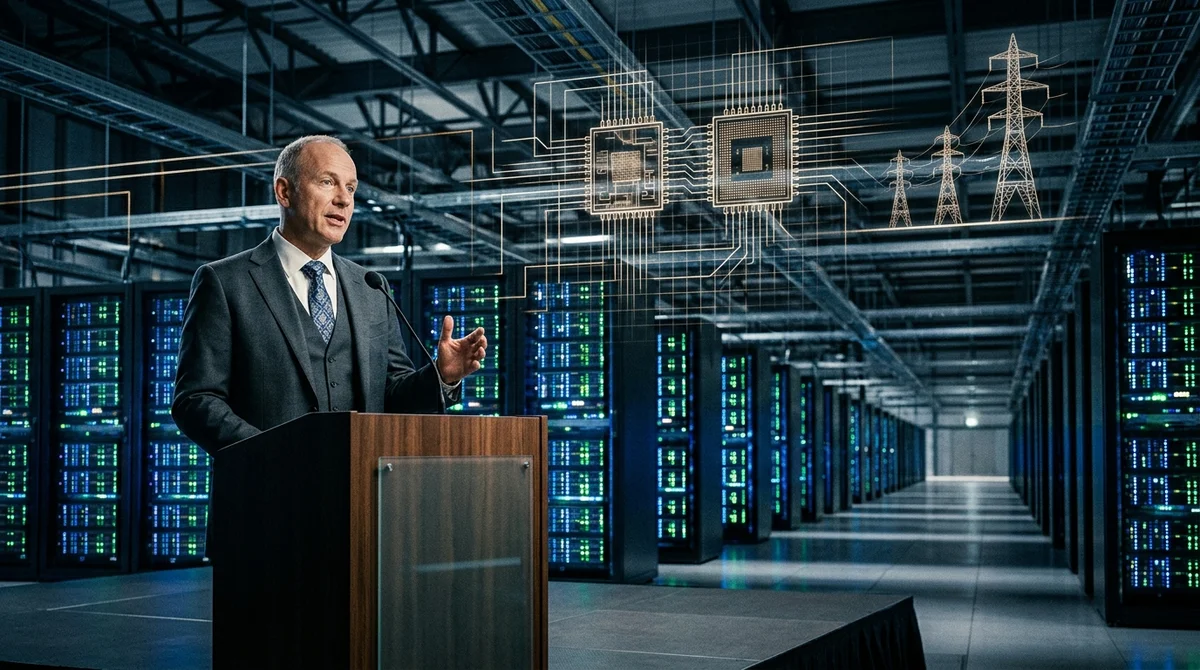
OpenAI chief operating officer Brad Lightcap has named the shortage of memory chips and limited energy capacity in the US as potential bottlenecks that could slow the scaling of AI infrastructure for years to come.
Two physical limits
The race to build new data centers and deploy ever larger models is already running into hard physical constraints, and Lightcap is the first to name both publicly.
The first is the shortage of memory chips, above all HBM (High Bandwidth Memory). This is specialized memory with extremely high bandwidth, without which modern AI accelerators such as NVIDIA H100, Blackwell and AMD Instinct cannot run models at the required speed. Only three companies in the world make HBM today: Samsung, SK Hynix and Micron. Demand from OpenAI, Google, Microsoft and Meta has already outpaced production capacity. Supply queues have stretched to 12–18 months, while building new factory lines takes 2–3 years.
The second factor is the state of US energy infrastructure. American data centers already consume about 4% of the country's electricity, roughly as much as the entire state of California. Goldman Sachs analysts forecast that the load on grids will triple by 2030. Connecting new large facilities to the grid takes from 3 to 7 years: outdated equipment, an acute shortage of industrial transformers and multi-level regulatory approvals create queues that will not clear anytime soon.
Details of the shortage
Each constraint has its own specific nature:
- HBM chips — production is growing, but much more slowly than demand from AI accelerator makers
- Industrial transformers — lead times have grown from one year to two or three because of a global surge in orders
- Sites near power nodes — in key states there are literally no suitable plots left with the required connection capacity
- Electrical engineers and maintenance specialists — an acute labor shortage slows construction as much as the lack of equipment
- ISO/RTO queues — grid operators are swamped with data center applications and take years to review them
Taken together, these factors mean that even with money and political will, quickly building a large data center in the US is extremely difficult today.
Stargate and the reality of resources
In early 2025, OpenAI, together with SoftBank and Oracle, announced Stargate, an investment program of up to $500 billion to deploy AI infrastructure in the US. The first phase planned to invest $100 billion. Against the backdrop of these ambitions, the COO's statement carries particular weight: even an unprecedented financial plan does not lift the limits of the physical world.
If the HBM shortage persists, memory prices will keep rising, and the operating costs of all AI platforms will rise with them. If energy capacity is not brought online on time, some Stargate sites will be delayed by years. Lightcap is, in effect, publicly admitting that OpenAI's growth is now limited not only by algorithms and training data but also by hard physical resources: silicon and electrons.
What this means
The words of the COO of the world's largest AI company are a signal to the entire industry. Physical supply chains have become as strategic a resource as models and datasets. Memory makers and energy companies get strong arguments for accelerating capital investment. For businesses that depend on AI services, it is an important reminder: the availability and cost of tools will be determined not only by progress in the models themselves, but also by whether there is enough physical infrastructure to run them.
*Meta is recognized as an extremist organization and banned in Russia.
- Nov 2, 2026Meta's Muse assistant keeps dossiers on loved ones and gets root on Ubuntu by default
- Nov 1, 2026Local models lose to Opus and Codex: 0.21 on a MacBook versus 1.00 for Codex
- Nov 1, 2026Kimi scores 96.2% on a 1C database analytics test and emerges as a fallback if Claude access is blocked
- Nov 1, 2026OpenAI Rewrites GPT Behavior Rules: Five Values and a Chain of Command
Key Questions Answered
What are the key details on Two physical limits?
The race to build new data centers and deploy ever larger models is already running into hard physical constraints, and Lightcap is the first to name both publicly. The first is the shortage of memory chips, above all HBM (High Bandwidth Memory). This is specialized memory with extremely high bandwidth, without which modern AI accelerators such as NVIDIA H100, Blackwell and AMD Instinct cannot run models at the required speed. Only three companies in the world make HBM today: Samsung, SK Hynix and Micron. Demand from OpenAI, Google, Microsoft and Meta has already outpaced p
What are the key details on Details of the shortage?
Each constraint has its own specific nature: HBM chips — production is growing, but much more slowly than demand from AI accelerator makers Industrial transformers — lead times have grown from one year to two or three because of a global surge in orders Sites near power nodes — in key states there are literally no suitable plots left with the required connection capacity Electrical engineers and maintenance specialists — an acute labor shortage slows construction as much as the lack of equipment ISO/RTO queues — grid operators are swamped with data center applications and t
What are the key details on Stargate and the reality of resources?
In early 2025, OpenAI, together with SoftBank and Oracle, announced Stargate, an investment program of up to $500 billion to deploy AI infrastructure in the US. The first phase planned to invest $100 billion. Against the backdrop of these ambitions, the COO's statement carries particular weight: even an unprecedented financial plan does not lift the limits of the physical world. If the HBM shortage persists, memory prices will keep rising, and the operating costs of all AI platforms will rise with them. If energy capacity is not brought online on time, some Stargate sites w
Test Frontier LLMs & Autonomous Agents in One Workspace
Run Claude Opus 5.5, GPT-6, Gemini 3.1, and DeepSeek side-by-side in Nomad AI (nomadnet.ai) — unified model routing, deep research, and multimodal workflows under one subscription.
The AI world, distilled — once a week
Seven stories that actually mattered, hand-picked. No noise, no reposts, no press releases.
Done! Check your inbox for a confirmation.