Palantir CTO calls Iran war the first major conflict with AI at its center
Palantir CTO Shyam Sankar has said the war in Iran will likely go down in history as the first major conflict in which AI played a central role. In his assessment, this is no longer a story about isolated automation but about a turning point in the very logic of war: the speed of data analysis and decision-making is becoming as important as weapons and troop numbers. His framing moves AI out of the category of auxiliary military technology and into the center of the debate over how battlefield decisions are now made.
AI-processed from Bloomberg Tech; edited by Hamidun News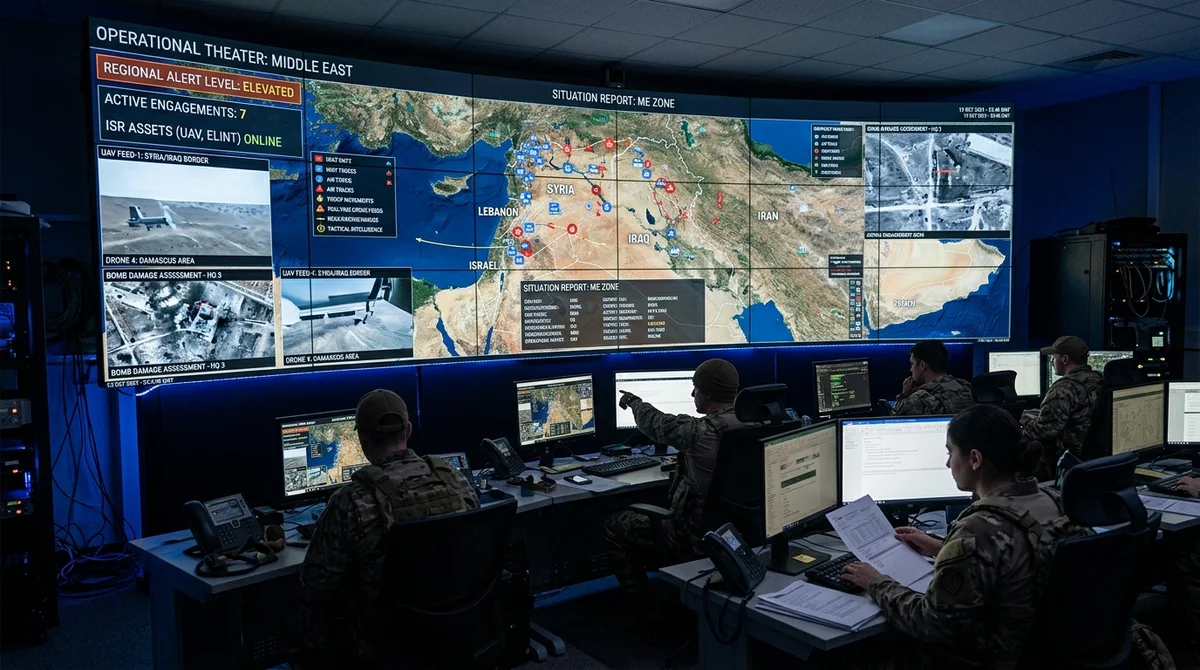
Palantir CTO Shyam Sankar believes the war in Iran will likely be remembered as the first major conflict in which artificial intelligence played a central role. His framing takes AI out of the category of auxiliary military technology and puts it at the center of the discussion about how decisions on the battlefield are now made.
What Palantir said
Sankar described the war in Iran as a turning point for modern warfare. In his interpretation, it is no longer just a matter of algorithms helping individual agencies sort data faster or automate routine work. He points to a harder shift: AI is, in effect, becoming part of the mechanism of conflict itself and influences how the parties see the situation, set priorities and respond to threats. It is no longer a digital backdrop but one of the drivers of combat decisions.
The statement carries particular weight coming from a top Palantir executive. The company's name has long been tied to analytics platforms for governments, intelligence agencies and the defense sector. His words can therefore be read not only as a political assessment of one war but as a signal of a broader change: digital systems no longer sit beside the military machine but are built into its nervous system and affect it in real time.
Where AI is at work
The available excerpt does not say which systems Palantir's CTO had in mind. But when people talk about a central role for AI in a military context, they usually mean not a single "super-algorithm" but a set of tools that speed up the cycle from observation to decision. In other words, AI does not necessarily replace the human, but increasingly determines the tempo, the volume of information and the accuracy of the suggestions that person relies on.
- Analysis of large volumes of intelligence data, from satellite images to signals and text reports.
- Detection of anomalies and likely threats faster than classic manual analysis.
- Prioritization of targets, routes, facilities and response scenarios when time is short.
- Coordination of decisions between different units, where not only the force of a strike matters but also the speed of approval.
It is also important that a "central role" does not necessarily mean fully autonomous war. In practice it often looks different: commanders, analysts and operators receive a ranked picture of events from the systems: what is more dangerous, where to look, which signals cannot be missed right now. In that layer between the chaos of data and the human decision, AI can change the outcome of operations even without dramatic scenes of robots on the front line.
Why this is a turning point
If Sankar's framing takes hold, the line between "weapons with software" and "data-driven war" will become much thinner. Historically, armies gained an edge through industrial capacity, troop numbers and equipment quality. Now another layer is being added: the ability to collect, clean, cross-reference and interpret information faster, and then turn it into action almost without delay. In this mode, victory goes not only to whoever has more resources but to whoever has the shorter decision cycle.
At the same time, such a shift brings not only efficiency but new risks. The deeper AI is embedded in critical processes, the harder it is to tell where the machine's recommendation ends and human responsibility begins. Data errors, model bias, opaque selection criteria and pressure for speed can prove far too costly. So the conversation about the "first AI war" almost inevitably leads to another question: how to verify, restrict and audit such systems in a real conflict.
What this means
The words of Palantir's CTO show that AI in defense is increasingly seen not as an add-on feature but as decision-making infrastructure. For the market, this means growing demand for military AI platforms; for governments, a need to discuss not only the effectiveness of such systems but also the rules for their use. It is around this triad of speed, accuracy and accountability that the next stage of military technology worldwide will now be built.
- Nov 1, 2026Local models lose to Opus and Codex: 0.21 on a MacBook versus 1.00 for Codex
- Nov 1, 2026Adobe's EditAgent judge picks a usable edit 81.3% of the time, versus 74.8% for EditScore
- Nov 1, 202616 models tested on 7 search tools: Exa averaged 10.5 out of 14, SearXNG about 3
- Nov 1, 2026Google's StreamVibe video agent beats other models by 10.7% on response timing and quality
Key Questions Answered
What Palantir said?
Sankar described the war in Iran as a turning point for modern warfare. In his interpretation, it is no longer just a matter of algorithms helping individual agencies sort data faster or automate routine work. He points to a harder shift: AI is, in effect, becoming part of the mechanism of conflict itself and influences how the parties see the situation, set priorities and respond to threats. It is no longer a digital backdrop but one of the drivers of combat decisions. The statement carries particular weight coming from a top Palantir executive. The company's name has long
Where AI is at work?
The available excerpt does not say which systems Palantir's CTO had in mind. But when people talk about a central role for AI in a military context, they usually mean not a single "super-algorithm" but a set of tools that speed up the cycle from observation to decision. In other words, AI does not necessarily replace the human, but increasingly determines the tempo, the volume of information and the accuracy of the suggestions that person relies on. Analysis of large volumes of intelligence data, from satellite images to signals and text reports. Detection of anomalies and
Why this is a turning point?
If Sankar's framing takes hold, the line between "weapons with software" and "data-driven war" will become much thinner. Historically, armies gained an edge through industrial capacity, troop numbers and equipment quality. Now another layer is being added: the ability to collect, clean, cross-reference and interpret information faster, and then turn it into action almost without delay. In this mode, victory goes not only to whoever has more resources but to whoever has the shorter decision cycle. At the same time, such a shift brings not only efficiency but new risks. The d
Ship AI Faster with Founders, Engineers & Weekly Architecture Reviews
Inside Vibe Club (hamidun.com/club) — weekly live masterminds with Zhemal Khamidun, Tech Radar, full LMS access, and 370+ production Claude Code skills.
The AI world, distilled — once a week
Seven stories that actually mattered, hand-picked. No noise, no reposts, no press releases.
Done! Check your inbox for a confirmation.