OpenAI nears $10 billion raise from MGX, Coatue, and Thrive in new round
OpenAI is close to a deal worth roughly $10 billion with MGX, Coatue, and Thrive. If the investors finalize the round, the company's latest fundraise will reach about $120 billion. That sends a strong signal to the market: the biggest funds are still willing to back the leaders in generative AI, and access to capital and compute infrastructure is becoming the main advantage in the race for market share.
AI-processed from Bloomberg Tech; edited by Hamidun News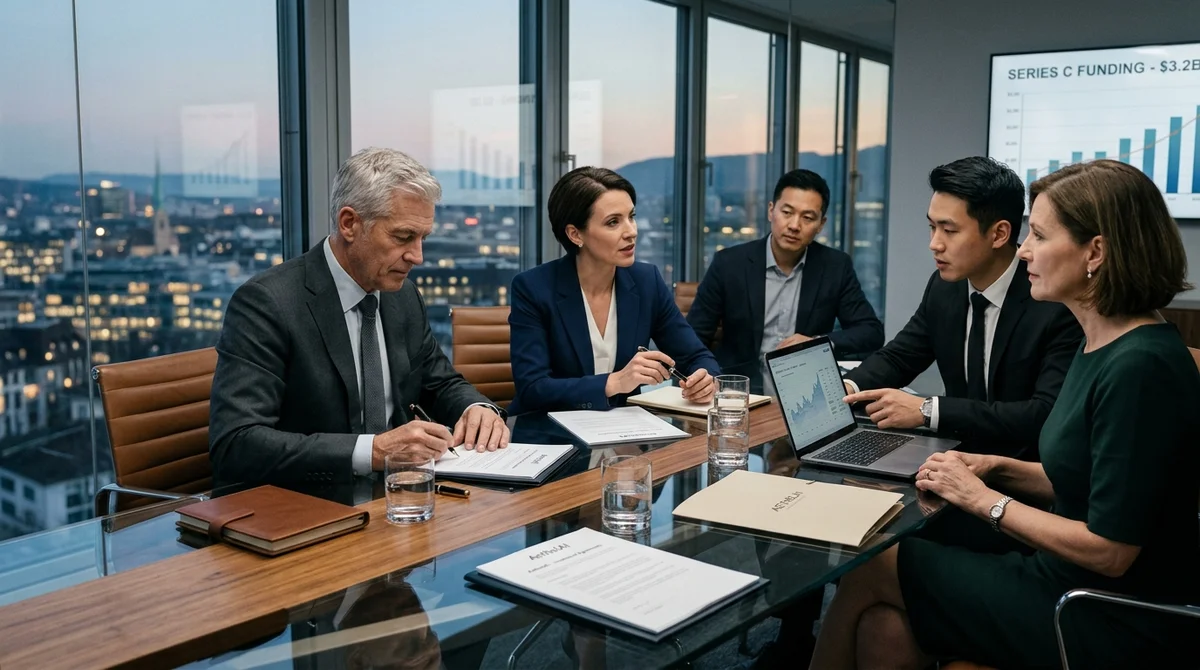
OpenAI is close to a deal to raise about $10 billion from MGX, Coatue, and Thrive. If the round closes on these terms, the company's latest funding would grow to roughly $120 billion.
Who is in the round
Three prominent investors sit at the center of the deal: MGX, Coatue, and Thrive. The phrase "close to a deal" matters here. It means the agreement has not yet been announced as final, and the terms may change before signing. Still, it is already clear that this is not a minor capital injection but a major stage that could significantly strengthen OpenAI's financial position.
For the company, the makeup of the syndicate matters as much as the size of the check. When several large investors join a single round, the market usually reads it as a vote of confidence in the scale of the business, its growth rate, and its ability to turn interest in AI into revenue. In OpenAI's case, the market apparently still sees not just a model lab but one of the central players in the entire industry.
It also matters that the money comes from venture investors and is not framed as one-off strategic backing for a narrow project. That makes the news bigger: it reflects confidence in OpenAI's overall business trajectory, its future products, and its ability to stay on top in a market where the cost of compute, talent, and fast model launches keeps rising.
Why the amount matters
The key figure here is not just the new $10 billion but the potential total for the current round: about $120 billion. Don't confuse that number with the company's valuation. It refers specifically to the amount of money OpenAI could raise as part of its latest fundraise. The scale alone shows how expensive the race for leadership in generative AI has become.
This kind of money isn't about grabbing headlines. In practice, large AI companies spend capital on compute infrastructure, on training and launching new models, on hiring strong research and product teams, and on expanding commercial services. The bigger the user base and the more complex the models, the more each next step costs.
Big rounds also buy strategic flexibility. A company with that much capital in reserve can fund long research cycles for longer, add capacity faster, and get through periods when spending outpaces revenue with less pain. That is especially important in AI, where leadership increasingly depends not on a single successful model but on the ability to keep updating the stack and shipping new products.
The bottom line is that the news points to several things:
- OpenAI still has access to very large pools of private capital.
- Investors are willing to fund not just ideas but expensive scaling.
- Competition in AI is shifting more and more toward players with access to infrastructure.
- Pressure on smaller startups will grow, because they find it harder to raise comparable rounds.
A signal for the market
A potential expansion of the round to $120 billion sends a signal well beyond one company. For the venture market, it shows that the bet on generative AI did not collapse after the first wave of hype. On the contrary, money keeps concentrating around the companies investors see as platform leaders, able to turn a technological edge into a durable product and business engine.
At the same time, a deal like this widens the gap between the top and bottom tiers of the market. While a handful of leaders gain access to tens of billions of dollars, most teams have to prove their economics far more rigorously and start monetizing earlier. In that sense, the OpenAI news is not only about the company itself but also about the new financial reality of the AI market, where the cost of staying in the race keeps climbing.
For enterprise customers and partners, this is also a clear indicator. The more confidently investors back market leaders, the more likely it is that ecosystems of services, integrations, and applied products will form around those leaders faster. Conversely, second-tier companies find it harder to compete not only on model quality but also on how quickly they bring solutions to market.
What it means
If the deal closes, OpenAI will further cement its status as the company that attracts the largest private money in AI. For the market, the takeaway is simple: investors are betting not on isolated demo capabilities but on companies that can turn models into mass-market services and absorb the cost of scaling.
- Nov 2, 2026Arca gives AI agents finance tasks lasting up to 10 days, but leaves the trades to humans
- Nov 2, 2026Meta's Muse assistant keeps dossiers on loved ones and gets root on Ubuntu by default
- Nov 1, 2026Local models lose to Opus and Codex: 0.21 on a MacBook versus 1.00 for Codex
- Nov 1, 2026Kimi scores 96.2% on a 1C database analytics test and emerges as a fallback if Claude access is blocked
Key Questions Answered
Who is in the round?
Three prominent investors sit at the center of the deal: MGX, Coatue, and Thrive. The phrase "close to a deal" matters here. It means the agreement has not yet been announced as final, and the terms may change before signing. Still, it is already clear that this is not a minor capital injection but a major stage that could significantly strengthen OpenAI's financial position. For the company, the makeup of the syndicate matters as much as the size of the check. When several large investors join a single round, the market usually reads it as a vote of confidence in the scale
Why the amount matters?
The key figure here is not just the new $10 billion but the potential total for the current round: about $120 billion. Don't confuse that number with the company's valuation. It refers specifically to the amount of money OpenAI could raise as part of its latest fundraise. The scale alone shows how expensive the race for leadership in generative AI has become. This kind of money isn't about grabbing headlines. In practice, large AI companies spend capital on compute infrastructure, on training and launching new models, on hiring strong research and product teams, and on expa
What are the key details on A signal for the market?
A potential expansion of the round to $120 billion sends a signal well beyond one company. For the venture market, it shows that the bet on generative AI did not collapse after the first wave of hype. On the contrary, money keeps concentrating around the companies investors see as platform leaders, able to turn a technological edge into a durable product and business engine. At the same time, a deal like this widens the gap between the top and bottom tiers of the market. While a handful of leaders gain access to tens of billions of dollars, most teams have to prove their ec
Ship AI Faster with Founders, Engineers & Weekly Architecture Reviews
Inside Vibe Club (hamidun.com/club) — weekly live masterminds with Zhemal Khamidun, Tech Radar, full LMS access, and 370+ production Claude Code skills.
The AI world, distilled — once a week
Seven stories that actually mattered, hand-picked. No noise, no reposts, no press releases.
Done! Check your inbox for a confirmation.